Loading...
This comparison has not been analyzed yet.
One-time AI generation (~1 minute). Scores and timeline are already available below.
Nguyen Tan Dung vs William Ewart Gladstone
William Ewart Gladstone leads by 14.8 pts · 2 figures compared
…

Nguyen Tan Dung
Politician · Modern
50.4Total
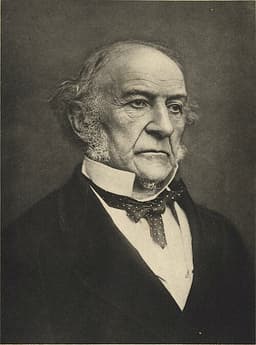
William Ewart Gladstone
Politician · Modern
65.2Total
Basic Information
Born
1949
1809
Died
—
1898
Era
Modern
Modern
Nationality
Vietnam
United Kingdom
Occupation
Politician
Politician
Civilization
Eastern
Western
Score Comparison
Military (10%)
15.1
50.0
Political (20%)
65.0
78.0
Influence (20%)
54.1
65.0
Legacy (20%)
45.0
65.0
Leadership (15%)
72.0
78.0
Strategy (15%)
35.3
42.5
TOTAL
50.4
65.2
Nguyen Tan Dung — Complete Timeline
2006 AD
Appointed Prime Minister of VietnamPolitical Action◆ Major
Nguyen Tan Dung was appointed Prime Minister of Vietnam by the National Assembly, succeeding Phan Van Khai. He became the head of government, overseeing economic reforms and integration into global markets.
AppointmentGovernment Leadership
Impact: national
2007 AD
Joined the World Trade OrganizationPolitical Action◆ Major
Under Dung's premiership, Vietnam officially joined the World Trade Organization (WTO) on January 11, 2007. This marked a major step in economic liberalization and integration into the global economy.
WTO AccessionEconomic Reform
Impact: globalconstructive
2011 AD
Re-elected as Prime MinisterPolitical Action◆ Major
Nguyen Tan Dung was re-elected as Prime Minister for a second term by the National Assembly. He continued his reformist policies, focusing on economic restructuring and state-owned enterprise reform.
Re-electionGovernment Leadership
Impact: national
2016 AD
End of Premiership and RetirementPolitical Action◆ Major
Nguyen Tan Dung stepped down as Prime Minister after two terms, replaced by Nguyen Xuan Phuc. He retired from active politics, marking the end of a decade-long tenure as head of government.
RetirementPolitical Transition
Impact: national
William Ewart Gladstone — Complete Timeline
1846 AD
Repeal of the Corn LawsReform◆ Major
As a minister in Sir Robert Peel's government, Gladstone supported the repeal of tariffs on imported grain. The repeal lowered food prices and marked a shift toward free trade, though it split the Conservative Party.
Free TradeEconomic ReformConservative Party
Impact: nationalconstructive
1870 AD
Education Act of 1870Reform◆ Major
Gladstone's government passed the Elementary Education Act, establishing school boards and providing state-funded elementary education in England and Wales. The act laid the foundation for universal primary education.
Education ReformSocial PolicyLiberal Government
Impact: nationalconstructive
1879 AD
Midlothian CampaignPolitical Action◆ Major
Gladstone conducted a series of public speeches in Midlothian, Scotland, attacking the foreign policy of Benjamin Disraeli's government. The campaign is considered the first modern political campaign, using mass rallies and media to sway public opinion.
Political CampaignPublic SpeakingLiberal Party
Impact: national
1884 AD
Third Reform ActReform◆ Major
Gladstone's government extended the franchise to agricultural laborers and others in rural areas, standardizing the voting qualification across counties and boroughs. The act added about two million men to the electorate.
Electoral ReformDemocracyLiberal Government
Impact: nationalconstructive
1886 AD
First Irish Home Rule BillPolitical Action◆ Major
Gladstone introduced the Government of Ireland Bill in the House of Commons, proposing a devolved parliament in Dublin. The bill split the Liberal Party and was defeated in the Commons, leading to the fall of his second government.
Irish Home RuleLiberal Party SplitLegislation
Impact: national
1893 AD
Second Irish Home Rule BillPolitical Action◆ Major
Gladstone introduced a second Home Rule Bill, which passed the House of Commons but was rejected by the House of Lords. The defeat demonstrated the Lords' veto power and delayed Irish self-government for decades.
Irish Home RuleHouse of LordsLegislation
Impact: national
1894 AD
Resignation over Budget DefeatPolitical Action
Gladstone resigned as Prime Minister after the House of Lords defeated his budget proposal, which included increased death duties. His resignation ended his fourth and final premiership, and he was succeeded by Lord Rosebery.
ResignationBudgetHouse of Lords
Impact: national
This comparison has not been analyzed yet.
One-time AI generation (~1 minute). Scores and timeline are already available below.
Rankings
🥇
William Ewart GladstoneLeader
Mil: 50.0Pol: 78.0Inf: 65.0
65.2
🥈
Nguyen Tan Dung
Mil: 15.1Pol: 65.0Inf: 54.1
50.4
+14.8 behind
How This Comparison Works
Algorithm
Each figure is scored on 6 dimensions (0—100 scale) based on structured historical data: Military (10%), Political (20%), Influence (20%), Legacy (20%), Leadership (15%), Strategy (15%). The weighted total produces the final ranking.
Data Sources
Scores are computed from structured sub-indicators in the database. Scale factors adjust for era (Ancient ×0.85, Modern ×1.0) and civilization size (Eastern ×1.05, Other ×0.80) to account for differences in population and military scale.
Maximum 3 Figures
Comparisons are limited to 2—3 figures to ensure readability and statistical meaningfulness.
Error Margins
±5 points per dimension — Sub-scores are derived from historical records with inherent uncertainty. Two figures within 5 points on a dimension should be considered roughly equivalent in that area.
Total Score Accuracy
±3 points overall — The weighted combination of 6 dimensions produces a total score with approximately ±3 points of uncertainty. Differences of less than 3 points are not statistically significant— the figures are effectively tied.
Known Limitations
- Historical records are incomplete and uneven across civilizations
- Figures from oral-tradition societies may be underrepresented
- Occupation labels can misclassify multi-role figures
- Scores measure capability and impact, not moral character
- Quantitative scoring is a comparison tool, not absolute truth
Capability Radar
Military (10%) — Battles & Warfare
Battles
16
26
Win Rate
19
32
Expansion
22
36
Political (20%) — Governance & Reform
Reform
70
90
Diplomacy
60
85
Economy
75
88
Influence (20%) — Cultural & Global Reach
Cultural
30
70
Global
35
75
Legacy (20%) — Historical Impact
Historical
40
80
Longevity
30
75
Leadership (15%) — Power & Stability
Tenure
65
85
Stability
55
75
Strategy (15%) — Tactics & Innovation
Strategy
25
37
Tactics
26
40
Reform
27
46
Similar Comparisons
Comments & Discussion
No comments yet. Be the first to share your thoughts!