Loading...
Neferneferuaten vs Vitellius
Neferneferuaten leads by 2.1 pts · 2 figures compared
…
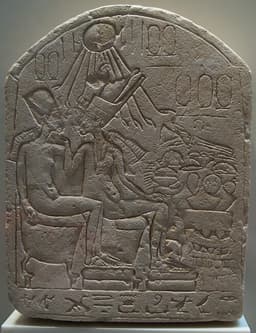
Neferneferuaten
Emperor · Ancient
41.8Total

Vitellius
Emperor · Ancient
39.7Total
Basic Information
Born
-1335
15
Died
-1333
69
Era
Ancient
Ancient
Nationality
New Kingdom Egypt
Roman Empire
Occupation
Emperor
Emperor
Civilization
Middle Eastern
Western
Score Comparison
Military (10%)
39.6
45.0
Political (20%)
27.9
39.4
Influence (20%)
45.5
42.4
Legacy (20%)
36.7
32.5
Leadership (15%)
49.9
45.0
Strategy (15%)
56.3
38.3
TOTAL
41.8
39.7
Neferneferuaten — Complete Timeline
1336 BC
Possible Co-regency with AkhenatenPolitical Action
Neferneferuaten may have served as co-regent with Akhenaten in the final years of his reign. Inscriptions from Amarna show a female figure with royal titles alongside Akhenaten. This co-regency, if historical, would have been a unique arrangement, possibly to stabilize the succession after Akhenaten's death.
Co-regencyAmarnaSuccession
Impact: national
1335 BC
Reign as Female Amarna PharaohPolitical Action◆ Major
Neferneferuaten ruled as a female pharaoh during the late Amarna period, possibly as the successor to Akhenaten. She adopted the throne name Ankhkheperure and was depicted with both male and female attributes. Her identity is debated, with many scholars identifying her as Nefertiti ruling under a new name.
Female PharaohAmarnaNefertiti
Impact: national
1334 BC
Attempted Religious ReconciliationReform◆ Major
Neferneferuaten may have initiated a gradual return to traditional Egyptian religion, reversing Akhenaten's exclusive worship of Aten. Evidence from inscriptions shows her making offerings to Amun and other gods, suggesting a policy of reconciliation to ease tensions caused by the Amarna religious revolution.
ReligionReformAmarna
Impact: nationalconstructive
Vitellius — Complete Timeline
69 AD
Battle of BedriacumWar◆ Major
Vitellius's forces defeated Otho's army at the First Battle of Bedriacum. The victory allowed Vitellius to enter Rome and be recognized as emperor by the Senate. His reign was marked by lavish spending and unpopularity.
Civil WarBattleVictory
Impact: national
Proclamation as EmperorPolitical Action◆ Major
Vitellius was proclaimed emperor by his troops in Germania Inferior after the death of Galba. He was the governor of the province and had the support of the Rhine legions. His claim was challenged by Otho, leading to civil war.
Year of the Four EmperorsProclamationRhine Legions
Impact: national
Death of VitelliusPolitical Action◆ Major
Vitellius was captured and killed by Vespasian's supporters in Rome. He was dragged through the streets and executed, and his body was thrown into the Tiber. His death ended the Year of the Four Emperors and established the Flavian dynasty.
ExecutionYear of the Four EmperorsFlavian Dynasty
Impact: nationaltragic
Expert Analysis
Origins
**Neferneferuaten** (reigned c. 1335–1333 BCE) was a female pharaoh of Egypt’s 18th Dynasty during the late Amarna period. Her name means “Beautiful are the beauties of Aten.” She is widely believed to be Nefertiti, the great royal wife of Akhenaten, who assumed the throne after his death. Nefertiti had been a powerful figure in Akhenaten’s court, depicted in art with equal status, and may have ruled as co-regent. The exact parentage of Neferneferuaten is unknown, but she was likely of noble birth, possibly a daughter of Ay. She was educated in the royal court and deeply involved in the Atenist religious revolution.
**Vitellius** (born 24 September 15 CE) was a Roman emperor for eight months in 69 CE, the Year of the Four Emperors. He was born into a prominent senatorial family; his father, Lucius Vitellius, was a consul and governor of Syria. Vitellius himself served as consul in 48 CE and governor of Africa in 61 CE. He gained military experience as legate of Germania Inferior, where he was popular with the troops. His path to power was through military acclamation, not dynastic succession.
Rise to Power
Neferneferuaten rose as a female pharaoh in a time of religious upheaval. Akhenaten had banned the traditional pantheon in favor of Aten, the sun disk. After his death, Neferneferuaten took the throne name Ankhkheperure. She ruled for a short period, possibly two to three years. Evidence from inscriptions and the Amarna letters suggests she faced pressure from the priesthood of Amun and foreign powers. She may have attempted to reconcile by reintroducing traditional gods, but her reign was cut short. She was succeeded by Tutankhamun, who fully restored the old religion.
Vitellius was proclaimed emperor by his troops in Germania Inferior on 2 January 69 CE, after the death of Galba. His legions, including the powerful Legio I Germanica and Legio XXI Rapax, supported him. He sent his general Caecina Alienus to invade Italy. Otho, who had seized Rome after Galba, met Vitellius’s forces at the First Battle of Bedriacum (near Cremona) in April 69. Vitellius’s army won, Otho committed suicide, and Vitellius entered Rome as emperor. His rise was swift but based on military might rather than political consensus.
Leadership & Governance
Neferneferuaten’s leadership style is inferred from scarce records. She likely continued Akhenaten’s administrative structure but with a shift toward religious moderation. She issued decrees restoring temples and offerings to Amun, as seen in the “Restoration Stela” of Tutankhamun, which may reflect her policies. Her political score of 27.9 reflects the instability of her reign. She lacked the military power to enforce her will, scoring 39.6 in military. Her strategy score of 56.3 suggests she attempted diplomatic reconciliation, but her short reign prevented lasting reforms.
Vitellius proved an ineffective ruler. He indulged in lavish banquets and executed political rivals. He failed to secure the loyalty of the legions in the east, which proclaimed Vespasian emperor. His military score of 45.0 is average; his political score of 39.4 indicates poor governance. He attempted to buy support by distributing land and money, but his reputation for cruelty and gluttony undermined him. His strategy score of 38.3 reflects his inability to foresee Vespasian’s threat. He did not reform the empire or stabilize the succession.
Triumph & Tragedy
Neferneferuaten’s greatest success was possibly the preservation of Egypt’s religious tradition. By reversing Akhenaten’s monotheism, she may have prevented civil war. Her greatest failure was her inability to secure her dynasty; she left no heir, and Tutankhamun’s reign was brief. Her legacy score of 36.7 reflects the obscurity of her rule.
Vitellius’s triumph was his victory at Bedriacum, which made him emperor. His tragedy was his downfall: he was captured by Vespasian’s troops, dragged through the streets of Rome, and executed. His legacy score of 32.5 is the lowest among Year of Four Emperors rulers. He is remembered as a glutton and a tyrant.
Character & Destiny
Neferneferuaten was likely pragmatic, attempting to navigate between Atenism and traditional religion. Her character is elusive; she may have been a skilled diplomat. Her fate is unknown—she disappeared from records, possibly died or was deposed. Her leadership score of 49.9 suggests moderate effectiveness.
Vitellius was known for his love of luxury and cruelty. He was indecisive, allowing his generals to act while he feasted. His personality led to his isolation; he lacked the discipline to command loyalty. His total score of 39.7 reflects his historical dismissal.
Legacy
Neferneferuaten’s legacy is tied to the Amarna period’s mystery. She is a subject of Egyptological debate, influencing modern views on female pharaohs. Her influence score of 45.5 is moderate. Vitellius’s legacy is as a cautionary tale of imperial instability. His name is synonymous with failure.
Conclusion
Neferneferuaten, with a total score of 41.8, edges out Vitellius (39.7) by 2.1 points. Her impact, though brief, influenced the restoration of polytheism, a key shift in Egyptian history. Vitellius’s reign had no lasting positive effect. Therefore, Neferneferuaten had greater historical impact. Her survival in historical memory as a possible Nefertiti adds to her significance, while Vitellius remains a footnote.
Rankings
🥇
NeferneferuatenLeader
Mil: 39.6Pol: 27.9Inf: 45.5
41.8
🥈
Vitellius
Mil: 45.0Pol: 39.4Inf: 42.4
39.7
+2.1 behind
How This Comparison Works
Algorithm
Each figure is scored on 6 dimensions (0—100 scale) based on structured historical data: Military (10%), Political (20%), Influence (20%), Legacy (20%), Leadership (15%), Strategy (15%). The weighted total produces the final ranking.
Data Sources
Scores are computed from structured sub-indicators in the database. Scale factors adjust for era (Ancient ×0.85, Modern ×1.0) and civilization size (Eastern ×1.05, Other ×0.80) to account for differences in population and military scale.
Maximum 3 Figures
Comparisons are limited to 2—3 figures to ensure readability and statistical meaningfulness.
Error Margins
±5 points per dimension — Sub-scores are derived from historical records with inherent uncertainty. Two figures within 5 points on a dimension should be considered roughly equivalent in that area.
Total Score Accuracy
±3 points overall — The weighted combination of 6 dimensions produces a total score with approximately ±3 points of uncertainty. Differences of less than 3 points are not statistically significant— the figures are effectively tied.
Known Limitations
- Historical records are incomplete and uneven across civilizations
- Figures from oral-tradition societies may be underrepresented
- Occupation labels can misclassify multi-role figures
- Scores measure capability and impact, not moral character
- Quantitative scoring is a comparison tool, not absolute truth
Capability Radar
Military (10%) — Battles & Warfare
Battles
36
10
Win Rate
43
5
Expansion
46
0
Political (20%) — Governance & Reform
Reform
20
0
Diplomacy
15
5
Economy
10
0
Influence (20%) — Cultural & Global Reach
Cultural
20
5
Global
10
5
Legacy (20%) — Historical Impact
Historical
25
10
Longevity
15
5
Leadership (15%) — Power & Stability
Tenure
10
5
Stability
5
0
Strategy (15%) — Tactics & Innovation
Strategy
46
5
Tactics
48
10
Reform
54
0
Similar Comparisons
Comments & Discussion
No comments yet. Be the first to share your thoughts!