Loading...
This comparison has not been analyzed yet.
One-time AI generation (~1 minute). Scores and timeline are already available below.
Naveen Patnaik vs Takahashi Korekiyo
Naveen Patnaik leads by 8.3 pts · 2 figures compared
…

Naveen Patnaik
Politician · Modern
57.2Total
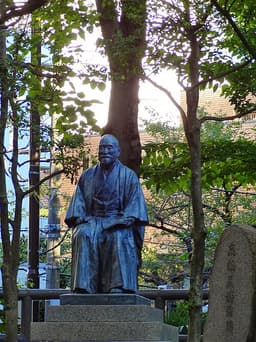
Takahashi Korekiyo
Politician · Modern
48.9Total
Basic Information
Born
1946
1854
Died
—
1936
Era
Modern
Modern
Nationality
India
Japan
Occupation
Politician
Politician
Civilization
Indian
Eastern
Score Comparison
Military (10%)
48.4
13.0
Political (20%)
59.3
70.3
Influence (20%)
54.9
55.7
Legacy (20%)
50.0
49.2
Leadership (15%)
75.0
53.2
Strategy (15%)
60.0
28.3
TOTAL
57.2
48.9
Naveen Patnaik — Complete Timeline
1997 AD
Founded Biju Janata Dal (BJD)Political Action◆ Major
Patnaik founded the Biju Janata Dal after splitting from the Janata Dal. The party was named after his father, former Odisha chief minister Biju Patnaik. This established his independent political base and launched his path to becoming chief minister.
Party FormationOdisha Politics
Impact: regionalconstructive
1999 AD
Survived 1999 Odisha cyclone as Union MinisterOther
As Union Minister for Steel and Mines, Patnaik was involved in the response to the devastating 1999 Odisha cyclone that killed over 10,000 people. The disaster shaped his later focus on disaster management as chief minister.
CycloneDisaster ManagementOdisha
Impact: regionaltragic
2000 AD
Implemented Odisha's disaster management modelReform◆ Major
Patnaik's government established the Odisha State Disaster Management Authority and invested in cyclone shelters, early warning systems, and evacuation drills. This model dramatically reduced cyclone fatalities in subsequent storms, notably during Cyclone Phailin in 2013.
Disaster ManagementReformOdisha
Impact: regionalconstructive
First sworn in as Chief Minister of OdishaPolitical Action◆ Major
Patnaik took office as Chief Minister of Odisha for the first time after the BJD-BJP alliance won the state election. He succeeded the Congress government. This began his tenure as the longest-serving chief minister in Odisha's history.
Chief MinisterOdishaBJD
Impact: regionalconstructive
2019 AD
Won fifth consecutive term as Chief MinisterPolitical Action◆ Major
Patnaik led the BJD to victory in the 2019 Odisha Legislative Assembly election, winning 112 out of 147 seats. He began his fifth consecutive term as chief minister, a record for Odisha and rare in Indian state politics.
Election VictoryOdishaBJD
Impact: regionalconstructive
Takahashi Korekiyo — Complete Timeline
1913 AD
Appointed Finance MinisterPolitical Action◆ Major
Takahashi Korekiyo was appointed Finance Minister of Japan. He served multiple terms and implemented policies to stabilize the Japanese economy, including managing the financial impact of World War I and the Great Kanto Earthquake.
Economic PolicyFinanceJapan
Impact: nationalconstructive
1930 AD
Returned to Gold StandardReform◆ Major
As Finance Minister, Takahashi oversaw Japan's return to the gold standard at the pre-World War I parity. This decision, intended to stabilize the yen, contributed to deflation and economic hardship during the Great Depression.
Economic PolicyGold StandardGreat Depression
Impact: nationaldestructive
1932 AD
Appointed Prime MinisterPolitical Action◆ Major
Takahashi Korekiyo became Prime Minister of Japan. His brief tenure focused on addressing the economic crisis and managing foreign policy tensions following the Mukden Incident.
Prime MinisterJapan1930s
Impact: national
1936 AD
Killed in the February 26 IncidentPolitical Action
Takahashi Korekiyo was assassinated by rebel army officers during the February 26 Incident, a coup attempt in Tokyo. His death removed a key moderate voice from the government, contributing to the rise of militarism in Japan.
AssassinationFebruary 26 IncidentMilitarism
Impact: nationaltragic
This comparison has not been analyzed yet.
One-time AI generation (~1 minute). Scores and timeline are already available below.
Rankings
🥇
Naveen PatnaikLeader
Mil: 48.4Pol: 59.3Inf: 54.9
57.2
🥈
Takahashi Korekiyo
Mil: 13.0Pol: 70.3Inf: 55.7
48.9
+8.3 behind
How This Comparison Works
Algorithm
Each figure is scored on 6 dimensions (0—100 scale) based on structured historical data: Military (10%), Political (20%), Influence (20%), Legacy (20%), Leadership (15%), Strategy (15%). The weighted total produces the final ranking.
Data Sources
Scores are computed from structured sub-indicators in the database. Scale factors adjust for era (Ancient ×0.85, Modern ×1.0) and civilization size (Eastern ×1.05, Other ×0.80) to account for differences in population and military scale.
Maximum 3 Figures
Comparisons are limited to 2—3 figures to ensure readability and statistical meaningfulness.
Error Margins
±5 points per dimension — Sub-scores are derived from historical records with inherent uncertainty. Two figures within 5 points on a dimension should be considered roughly equivalent in that area.
Total Score Accuracy
±3 points overall — The weighted combination of 6 dimensions produces a total score with approximately ±3 points of uncertainty. Differences of less than 3 points are not statistically significant— the figures are effectively tied.
Known Limitations
- Historical records are incomplete and uneven across civilizations
- Figures from oral-tradition societies may be underrepresented
- Occupation labels can misclassify multi-role figures
- Scores measure capability and impact, not moral character
- Quantitative scoring is a comparison tool, not absolute truth
Capability Radar
Military (10%) — Battles & Warfare
Battles
42
17
Win Rate
46
17
Expansion
49
18
Political (20%) — Governance & Reform
Reform
65
75
Diplomacy
70
65
Economy
75
85
Influence (20%) — Cultural & Global Reach
Cultural
40
30
Global
30
35
Legacy (20%) — Historical Impact
Historical
50
55
Longevity
55
40
Leadership (15%) — Power & Stability
Tenure
85
60
Stability
80
40
Strategy (15%) — Tactics & Innovation
Strategy
55
25
Tactics
53
28
Reform
61
31
Similar Comparisons
Comments & Discussion
No comments yet. Be the first to share your thoughts!