Loading...
Narendra Modi vs Wang Jin-pyng
Narendra Modi leads by 4.6 pts · 2 figures compared
…

Narendra Modi
Politician · Modern
58.1Total
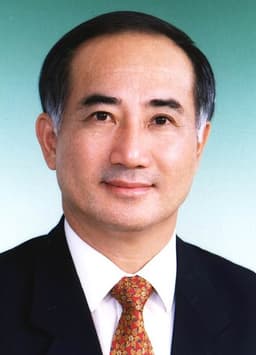
Wang Jin-pyng
Politician · Modern
53.5Total
Basic Information
Born
1950
1941
Died
—
—
Era
Modern
Modern
Nationality
India
China
Occupation
Politician
Politician
Civilization
Indian
Eastern
Score Comparison
Military (10%)
22.1
16.4
Political (20%)
68.8
68.0
Influence (20%)
72.0
55.7
Legacy (20%)
50.0
50.0
Leadership (15%)
72.0
78.0
Strategy (15%)
43.0
35.2
TOTAL
58.1
53.5
Narendra Modi — Complete Timeline
2014 AD
Appointed Prime Minister of IndiaPolitical Action◆ Major
Narendra Modi became the 14th Prime Minister of India after leading the BJP to a landslide victory in the general election. His government was the first non-Congress government to win an outright majority since 1984.
Indian PoliticsBJPLandslide Victory
Impact: nationalconstructive
2016 AD
Demonetized High-Value Currency NotesReform
Modi announced the demonetization of
DemonetizationEconomic PolicyBlack Money
Impact: national
2017 AD
Implemented Goods and Services Tax (GST)Reform◆ Major
Modi's government launched the Goods and Services Tax, a unified indirect tax system replacing multiple state and central taxes. The reform aimed to create a single national market but faced implementation challenges.
Tax ReformGSTEconomic Integration
Impact: nationalconstructive
2019 AD
Revoked Article 370 in Jammu and KashmirPolitical Action
Modi's government abrogated Article 370, which granted special autonomy to Jammu and Kashmir, and bifurcated the state into two union territories. The move was met with protests and international concern.
Article 370KashmirConstitutional Change
Impact: national
2020 AD
Led Response to COVID-19 PandemicPolitical Action◆ Major
Modi's government imposed a nationwide lockdown in March 2020 to contain the COVID-19 pandemic. The lockdown caused economic hardship and mass migration, while the health response faced criticism for lack of preparedness.
COVID-19LockdownPublic Health
Impact: global
Wang Jin-pyng — Complete Timeline
1999 AD
Elected as Legislative SpeakerPolitical Action◆ Major
Wang Jin-pyng was elected as the Speaker of the Legislative Yuan of the Republic of China (Taiwan). He held this position for 17 years, becoming the longest-serving legislative speaker in ROC history, overseeing numerous legislative sessions and political negotiations.
Legislative YuanTaiwan PoliticsSpeaker
Impact: national
2013 AD
Signed Cross-Strait Service Trade AgreementPolitical Action◆ Major
Wang Jin-pyng, as Legislative Speaker, signed the Cross-Strait Service Trade Agreement between Taiwan and China. This agreement sparked major protests by student groups, known as the Sunflower Movement, due to concerns over transparency and national sovereignty.
Cross-Strait RelationsSunflower MovementTrade Agreement
Impact: nationaldestructive
2019 AD
Expelled from KuomintangPolitical Action◆ Major
Wang Jin-pyng was expelled from the Kuomintang (KMT) after he registered to run as an independent candidate in the 2020 presidential election. This followed a long-standing rivalry with KMT leadership and his decision to challenge the party's official nominee.
KuomintangPresidential ElectionParty Expulsion
Impact: nationaldestructive
Expert Analysis
Origins
Narendra Modi was born on September 17, 1950, in Vadnagar, Gujarat, into a lower-middle-class family of grocers. He joined the Rashtriya Swayamsevak Sangh (RSS) as a child and later earned a master's degree in political science from Gujarat University. His early work with the RSS and the Bharatiya Janata Party (BJP) shaped his political ideology.
Wang Jin-pyng was born on March 18, 1941, in Taiwan (then under Japanese rule) to a farming family. He studied at the National Taiwan University and earned a degree in law. He began his political career in the Kuomintang (KMT) and was first elected to the Legislative Yuan in 1975.
Rise to Power
Modi's rise was marked by his role as Chief Minister of Gujarat from 2001 to 2014. He gained national prominence after the 2002 Gujarat riots, which polarized opinions. In 2014, he led the BJP to a landslide victory, becoming Prime Minister with a majority not seen in decades. His 2019 re-election further solidified his dominance.
Wang Jin-pyng's rise was gradual. He served as Deputy Speaker of the Legislative Yuan from 1996 to 1999 and became Speaker in 1999, a position he held for 17 years until 2016. He was known for his ability to negotiate across party lines, playing a key role in passing legislation.
Leadership & Governance
Modi's governance is characterized by centralization and major economic reforms. He implemented the Goods and Services Tax (GST) in 2017, unifying India's complex tax system. His demonetization in 2016 aimed to curb black money but caused severe cash shortages. He revoked Article 370 in 2019, integrating Jammu and Kashmir into India. His leadership score is 72.0, reflecting his decisive style.
Wang Jin-pyng's leadership was more consensus-based. As Speaker, he managed a fractured parliament, often mediating between the KMT and the Democratic Progressive Party (DPP). He signed the Cross-Strait Service Trade Agreement in 2013, which sparked protests but aimed to boost economic ties. His leadership score is 78.0, higher than Modi's, due to his longevity and ability to maintain stability.
Triumph & Tragedy
Modi's triumphs include a strong economic growth trajectory pre-pandemic, with GDP growth averaging 7.5% from 2014-2019. His handling of the COVID-19 pandemic, however, was criticized for a harsh lockdown that caused a migrant crisis. His political score of 68.8 reflects his electoral success but also polarizing policies.
Wang's greatest success was his 17-year tenure as Speaker, the longest in Taiwan's history. He helped pass key legislation, including the Agricultural Development Act. His tragedy came in 2019 when he was expelled from the KMT for running as an independent candidate, ending his party career. His political score is 68.0, slightly lower than Modi's.
Character & Destiny
Modi is known for his oratory skills and a strong, often authoritarian, leadership style. His decision-making is swift and centralizing, as seen in demonetization and Article 370. This has earned him both fervent support and strong opposition. His character has shaped India's shift towards Hindu nationalism.
Wang is seen as a pragmatic dealmaker, focused on legislative process and consensus. His expulsion from the KMT highlights the costs of independence in a party-dominated system. His character of moderation led to longevity but eventual isolation.
Legacy
Modi's legacy will be defined by his transformation of India's political economy and the rise of Hindu nationalism. His economic reforms, though controversial, have set a new direction. His influence score is 72.0, indicating global recognition.
Wang's legacy lies in his role as a stabilizing force in Taiwan's legislature. He is remembered as a skilled parliamentarian. His legacy score of 50.0 reflects the narrower impact of a legislative role compared to an executive one.
Conclusion
Narendra Modi has had a greater impact on a larger scale, leading a nation of 1.4 billion with transformative policies. Despite his lower leadership score (72.0 vs 78.0), his political (68.8 vs 68.0) and influence (72.0 vs 55.7) scores are higher. Wang Jin-pyng's expertise in legislative management is notable, but Modi's actions have reshaped India's trajectory. Therefore, Modi's overall impact surpasses Wang's.
Rankings
🥇
Narendra ModiLeader
Mil: 22.1Pol: 68.8Inf: 72.0
58.1
🥈
Wang Jin-pyng
Mil: 16.4Pol: 68.0Inf: 55.7
53.5
+4.6 behind
How This Comparison Works
Algorithm
Each figure is scored on 6 dimensions (0—100 scale) based on structured historical data: Military (10%), Political (20%), Influence (20%), Legacy (20%), Leadership (15%), Strategy (15%). The weighted total produces the final ranking.
Data Sources
Scores are computed from structured sub-indicators in the database. Scale factors adjust for era (Ancient ×0.85, Modern ×1.0) and civilization size (Eastern ×1.05, Other ×0.80) to account for differences in population and military scale.
Maximum 3 Figures
Comparisons are limited to 2—3 figures to ensure readability and statistical meaningfulness.
Error Margins
±5 points per dimension — Sub-scores are derived from historical records with inherent uncertainty. Two figures within 5 points on a dimension should be considered roughly equivalent in that area.
Total Score Accuracy
±3 points overall — The weighted combination of 6 dimensions produces a total score with approximately ±3 points of uncertainty. Differences of less than 3 points are not statistically significant— the figures are effectively tied.
Known Limitations
- Historical records are incomplete and uneven across civilizations
- Figures from oral-tradition societies may be underrepresented
- Occupation labels can misclassify multi-role figures
- Scores measure capability and impact, not moral character
- Quantitative scoring is a comparison tool, not absolute truth
Capability Radar
Military (10%) — Battles & Warfare
Battles
25
13
Win Rate
25
18
Expansion
31
18
Political (20%) — Governance & Reform
Reform
75
55
Diplomacy
70
60
Economy
72
50
Influence (20%) — Cultural & Global Reach
Cultural
60
40
Global
65
35
Legacy (20%) — Historical Impact
Historical
55
55
Longevity
50
50
Leadership (15%) — Power & Stability
Tenure
65
75
Stability
60
65
Strategy (15%) — Tactics & Innovation
Strategy
35
20
Tactics
37
26
Reform
41
32
Similar Comparisons
Comments & Discussion
No comments yet. Be the first to share your thoughts!