Loading...
Napoleon III vs Tamim bin Hamad Al Thani
Napoleon III leads by 0.7 pts · 2 figures compared
…

Napoleon III
Emperor · Modern
58.5Total
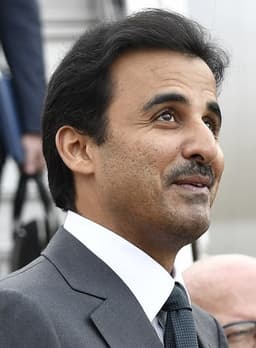
Tamim bin Hamad Al Thani
Emperor · Modern
57.8Total
Basic Information
Born
1808
1980
Died
1873
—
Era
Modern
Modern
Nationality
France
Qatar
Occupation
Emperor
Emperor
Civilization
Western
Middle Eastern
Score Comparison
Military (10%)
55.0
45.0
Political (20%)
65.0
72.0
Influence (20%)
56.7
55.0
Legacy (20%)
50.0
43.3
Leadership (15%)
72.0
79.8
Strategy (15%)
57.5
60.0
TOTAL
58.5
57.8
Napoleon III — Complete Timeline
1851 AD
Coup d'État of 1851Political Action
As President of the Second Republic, Louis-Napol
CoupPower ConsolidationAuthoritarianism
Impact: nationaldestructive
1852 AD
Proclamation of the Second EmpirePolitical Action◆ Major
Louis-Napol
EmpireRegime ChangeMonarchy
Impact: national
1853 AD
Haussmann's Renovation of ParisReform◆ Major
Napoleon III appointed Georges-Eug
Urban PlanningModernizationArchitecture
Impact: nationalconstructive
1870 AD
Franco-Prussian War and CaptureWar
Napoleon III declared war on Prussia, but French forces were quickly defeated. He was captured at the Battle of Sedan on September 2, 1870, and the Second Empire collapsed. His capture led to the proclamation of the Third Republic and the end of his reign.
WarDefeatCapture
Impact: globaltragic
Exile in EnglandPolitical Action
After his release from Prussian captivity, Napoleon III went into exile in England, settling at Chislehurst. He lived there until his death in 1873, never returning to France or regaining political power.
ExileEnd of Reign
tragic
Tamim bin Hamad Al Thani — Complete Timeline
2013 AD
Accession as Emir of QatarPolitical Action◆ Major
Tamim bin Hamad Al Thani became Emir of Qatar after his father, Hamad bin Khalifa, abdicated in his favor. The transition was peaceful and marked a generational shift, with Tamim inheriting a wealthy state with ambitious foreign policy goals.
SuccessionEmirQatar
Impact: national
Expansion of Al Jazeera NetworkCultural
Under Tamim's rule, Al Jazeera continued to expand its global reach, launching new channels and digital platforms. The network remained influential in shaping Middle Eastern media, though it faced accusations of bias and censorship.
MediaAl JazeeraInfluence
Impact: global
2017 AD
Qatar Diplomatic CrisisPolitical Action◆ Major
Saudi Arabia, UAE, Bahrain, and Egypt imposed a blockade on Qatar, accusing it of supporting terrorism. Tamim resisted the demands, maintaining ties with Iran and Turkey, and the crisis solidified Qatar's independent foreign policy, though it caused economic strain.
BlockadeDiplomacyGulf Crisis
Impact: regional
2022 AD
Hosting of the FIFA World Cup 2022Cultural
Qatar hosted the FIFA World Cup, the first Arab and Muslim-majority country to do so. The event drew global attention and criticism over labor rights and corruption, but Tamim used it to project Qatar's soft power and modernize its infrastructure.
World CupSportsSoft Power
Impact: global
Expert Analysis
Origins
Napoleon III, born Charles-Louis Napoléon Bonaparte on April 20, 1808, in Paris, was the nephew of Napoleon I. His early life was marked by exile and instability; after his uncle's defeat, the Bonaparte family was banished from France. He spent his youth in Switzerland and Germany, receiving military training and developing a romanticized vision of empire. His mother, Hortense de Beauharnais, instilled in him a sense of destiny. In contrast, Tamim bin Hamad Al Thani was born on June 3, 1980, in Doha, Qatar, as the fourth son of Emir Hamad bin Khalifa. He was educated at the Royal Military Academy Sandhurst in the UK, graduating in 1998. His upbringing was one of privilege within a ruling family, groomed for leadership from an early age.
Rise to Power
Napoleon III's path to power was tumultuous. He attempted two coups in 1836 and 1840, both failures that led to imprisonment and exile. After the 1848 Revolution, he returned to France and was elected President of the Second Republic in December 1848, winning 74% of the vote. He staged a coup on December 2, 1851, dissolving the National Assembly and consolidating power. A year later, he proclaimed himself Emperor, establishing the Second Empire. Tamim's rise was smoother: he was appointed heir apparent in 2003, replacing his older brother. He gradually took on responsibilities, including chairing the Qatar National Olympic Committee. On June 25, 2013, his father abdicated in his favor, making Tamim the youngest ruling emir in the Gulf at age 33. The transition was peaceful and internationally recognized.
Leadership & Governance
Napoleon III ruled as an authoritarian modernizer. He centralized power, controlled the press, and suppressed opposition. He appointed Baron Haussmann to rebuild Paris, creating wide boulevards, parks, and modern infrastructure. Economically, he promoted industrialization, railway expansion, and free trade agreements. However, his foreign policy was erratic: he intervened in Mexico (1861-1867) leading to a costly failure, and mismanaged relations with Prussia. Tamim, by contrast, leads a small but wealthy state. He has focused on economic diversification, investing in infrastructure, media (Al Jazeera), and sports. He maintained Qatar's independence during the 2017-2021 diplomatic crisis, resisting demands from Saudi Arabia and the UAE. His governance style is more consultative, but ultimate authority rests with him. He scored 79.8 in leadership, compared to Napoleon III's 72.0.
Triumph & Tragedy
Napoleon III's triumphs include modernizing Paris, which became a model for urban planning. He also expanded the French railway network from 3,000 to 17,000 kilometers. His greatest tragedy was the Franco-Prussian War (1870-1871); he was captured at Sedan, leading to the collapse of his empire and his exile. He died in England in 1873. Tamim's triumph is successfully hosting the 2022 FIFA World Cup, despite international criticism over labor rights and corruption allegations. The event boosted Qatar's global profile. His tragedy is the ongoing human rights concerns, especially the treatment of migrant workers, which tarnishes his legacy. He scored 43.3 in legacy, lower than Napoleon III's 50.0.
Character & Destiny
Napoleon III was ambitious and cunning but often overreached. His belief in his own destiny led to reckless foreign adventures. He was described by contemporaries as secretive and indecisive at critical moments. His character contributed to his downfall: he failed to assess Prussian military strength accurately. Tamim is seen as pragmatic and cautious. He has navigated regional rivalries with skill, but his reliance on gas wealth makes Qatar vulnerable. His destiny is tied to the sustainability of his modernization projects. Historians note his calm demeanor during the blockade, which earned him respect regionally.
Legacy
Napoleon III's legacy is mixed. He transformed Paris physically, but his political system did not outlast him. The Second Empire's collapse discredited Bonapartism. He scored 56.7 in influence and 50.0 in legacy. Tamim's legacy is still forming. The World Cup put Qatar on the map, but human rights issues persist. His influence score is 55.0, slightly lower. He has strengthened Qatar's soft power through media and sports, but his authoritarian governance remains unchanged.
Conclusion
While Napoleon III had a higher total score (58.5 vs 57.8), his impact was more transformative but ultimately failed. Tamim's score is close, but his achievements are more sustainable in the context of modern Qatar. However, taking a stance: Napoleon III had greater historical impact due to his role in reshaping a major European capital and his influence on French history. Tamim's impact is significant but more localized and dependent on Qatar's wealth. Thus, Napoleon III edges out Tamim in terms of lasting legacy.
Rankings
🥇
Napoleon IIILeader
Mil: 55.0Pol: 65.0Inf: 56.7
58.5
🥈
Tamim bin Hamad Al Thani
Mil: 45.0Pol: 72.0Inf: 55.0
57.8
+0.7 behind
How This Comparison Works
Algorithm
Each figure is scored on 6 dimensions (0—100 scale) based on structured historical data: Military (10%), Political (20%), Influence (20%), Legacy (20%), Leadership (15%), Strategy (15%). The weighted total produces the final ranking.
Data Sources
Scores are computed from structured sub-indicators in the database. Scale factors adjust for era (Ancient ×0.85, Modern ×1.0) and civilization size (Eastern ×1.05, Other ×0.80) to account for differences in population and military scale.
Maximum 3 Figures
Comparisons are limited to 2—3 figures to ensure readability and statistical meaningfulness.
Error Margins
±5 points per dimension — Sub-scores are derived from historical records with inherent uncertainty. Two figures within 5 points on a dimension should be considered roughly equivalent in that area.
Total Score Accuracy
±3 points overall — The weighted combination of 6 dimensions produces a total score with approximately ±3 points of uncertainty. Differences of less than 3 points are not statistically significant— the figures are effectively tied.
Known Limitations
- Historical records are incomplete and uneven across civilizations
- Figures from oral-tradition societies may be underrepresented
- Occupation labels can misclassify multi-role figures
- Scores measure capability and impact, not moral character
- Quantitative scoring is a comparison tool, not absolute truth
Capability Radar
Military (10%) — Battles & Warfare
Battles
55
0
Win Rate
40
0
Expansion
60
0
Political (20%) — Governance & Reform
Reform
75
65
Diplomacy
60
75
Economy
70
70
Influence (20%) — Cultural & Global Reach
Cultural
65
55
Global
60
60
Legacy (20%) — Historical Impact
Historical
60
40
Longevity
55
30
Leadership (15%) — Power & Stability
Tenure
70
60
Stability
55
70
Strategy (15%) — Tactics & Innovation
Strategy
50
0
Tactics
45
0
Reform
65
10
Similar Comparisons
Comments & Discussion
No comments yet. Be the first to share your thoughts!