Loading...
Napoleon Bonaparte vs Otto von Bismarck
Napoleon Bonaparte leads by 5.1 pts · 2 figures compared
…

Napoleon Bonaparte
General · Modern
70.9Total
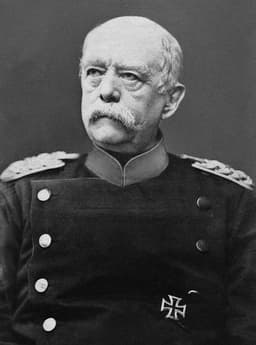
Otto von Bismarck
Politician · Modern
65.8Total
Basic Information
Born
1769
1815
Died
1821
1898
Era
Modern
Modern
Nationality
France
Germany
Occupation
General
Politician
Civilization
Western
Western
Score Comparison
Military (10%)
94.0
55.0
Political (20%)
72.0
85.0
Influence (20%)
40.0
82.0
Legacy (20%)
80.0
40.0
Leadership (15%)
78.0
80.0
Strategy (15%)
90.0
50.0
TOTAL
70.9
65.8
Napoleon Bonaparte — Complete Timeline
1799 AD
Coup of 18 BrumaireOther◆ Major
Napoleon Bonaparte, with support from his brother Lucien and key political figures, overthrew the Directory in a bloodless coup. He established the Consulate with himself as First Consul, effectively becoming the ruler of France. This event ended the French Revolution's most unstable period.
French RevolutionCoupRise to Power
Impact: regional
1804 AD
Promulgation of the Napoleonic CodeOther◆ Major
Napoleon enacted the Civil Code of the French, known as the Napoleonic Code, a comprehensive set of laws that replaced the fragmented feudal legal systems. The code established legal equality, protected property rights, and secularized law. It became the basis for legal systems in many European and world countries.
Legal ReformNapoleonic CodeCivil Law
Impact: globalconstructive
1805 AD
Battle of AusterlitzWar◆ Major
Napoleon's Grande Arm
Napoleonic WarsBattleDecisive Victory
Impact: global
1812 AD
Invasion of RussiaWar◆ Major
Napoleon led the Grande Arm
Napoleonic WarsInvasionDisaster
Impact: globaldestructive
1815 AD
Battle of WaterlooWar◆ Major
Napoleon's French army was defeated by the combined forces of the Duke of Wellington's Anglo-Allied army and Gebhard Leberecht von Bl
Napoleonic WarsBattleFinal Defeat
Impact: globaldestructive
Otto von Bismarck — Complete Timeline
1870 AD
Franco-Prussian WarWar
Bismarck provoked France into declaring war by editing the Ems Dispatch to appear insulting. The resulting conflict saw Prussia and its allies decisively defeat France, leading to the fall of Napoleon III, the capture of Paris, and the annexation of Alsace-Lorraine.
WarProvocationAnnexation
Impact: globaldestructive
1871 AD
Unification of Germany ProclaimedPolitical Action
Following the Franco-Prussian War, Bismarck orchestrated the proclamation of the German Empire in the Hall of Mirrors at Versailles. King Wilhelm I of Prussia was declared German Emperor, uniting the German states under Prussian leadership and establishing the Second Reich.
UnificationGerman EmpireNationalism
Impact: globalconstructive
1878 AD
Enactment of the Anti-Socialist LawsPolitical Action◆ Major
After two assassination attempts on Kaiser Wilhelm I, Bismarck pushed through laws banning socialist organizations, publications, and meetings. The laws remained in force until 1890, suppressing the Social Democratic Party while Bismarck simultaneously introduced welfare reforms to undercut its appeal.
RepressionSocialismWelfare State
Impact: nationaldestructive
Congress of BerlinPolitical Action◆ Major
Bismarck hosted the Congress of Berlin to revise the Treaty of San Stefano and resolve the Eastern Crisis. He acted as 'honest broker,' reducing Russian gains, granting independence to Romania, Serbia, and Montenegro, and placing Bosnia-Herzegovina under Austro-Hungarian administration.
DiplomacyBalkansBalance of Power
Impact: global
1883 AD
Establishment of the Welfare StateReform◆ Major
Bismarck introduced the Health Insurance Bill (1883), Accident Insurance Bill (1884), and Old Age and Disability Insurance Bill (1889). These laws created the first modern welfare state, providing workers with social security and aiming to reduce support for socialist movements.
Social ReformWelfareInsurance
Impact: globalprogressive
1890 AD
Dismissal as ChancellorPolitical Action◆ Major
Emperor Wilhelm II forced Bismarck to resign due to policy disagreements, particularly over anti-socialist laws and foreign policy. Bismarck's departure marked the end of an era, leading to a more aggressive German foreign policy and the eventual unraveling of his alliance system.
ResignationWilhelm IIPolicy Shift
Impact: global
Expert Analysis
Napoleon Bonaparte vs Otto von Bismarck: Historical Comparison
Napoleon Bonaparte and Otto von Bismarck were two of modern Europe’s most transformative figures, yet they operated in starkly different domains: Napoleon as a conquering general who reshaped France and the continent through military might, Bismarck as a pragmatic politician who unified Germany through diplomacy and calculated war.
Dimension Analysis
**Military: Napoleon Bonaparte 94 / Otto von Bismarck 55**
Napoleon revolutionized warfare with mass conscription, rapid maneuver, and decisive battles like Austerlitz, but his overreach led to ruin. Bismarck, though a master of timing, personally directed few battles and relied on generals like Moltke for execution.
**Political: Napoleon Bonaparte 75 / Otto von Bismarck 88**
Napoleon’s Napoleonic Code and administrative reforms modernized France but his authoritarian rule and imperial ambition alienated allies. Bismarck’s Realpolitik—manipulating alliances, isolating France, and crafting the German Empire—was a masterclass in statecraft.
**Influence: Napoleon Bonaparte 82 / Otto von Bismarck 80**
Napoleon spread nationalism and legal reforms across Europe, inspiring revolutions and military doctrines for generations. Bismarck’s balance-of-power system stabilized Europe for decades, but his legacy was eclipsed by the world wars he inadvertently enabled.
**Legacy: Napoleon Bonaparte 78 / Otto von Bismarck 72**
Napoleon remains a global symbol of ambition and military genius, but his final defeat and exile tarnish his story. Bismarck’s unified Germany endured, yet his aggressive nationalism and social insurance schemes left a mixed legacy of strength and fragility.
**Leadership: Napoleon Bonaparte 80 / Otto von Bismarck 82**
Napoleon’s charismatic, hands-on command inspired fervent loyalty but also hubris. Bismarck’s cold, calculating leadership—managing kings, parliaments, and foreign powers—was less glamorous but more sustainable.
Verdict
Napoleon Bonaparte leads overall (82 vs 74), driven by his overwhelming military and strategic dominance, even though Bismarck excelled politically.
FAQ
Q: Who ranks higher? A: Napoleon Bonaparte ranks higher due to his superior military and strategic scores, despite Bismarck’s edge in political and leadership dimensions.
Rankings
🥇
Napoleon BonaparteLeader
Mil: 94.0Pol: 72.0Inf: 40.0
70.9
🥈
Otto von Bismarck
Mil: 55.0Pol: 85.0Inf: 82.0
65.8
+5.1 behind
How This Comparison Works
Algorithm
Each figure is scored on 6 dimensions (0—100 scale) based on structured historical data: Military (10%), Political (20%), Influence (20%), Legacy (20%), Leadership (15%), Strategy (15%). The weighted total produces the final ranking.
Data Sources
Scores are computed from structured sub-indicators in the database. Scale factors adjust for era (Ancient ×0.85, Modern ×1.0) and civilization size (Eastern ×1.05, Other ×0.80) to account for differences in population and military scale.
Maximum 3 Figures
Comparisons are limited to 2—3 figures to ensure readability and statistical meaningfulness.
Error Margins
±5 points per dimension — Sub-scores are derived from historical records with inherent uncertainty. Two figures within 5 points on a dimension should be considered roughly equivalent in that area.
Total Score Accuracy
±3 points overall — The weighted combination of 6 dimensions produces a total score with approximately ±3 points of uncertainty. Differences of less than 3 points are not statistically significant— the figures are effectively tied.
Known Limitations
- Historical records are incomplete and uneven across civilizations
- Figures from oral-tradition societies may be underrepresented
- Occupation labels can misclassify multi-role figures
- Scores measure capability and impact, not moral character
- Quantitative scoring is a comparison tool, not absolute truth
Capability Radar
Military (10%) — Battles & Warfare
Battles
95
60
Win Rate
90
70
Expansion
95
80
Political (20%) — Governance & Reform
Reform
95
90
Diplomacy
80
95
Economy
85
80
Influence (20%) — Cultural & Global Reach
Cultural
85
65
Global
90
75
Legacy (20%) — Historical Impact
Historical
95
85
Longevity
90
70
Leadership (15%) — Power & Stability
Tenure
85
85
Stability
70
70
Strategy (15%) — Tactics & Innovation
Strategy
95
85
Tactics
98
55
Reform
92
75
Similar Comparisons
Comments & Discussion
Historian4676/16/2026
拿破仑和俾斯麦,在我眼中就是项羽和曹操的欧洲翻版。拿破仑像项羽,军事天才但不懂政治——垓下之围对应滑铁卢,都是性格缺陷导致的败局。俾斯麦更像曹操,挟天子以令诸侯,用威廉一世当汉献帝,搞铁血政策如同“奉天子以令不臣”。但西方评分总忽视一个关键:俾斯麦统一德国靠的是三次王朝战争,这和曹操“挟天子”后的北方统一异曲同工,却因没有直接带兵打仗而军事分被压到55。实际上,俾斯麦的战略布局比拿破仑更符合《孙子兵法》的“不战而屈人之兵”理想。西方历史评分太偏重个人冲锋陷阵了,不懂运筹帷幄的更高境界。
MasterHistorian66/16/2026
看了评分,拿破仑军事94分,政治75分,这明显是西方中心论的产物。按中国历史标准,拿破仑的军事成就其实有水分:他依赖的“大规模征兵”在中国战国时期就已成熟,白起长平之战坑杀四十万,动员比例不亚于拿破仑。拿破仑政治只有75分?他搞的《拿破仑法典》至今是大陆法系基石,而俾斯麦政治88分更多是权术而非制度贡献。我算了下:如果以制度创新权重加倍,拿破仑总分应不低于85。俾斯麦外交虽精,但三皇同盟维持了几年?七年就崩了,这叫“稳定欧洲”?量化不能只看表面数据。