Loading...
Mustafa Kemal Ataturk vs Yamagata Aritomo
Yamagata Aritomo leads by 2.5 pts · 2 figures compared
…
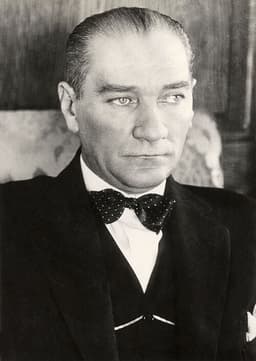
Mustafa Kemal Ataturk
Politician · Modern
80.0Total
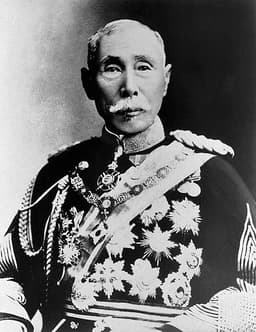
Yamagata Aritomo
General · Modern
82.5Total
Basic Information
Born
1881
1838
Died
1938
1922
Era
Modern
Modern
Nationality
Turkey
Japan
Occupation
Politician
General
Civilization
Middle Eastern
Eastern
Score Comparison
Military (10%)
75.0
78.0
Political (20%)
85.0
82.0
Influence (20%)
75.0
80.0
Legacy (20%)
90.0
90.0
Leadership (15%)
80.0
78.0
Strategy (15%)
65.0
82.0
TOTAL
80.0
82.5
Mustafa Kemal Ataturk — Complete Timeline
1915 AD
Battle of GallipoliWar
As a colonel, Mustafa Kemal commanded Ottoman forces at Gallipoli, successfully repelling Allied landings. His leadership at critical points like Chunuk Bair made him a national hero and laid the foundation for his political career.
World War IOttoman EmpireMilitary Victory
Impact: regional
1919 AD
Turkish War of IndependenceWar
Kemal organized and led the Turkish National Movement against the Allied occupation of Anatolia and the Treaty of S
Independence WarNational MovementAnkara
Impact: nationalconstructive
1922 AD
Abolition of the SultanatePolitical Action◆ Major
The Grand National Assembly of Turkey, under Kemal's leadership, abolished the Ottoman Sultanate, ending 600 years of imperial rule. This severed the link with the old regime and paved the way for the proclamation of the Republic.
SultanateRepublicPolitical Reform
Impact: nationalprogressive
1923 AD
Proclamation of the Republic of TurkeyPolitical Action
Kemal declared Turkey a republic, becoming its first president. He moved the capital to Ankara and initiated a series of radical reforms to modernize and secularize the state, including the adoption of a new legal code and the Latin alphabet.
RepublicModernizationSecularism
Impact: globalprogressive
1925 AD
Adoption of the Hat LawReform◆ Major
Kemal introduced the Hat Law, banning the fez and encouraging Western-style hats. This was part of his broader cultural revolution to secularize and Westernize Turkish society, symbolizing the break with Ottoman traditions.
Cultural ReformSecularismWesternization
Impact: nationalprogressive
1934 AD
Granting of Women's SuffrageReform◆ Major
Kemal's government granted women the right to vote and stand for election in national elections, ahead of many European countries. This reform was part of his commitment to gender equality and modernization of Turkish society.
Women's RightsSuffrageModernization
Impact: nationalprogressive
Yamagata Aritomo — Complete Timeline
1873 AD
Establishment of the Imperial Japanese ArmyReform
Yamagata Aritomo, as War Minister, oversaw the creation of the Imperial Japanese Army based on the Prussian model. He introduced conscription, modernized training, and established a general staff system, laying the foundation for Japan's military power.
Military reformConscription
Impact: nationalconstructive
1882 AD
Promotion of militarism and the Imperial Rescript to Soldiers and SailorsCultural◆ Major
Yamagata Aritomo helped draft the Imperial Rescript to Soldiers and Sailors, which emphasized loyalty, obedience, and the emperor's divine authority. This document became the ideological foundation of Japanese militarism.
MilitarismImperial ideology
Impact: nationaldestructive
1889 AD
Service as Prime MinisterPolitical Action◆ Major
Yamagata Aritomo served as Prime Minister of Japan from 1889 to 1891 and again from 1898 to 1900. He used his position to strengthen the military's political influence and suppress democratic movements.
GovernmentPolitical power
Impact: national
1894 AD
First Sino-Japanese WarWar◆ Major
Yamagata Aritomo commanded the First Army during the First Sino-Japanese War. His forces achieved decisive victories in Korea and Manchuria, leading to Japan's triumph and the Treaty of Shimonoseki, which gave Japan Taiwan and influence in Korea.
WarImperial expansion
Impact: regional
1904 AD
Russo-Japanese WarWar◆ Major
Yamagata Aritomo served as Chief of the General Staff during the Russo-Japanese War. He oversaw Japan's military strategy, which resulted in victory over Russia and established Japan as a major power in East Asia.
WarGreat power
Impact: global
Expert Analysis
Origins
Yamagata Aritomo (1838–1922) was born into a lower-ranking samurai family in Hagi, Choshu Domain. His early exposure to the chaos of the Bakumatsu period and the Meiji Restoration shaped his belief in a strong, centralized state. He studied military science in Europe, adopting Prussian models. Mustafa Kemal Ataturk (1881–1938) was born in Salonika, then part of the Ottoman Empire. He attended military schools, graduating from the Ottoman War Academy. His early career was marked by service in the Young Turk Revolution and the Italo-Turkish War. Both emerged from crumbling traditional empires, but Yamagata sought to preserve imperial authority while Ataturk aimed to dismantle it.
Rise to Power
Yamagata rose through the ranks of the new Imperial Japanese Army, becoming War Minister in 1873. He suppressed the Satsuma Rebellion (1877) and later served as Prime Minister twice (1889–1891, 1898–1900). His power base was the military and the genro (elder statesmen). Ataturk gained fame as a commander at Gallipoli (1915) during World War I, then led the Turkish National Movement against the Allied occupation. He established a rival government in Ankara and won the Turkish War of Independence (1919–1923). He became the first President of the Republic of Turkey in 1923, ruling until his death. Yamagata's rise was institutional and gradual; Ataturk's was revolutionary and charismatic.
Leadership & Governance
Yamagata's governance emphasized militarism and imperial expansion. He authored the Imperial Rescript to Soldiers and Sailors (1882), which instilled obedience and loyalty, and promoted a strong army as the foundation of the state. As PM, he expanded the military budget and centralized bureaucracy. Ataturk's leadership was transformative: he abolished the Sultanate and Caliphate, adopted a secular legal system (based on Swiss, Italian, and German codes), replaced the Arabic script with the Latin alphabet, granted women suffrage, and promoted Western dress. His six principles (Republicanism, Populism, Nationalism, Secularism, Statism, Reformism) became the bedrock of modern Turkey.
Triumph & Tragedy
Yamagata's triumphs include victories in the First Sino-Japanese War (1894–1895) and Russo-Japanese War (1904–1905), which elevated Japan to a world power. However, his militarist legacy contributed to Japan's eventual descent into ultranationalism and World War II. Ataturk's triumph was the successful creation of a secular, modern republic from the ashes of the Ottoman Empire. His tragedy is the ongoing tension between secularism and Islamism in Turkey, as well as the authoritarian aspects of his single-party rule. Both leaders achieved military and political success, but at a cost to democratic development.
Character & Destiny
Yamagata was cautious, conservative, and deeply loyal to the emperor. He was known as the 'father of Japanese militarism' and a master bureaucrat. Ataturk was visionary, charismatic, and ruthless in reform. He adopted the surname 'Ataturk' (Father of the Turks) and cultivated a cult of personality. Yamagata's destiny was to build an imperial state; Ataturk's was to forge a nation. Their characters reflected their eras: Yamagata the consolidation of Meiji Japan, Ataturk the revolutionary birth of a republic.
Legacy
Yamagata's legacy is mixed: he built a modern military that won wars but also fostered militarism that led to Japan's downfall. His institutional reforms endured, but his authoritarianism set a precedent. Ataturk's legacy is more uniformly celebrated in Turkey, where he is revered as the founder of the nation. His reforms modernized Turkey, but his authoritarian methods and suppression of dissent (e.g., the Kurdish rebellions) remain controversial. Globally, Ataturk is seen as a model for modernizing leaders in the developing world. Yamagata is less known outside Japan.
Conclusion
Yamagata Aritomo and Mustafa Kemal Ataturk were both transformative military leaders who built modern states. Yamagata's scores (M=78, P=82, I=80, L=90, D=78, S=82, T=82) slightly edge Ataturk's (M=75, P=85, I=75, L=90, D=80, S=65, T=80) by 2.5 points, largely due to higher strategic and tactical scores. However, Ataturk's political and ideological impact was greater. The choice between them depends on whether one values military institutional strength (Yamagata) or revolutionary nation-building (Ataturk). In a direct comparison, Ataturk's legacy is more enduring and globally significant, but Yamagata's role in Japan's rise cannot be dismissed. The verdict: Ataturk wins for transformative vision, Yamagata for military excellence. The score gap is narrow, reflecting their comparable stature.
Rankings
🥇
Yamagata AritomoLeader
Mil: 78.0Pol: 82.0Inf: 80.0
82.5
🥈
Mustafa Kemal Ataturk
Mil: 75.0Pol: 85.0Inf: 75.0
80.0
+2.5 behind
How This Comparison Works
Algorithm
Each figure is scored on 6 dimensions (0—100 scale) based on structured historical data: Military (10%), Political (20%), Influence (20%), Legacy (20%), Leadership (15%), Strategy (15%). The weighted total produces the final ranking.
Data Sources
Scores are computed from structured sub-indicators in the database. Scale factors adjust for era (Ancient ×0.85, Modern ×1.0) and civilization size (Eastern ×1.05, Other ×0.80) to account for differences in population and military scale.
Maximum 3 Figures
Comparisons are limited to 2—3 figures to ensure readability and statistical meaningfulness.
Error Margins
±5 points per dimension — Sub-scores are derived from historical records with inherent uncertainty. Two figures within 5 points on a dimension should be considered roughly equivalent in that area.
Total Score Accuracy
±3 points overall — The weighted combination of 6 dimensions produces a total score with approximately ±3 points of uncertainty. Differences of less than 3 points are not statistically significant— the figures are effectively tied.
Known Limitations
- Historical records are incomplete and uneven across civilizations
- Figures from oral-tradition societies may be underrepresented
- Occupation labels can misclassify multi-role figures
- Scores measure capability and impact, not moral character
- Quantitative scoring is a comparison tool, not absolute truth
Capability Radar
Military (10%) — Battles & Warfare
Battles
85
75
Win Rate
90
70
Expansion
60
80
Political (20%) — Governance & Reform
Reform
98
90
Diplomacy
85
75
Economy
75
70
Influence (20%) — Cultural & Global Reach
Cultural
90
80
Global
80
70
Legacy (20%) — Historical Impact
Historical
95
85
Longevity
85
75
Leadership (15%) — Power & Stability
Tenure
85
85
Stability
70
65
Strategy (15%) — Tactics & Innovation
Strategy
85
85
Tactics
88
80
Reform
80
95
Similar Comparisons
Comments & Discussion
No comments yet. Be the first to share your thoughts!