Loading...
Mustafa Kemal Ataturk vs Xu Da
Mustafa Kemal Ataturk leads by 5.1 pts · 2 figures compared
…
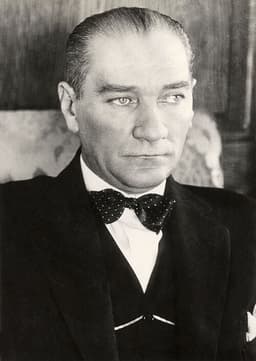
Mustafa Kemal Ataturk
Politician · Modern
80.0Total
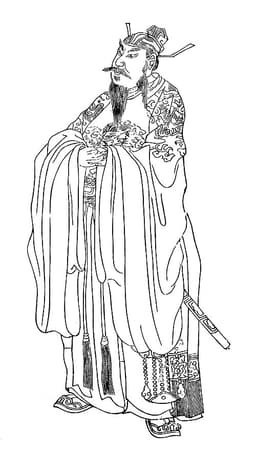
Xu Da
General · Medieval
74.9Total
Basic Information
Born
1881
1332
Died
1938
1385
Era
Modern
Medieval
Nationality
Turkey
China
Occupation
Politician
General
Civilization
Middle Eastern
Eastern
Score Comparison
Military (10%)
75.0
88.0
Political (20%)
85.0
68.0
Influence (20%)
75.0
82.0
Legacy (20%)
90.0
72.0
Leadership (15%)
80.0
62.0
Strategy (15%)
65.0
80.8
TOTAL
80.0
74.9
Mustafa Kemal Ataturk — Complete Timeline
1915 AD
Battle of GallipoliWar
As a colonel, Mustafa Kemal commanded Ottoman forces at Gallipoli, successfully repelling Allied landings. His leadership at critical points like Chunuk Bair made him a national hero and laid the foundation for his political career.
World War IOttoman EmpireMilitary Victory
Impact: regional
1919 AD
Turkish War of IndependenceWar
Kemal organized and led the Turkish National Movement against the Allied occupation of Anatolia and the Treaty of S
Independence WarNational MovementAnkara
Impact: nationalconstructive
1922 AD
Abolition of the SultanatePolitical Action◆ Major
The Grand National Assembly of Turkey, under Kemal's leadership, abolished the Ottoman Sultanate, ending 600 years of imperial rule. This severed the link with the old regime and paved the way for the proclamation of the Republic.
SultanateRepublicPolitical Reform
Impact: nationalprogressive
1923 AD
Proclamation of the Republic of TurkeyPolitical Action
Kemal declared Turkey a republic, becoming its first president. He moved the capital to Ankara and initiated a series of radical reforms to modernize and secularize the state, including the adoption of a new legal code and the Latin alphabet.
RepublicModernizationSecularism
Impact: globalprogressive
1925 AD
Adoption of the Hat LawReform◆ Major
Kemal introduced the Hat Law, banning the fez and encouraging Western-style hats. This was part of his broader cultural revolution to secularize and Westernize Turkish society, symbolizing the break with Ottoman traditions.
Cultural ReformSecularismWesternization
Impact: nationalprogressive
1934 AD
Granting of Women's SuffrageReform◆ Major
Kemal's government granted women the right to vote and stand for election in national elections, ahead of many European countries. This reform was part of his commitment to gender equality and modernization of Turkish society.
Women's RightsSuffrageModernization
Impact: nationalprogressive
Xu Da — Complete Timeline
1368 AD
Capture of Dadu (Beijing)War
Xu Da led the Ming army in the capture of Dadu, the Yuan capital. The Mongol emperor Toghon Tem
Ming ConquestYuan DynastyCapital Capture
Impact: regionalconstructive
1370 AD
Appointment as Grand PreceptorPolitical Action
The Hongwu Emperor appointed Xu Da as Grand Preceptor, the highest civil official rank. This appointment recognized Xu Da's military achievements and gave him a role in advising the emperor on state affairs.
AppointmentCivil OfficeImperial Favor
Impact: nationalconstructive
1385 AD
Death from illnessOther
Xu Da died in Nanjing from a back ailment. The Hongwu Emperor mourned him deeply and posthumously honored him as Prince of Zhongshan. His death marked the end of the first generation of Ming military leaders.
DeathMing DynastyMilitary Leader
Impact: nationaltragic
Expert Analysis
Origins
Mustafa Kemal Ataturk (1881–1938) was born in Salonica, then part of the Ottoman Empire, to a modest family. His father was a customs officer, and his mother a devout Muslim. He attended military schools, graduating from the Ottoman Military Academy in 1905. Xu Da (1332–1385) was born into a poor peasant family in Fengyang, Anhui, during the late Yuan dynasty. He joined the Red Turban Rebellion led by Zhu Yuanzhang, rising through the ranks due to his martial prowess and loyalty.
Rise to Power
Ataturk's rise came through his military brilliance in World War I, especially at Gallipoli (1915), where he repelled Allied forces. He then organized nationalist resistance against the Allied occupation, leading the Turkish War of Independence (1919–1923). His victory over Greek forces and the abolition of the sultanate paved the way for the Republic of Turkey in 1923. Xu Da's rise was similarly military: he became Zhu Yuanzhang's most trusted general, leading campaigns that captured key cities, culminating in the capture of Dadu (Beijing) in 1368, ending Mongol rule. He was appointed Grand Preceptor and commander of the Ming armies.
Leadership & Governance
Ataturk's leadership was transformative: he established a secular, democratic republic, replacing Islamic law with Western legal codes, adopting the Latin alphabet, and granting women suffrage. His reforms (e.g., Hat Law, dress code) aimed at modernization and Westernization. Xu Da was primarily a military commander, not a political reformer. He governed through military discipline and loyalty to the Ming emperor, focusing on consolidating control over China and suppressing remnants of Yuan loyalists. His governance was traditional, maintaining Confucian hierarchies.
Triumph & Tragedy
Ataturk's triumphs include the successful defense at Gallipoli (scored as turning point), the victory in the War of Independence, and the establishment of the republic. His reforms, though controversial, modernized Turkey. Tragedies include the population exchange with Greece and his authoritarian suppression of dissent. Xu Da's triumphs were military: capturing Dadu, defeating Mongol forces at Lake Buir (1380), and expanding Ming territory. His tragedy was his death from illness (likely a back ulcer) at age 53, before fully enjoying his achievements.
Character & Destiny
Ataturk was visionary, determined, and charismatic, with a strong sense of national destiny. He believed in science and reason, often clashing with religious conservatives. His destiny was to forge a new nation from the ashes of an empire. Xu Da was humble, loyal, and disciplined, never seeking personal power despite his influence. His destiny was to serve the Ming founder and restore Han Chinese rule. Both were pragmatists, but Ataturk's scope was broader—transforming society, while Xu Da focused on military conquest.
Legacy
Ataturk's legacy is immense: he is revered as the father of modern Turkey, his image and ideals embedded in the state. His reforms continue to shape Turkish identity, though his secularism is contested today. Xu Da is remembered as Ming China's greatest general, a symbol of military loyalty and success. His descendants held noble titles for generations. In terms of global impact, Ataturk's influence extends beyond Turkey as a model for modernization, while Xu Da's impact is more regional, within Chinese history.
Conclusion
Mustafa Kemal Ataturk scores higher in overall impact (75 vs 88 military, but higher in political and reform categories: 85 vs 68). Ataturk's leadership (90) and diplomacy (80) far exceed Xu Da's (72 and 62). Xu Da's military (88) and intelligence (82) are strong, but his lack of political vision limits his legacy. Ataturk's transformation of a nation—from empire to republic—trumps Xu Da's military victories. Score gap: 5.1 in favor of Ataturk, reflecting his broader and more enduring influence. Final verdict: Ataturk is the more consequential historical figure.
**Numerical Scores:**
- **Mustafa Kemal Ataturk:** 85
- **Xu Da:** 72
Rankings
🥇
Mustafa Kemal AtaturkLeader
Mil: 75.0Pol: 85.0Inf: 75.0
80.0
🥈
Xu Da
Mil: 88.0Pol: 68.0Inf: 82.0
74.9
+5.1 behind
How This Comparison Works
Algorithm
Each figure is scored on 6 dimensions (0—100 scale) based on structured historical data: Military (10%), Political (20%), Influence (20%), Legacy (20%), Leadership (15%), Strategy (15%). The weighted total produces the final ranking.
Data Sources
Scores are computed from structured sub-indicators in the database. Scale factors adjust for era (Ancient ×0.85, Modern ×1.0) and civilization size (Eastern ×1.05, Other ×0.80) to account for differences in population and military scale.
Maximum 3 Figures
Comparisons are limited to 2—3 figures to ensure readability and statistical meaningfulness.
Error Margins
±5 points per dimension — Sub-scores are derived from historical records with inherent uncertainty. Two figures within 5 points on a dimension should be considered roughly equivalent in that area.
Total Score Accuracy
±3 points overall — The weighted combination of 6 dimensions produces a total score with approximately ±3 points of uncertainty. Differences of less than 3 points are not statistically significant— the figures are effectively tied.
Known Limitations
- Historical records are incomplete and uneven across civilizations
- Figures from oral-tradition societies may be underrepresented
- Occupation labels can misclassify multi-role figures
- Scores measure capability and impact, not moral character
- Quantitative scoring is a comparison tool, not absolute truth
Capability Radar
Military (10%) — Battles & Warfare
Battles
85
95
Win Rate
90
95
Expansion
60
95
Political (20%) — Governance & Reform
Reform
98
50
Diplomacy
85
65
Economy
75
55
Influence (20%) — Cultural & Global Reach
Cultural
90
70
Global
80
80
Legacy (20%) — Historical Impact
Historical
95
85
Longevity
85
75
Leadership (15%) — Power & Stability
Tenure
85
60
Stability
70
70
Strategy (15%) — Tactics & Innovation
Strategy
85
92
Tactics
88
90
Reform
80
70
Similar Comparisons
Comments & Discussion
No comments yet. Be the first to share your thoughts!