Loading...
Mustafa Kemal Ataturk vs Winston Churchill
Mustafa Kemal Ataturk leads by 8.2 pts · 2 figures compared
…
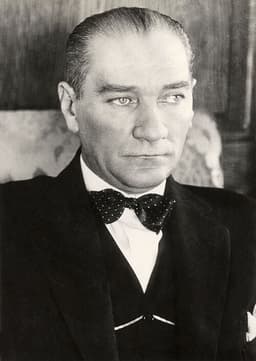
Mustafa Kemal Ataturk
Politician · Modern
80.0Total
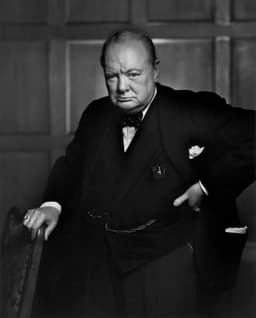
Winston Churchill
Politician · Modern
71.8Total
Basic Information
Born
1881
1874
Died
1938
1965
Era
Modern
Modern
Nationality
Turkey
United Kingdom
Occupation
Politician
Politician
Civilization
Middle Eastern
Western
Score Comparison
Military (10%)
75.0
55.0
Political (20%)
85.0
78.0
Influence (20%)
75.0
75.0
Legacy (20%)
90.0
68.0
Leadership (15%)
80.0
82.0
Strategy (15%)
65.0
65.0
TOTAL
80.0
71.8
Mustafa Kemal Ataturk — Complete Timeline
1915 AD
Battle of GallipoliWar
As a colonel, Mustafa Kemal commanded Ottoman forces at Gallipoli, successfully repelling Allied landings. His leadership at critical points like Chunuk Bair made him a national hero and laid the foundation for his political career.
World War IOttoman EmpireMilitary Victory
Impact: regional
1919 AD
Turkish War of IndependenceWar
Kemal organized and led the Turkish National Movement against the Allied occupation of Anatolia and the Treaty of S
Independence WarNational MovementAnkara
Impact: nationalconstructive
1922 AD
Abolition of the SultanatePolitical Action◆ Major
The Grand National Assembly of Turkey, under Kemal's leadership, abolished the Ottoman Sultanate, ending 600 years of imperial rule. This severed the link with the old regime and paved the way for the proclamation of the Republic.
SultanateRepublicPolitical Reform
Impact: nationalprogressive
1923 AD
Proclamation of the Republic of TurkeyPolitical Action
Kemal declared Turkey a republic, becoming its first president. He moved the capital to Ankara and initiated a series of radical reforms to modernize and secularize the state, including the adoption of a new legal code and the Latin alphabet.
RepublicModernizationSecularism
Impact: globalprogressive
1925 AD
Adoption of the Hat LawReform◆ Major
Kemal introduced the Hat Law, banning the fez and encouraging Western-style hats. This was part of his broader cultural revolution to secularize and Westernize Turkish society, symbolizing the break with Ottoman traditions.
Cultural ReformSecularismWesternization
Impact: nationalprogressive
1934 AD
Granting of Women's SuffrageReform◆ Major
Kemal's government granted women the right to vote and stand for election in national elections, ahead of many European countries. This reform was part of his commitment to gender equality and modernization of Turkish society.
Women's RightsSuffrageModernization
Impact: nationalprogressive
Winston Churchill — Complete Timeline
1940 AD
Appointed Prime Minister of the United KingdomPolitical Action◆ Major
On May 10, 1940, Winston Churchill became Prime Minister of the United Kingdom, replacing Neville Chamberlain. His appointment came as Nazi Germany invaded France and the Low Countries, and Churchill formed a coalition government to lead Britain through World War II.
World War IILeadershipCoalition Government
Impact: globalconstructive
Delivered the 'We Shall Fight on the Beaches' SpeechOther◆ Major
On June 4, 1940, Churchill delivered a speech to the House of Commons following the evacuation of British forces from Dunkirk. He declared that Britain would fight on the beaches, landing grounds, fields, streets, and hills, and never surrender, rallying British morale during the darkest days of World War II.
World War IIOratoryMorale
Impact: nationalconstructive
1941 AD
Signed the Atlantic CharterOther◆ Major
On August 14, 1941, Churchill and U.S. President Franklin D. Roosevelt signed the Atlantic Charter aboard HMS Prince of Wales. This joint declaration outlined post-war goals including self-determination, disarmament, and free trade, and became a foundational document for the Allied war aims and the United Nations.
World War IIAllied CooperationPost-war Planning
Impact: globalconstructive
1945 AD
Attended the Yalta ConferenceOther◆ Major
In February 1945, Churchill attended the Yalta Conference with Roosevelt and Stalin to discuss the post-war reorganization of Europe. The conference agreed on the division of Germany, the establishment of the United Nations, and the fate of Eastern Europe, though Churchill later expressed regret over concessions to Stalin.
World War IIPost-war SettlementBig Three
Impact: global
1946 AD
Delivered the 'Iron Curtain' SpeechOther◆ Major
On March 5, 1946, Churchill delivered a speech at Westminster College in Fulton, Missouri, where he stated that an 'iron curtain' had descended across Europe from Stettin to Trieste. This speech is widely regarded as marking the beginning of the Cold War, as it highlighted the division between Soviet-controlled Eastern Europe and the West.
Cold WarSoviet UnionDivision of Europe
Impact: globaldestructive
1953 AD
Awarded the Nobel Prize in LiteratureOther◆ Major
In 1953, Churchill was awarded the Nobel Prize in Literature for his historical writings, particularly 'The Second World War' and 'A History of the English-Speaking Peoples'. The Nobel committee cited his mastery of historical and biographical description as well as his brilliant oratory in defending human values.
LiteratureNobel PrizeHistorical Writing
Impact: nationalconstructive
Expert Analysis
Winston Churchill vs Mustafa Kemal Ataturk
# The Architect and the Lion: How Two Titans Forged Their Nations
In the winter of 1941, as German bombs rained on London, Winston Churchill stood in the smoking ruins of the House of Commons and declared, “We shall never surrender.” Half a continent away, in Ankara, Mustafa Kemal Atatürk had been dead for three years, but the nation he built was already proving his greatest prophecy: that Turkey would stand independent, modern, and unshakable. One man saved an empire from extinction; the other buried an empire to birth a republic. Both were giants, but they moved through history in opposite directions—Churchill defending the old world, Atatürk creating a new one.
Origins
Churchill was born into the British aristocracy, the grandson of a duke, raised in the gilded halls of Blenheim Palace. His father, Lord Randolph Churchill, was a brilliant but erratic politician; his mother, an American heiress. Young Winston grew up with a sense of entitlement and a hunger for glory, but also with a deep, almost romantic attachment to the British Empire. He was a poor student, rebellious and lonely, finding his education in the army and in the far-flung corners of the empire—India, Sudan, South Africa—where he chased battles as a war correspondent and a cavalry officer.
Atatürk, born Mustafa Kemal in Salonika (then part of the Ottoman Empire), came from a very different world. His father was a minor customs official who died when Mustafa was young; his mother was a devout Muslim who wanted him to become a religious scholar. Instead, he chose a military career, driven by a fierce intelligence and a growing conviction that the Ottoman Empire was a dying, corrupt institution. Where Churchill loved tradition, Atatürk despised it. Where Churchill felt loyalty to crown and empire, Atatürk felt loyalty only to the Turkish nation—a nation that, in his youth, did not yet exist.
Rise to Power
Churchill’s path was erratic. He entered Parliament at twenty-five, switched parties twice, held cabinet posts, and made a name as a reformer—but also as a man of poor judgment. His disastrous role in the Gallipoli campaign of 1915 nearly destroyed his career. The same campaign, however, made Mustafa Kemal a hero. As a young colonel, Kemal correctly predicted where the Allied landings would come, held the line at Chunuk Bair, and turned a potential Ottoman collapse into a costly Allied retreat. The irony is striking: Churchill’s greatest failure was Atatürk’s greatest triumph.
After Gallipoli, Churchill spent years in the political wilderness, writing, painting, and warning about the rise of Nazi Germany. Atatürk, meanwhile, seized the moment after World War I, when the Ottoman Empire lay defeated and occupied. He organized the Turkish National Movement, defied the Sultan’s government, and fought a brutal war of independence against Greeks, Armenians, and the Allied powers. By 1922, he had expelled foreign armies, abolished the sultanate, and stood ready to remake his country.
Leadership & Governance
Churchill’s leadership was forged in crisis. When he became Prime Minister in May 1940, Britain faced its darkest hour. He offered not plans or policies, but will. His speeches—“blood, toil, tears and sweat,” “their finest hour,” “we shall fight on the beaches”—were acts of national creation. He rallied a people on the edge of defeat, not by promising victory, but by making defeat unthinkable. His military strategy was often flawed—he loved grand, peripheral campaigns—but his political instinct was near-perfect. He held together a fragile coalition, courted Roosevelt, and outlasted Hitler.
Atatürk was a different kind of leader: not a defender, but a builder. As president of the new Republic of Turkey, he launched a revolution from above. He abolished the caliphate, replaced Islamic law with a Swiss civil code, adopted the Latin alphabet, banned the fez, gave women the vote (in 1934, years before France or Italy), and pushed industrialization. He ruled with an iron hand—there was no room for opposition—but his goal was not personal power; it was to drag a traditional society into the modern world. Where Churchill inspired through words, Atatürk transformed through laws.
Triumph & Tragedy
Churchill’s triumph was the survival of Britain. But his tragedy came immediately after: in 1945, with victory in sight, the British people voted him out of office. He had won the war; they wanted someone else to build the peace. He returned as Prime Minister in 1951, old and ill, and presided over the slow dismantling of the empire he had spent his life defending. He died in 1965, a national icon, but a man out of time.
Atatürk’s triumph was the creation of a nation. He died in 1938 at age fifty-seven, worn out by a lifetime of war and reform. His tragedy was that he left no clear successor, and his single-party state eventually gave way to military coups and democratic backsliding. But unlike Churchill, he did not live to see his legacy eroded. He died at the peak of his power, mourned by a nation that worshipped him.
Character & Destiny
Churchill was a man of immense ego, romanticism, and melancholy. He suffered from what he called the “black dog” of depression. He drank heavily, smoked constantly, and worked through the night. He was a Victorian who lived into the atomic age, a liberal imperialist who loved empire but hated tyranny. His character drove him to resist Hitler when others sought appeasement—but also to defend British colonialism when the world had turned against it.
Atatürk was austere, disciplined, and coldly rational. He drank (he loved rakı), but he did not indulge in Churchill’s grand emotions. He was a revolutionary who believed that a nation must be remade from the ground up—language, law, dress, religion, everything. His character was shaped by a single conviction: that the Ottoman past was a dead weight, and that Turkey must become European, secular, and modern or perish.
Legacy
Churchill’s legacy is the preservation of liberal democracy in Europe. His words remain a standard of political courage. But his reputation has been complicated by his views on race, empire, and India. He is remembered as a flawed hero—indispensable in 1940, but increasingly contested in the twenty-first century.
Atatürk’s legacy is the Republic of Turkey itself. His face is on every banknote, his statue in every town square. He is remembered as the father of the nation, and his reforms have proven remarkably durable. But his authoritarian methods and cult of personality have also left a difficult inheritance—a democracy that struggles to balance secularism with religious freedom, and a nationalism that sometimes resists pluralism.
Conclusion
One man saved a civilization; the other created one. Churchill looked backward with love, Atatürk forward with fire. Both were men of war who became architects of peace, but they built on different foundations: Churchill on tradition, Atatürk on rupture. Perhaps the deepest difference is this: Churchill’s Britain could have survived without him—it had institutions, a parliament, a rule of law. Atatürk’s Turkey could not. He was the institution. That is why his name is still spoken with reverence in every village, and why Churchill’s is debated in every classroom. Both shaped the twentieth century, but only one was his country’s sole foundation.
Rankings
🥇
Mustafa Kemal AtaturkLeader
Mil: 75.0Pol: 85.0Inf: 75.0
80.0
🥈
Winston Churchill
Mil: 55.0Pol: 78.0Inf: 75.0
71.8
+8.2 behind
How This Comparison Works
Algorithm
Each figure is scored on 6 dimensions (0—100 scale) based on structured historical data: Military (10%), Political (20%), Influence (20%), Legacy (20%), Leadership (15%), Strategy (15%). The weighted total produces the final ranking.
Data Sources
Scores are computed from structured sub-indicators in the database. Scale factors adjust for era (Ancient ×0.85, Modern ×1.0) and civilization size (Eastern ×1.05, Other ×0.80) to account for differences in population and military scale.
Maximum 3 Figures
Comparisons are limited to 2—3 figures to ensure readability and statistical meaningfulness.
Error Margins
±5 points per dimension — Sub-scores are derived from historical records with inherent uncertainty. Two figures within 5 points on a dimension should be considered roughly equivalent in that area.
Total Score Accuracy
±3 points overall — The weighted combination of 6 dimensions produces a total score with approximately ±3 points of uncertainty. Differences of less than 3 points are not statistically significant— the figures are effectively tied.
Known Limitations
- Historical records are incomplete and uneven across civilizations
- Figures from oral-tradition societies may be underrepresented
- Occupation labels can misclassify multi-role figures
- Scores measure capability and impact, not moral character
- Quantitative scoring is a comparison tool, not absolute truth
Capability Radar
Military (10%) — Battles & Warfare
Battles
85
55
Win Rate
90
60
Expansion
60
40
Political (20%) — Governance & Reform
Reform
98
70
Diplomacy
85
85
Economy
75
60
Influence (20%) — Cultural & Global Reach
Cultural
90
85
Global
80
85
Legacy (20%) — Historical Impact
Historical
95
90
Longevity
85
80
Leadership (15%) — Power & Stability
Tenure
85
75
Stability
70
70
Strategy (15%) — Tactics & Innovation
Strategy
85
85
Tactics
88
65
Reform
80
70
Similar Comparisons
Comments & Discussion
No comments yet. Be the first to share your thoughts!