Loading...
Mustafa Kemal Ataturk vs Turenne
Mustafa Kemal Ataturk leads by 4.2 pts · 2 figures compared
…
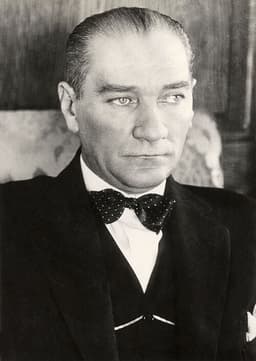
Mustafa Kemal Ataturk
Politician · Modern
80.0Total
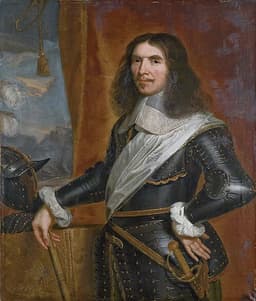
Turenne
General · Modern
75.8Total
Basic Information
Born
1881
1611
Died
1938
1675
Era
Modern
Modern
Nationality
Turkey
France
Occupation
Politician
General
Civilization
Middle Eastern
Western
Score Comparison
Military (10%)
75.0
79.9
Political (20%)
85.0
72.0
Influence (20%)
75.0
88.0
Legacy (20%)
90.0
65.0
Leadership (15%)
80.0
77.2
Strategy (15%)
65.0
72.0
TOTAL
80.0
75.8
Mustafa Kemal Ataturk — Complete Timeline
1915 AD
Battle of GallipoliWar
As a colonel, Mustafa Kemal commanded Ottoman forces at Gallipoli, successfully repelling Allied landings. His leadership at critical points like Chunuk Bair made him a national hero and laid the foundation for his political career.
World War IOttoman EmpireMilitary Victory
Impact: regional
1919 AD
Turkish War of IndependenceWar
Kemal organized and led the Turkish National Movement against the Allied occupation of Anatolia and the Treaty of S
Independence WarNational MovementAnkara
Impact: nationalconstructive
1922 AD
Abolition of the SultanatePolitical Action◆ Major
The Grand National Assembly of Turkey, under Kemal's leadership, abolished the Ottoman Sultanate, ending 600 years of imperial rule. This severed the link with the old regime and paved the way for the proclamation of the Republic.
SultanateRepublicPolitical Reform
Impact: nationalprogressive
1923 AD
Proclamation of the Republic of TurkeyPolitical Action
Kemal declared Turkey a republic, becoming its first president. He moved the capital to Ankara and initiated a series of radical reforms to modernize and secularize the state, including the adoption of a new legal code and the Latin alphabet.
RepublicModernizationSecularism
Impact: globalprogressive
1925 AD
Adoption of the Hat LawReform◆ Major
Kemal introduced the Hat Law, banning the fez and encouraging Western-style hats. This was part of his broader cultural revolution to secularize and Westernize Turkish society, symbolizing the break with Ottoman traditions.
Cultural ReformSecularismWesternization
Impact: nationalprogressive
1934 AD
Granting of Women's SuffrageReform◆ Major
Kemal's government granted women the right to vote and stand for election in national elections, ahead of many European countries. This reform was part of his commitment to gender equality and modernization of Turkish society.
Women's RightsSuffrageModernization
Impact: nationalprogressive
Turenne — Complete Timeline
1639 AD
Campaign in the ValtellinaWar
Turenne commanded French forces in the Valtellina during the Thirty Years' War. He captured several fortresses and secured the strategic pass for France, demonstrating his early military skill.
Thirty Years' WarAlpsEarly Career
Impact: regional
1658 AD
Battle of the DunesWar◆ Major
Turenne commanded the French army to victory over the Spanish at the Battle of the Dunes near Dunkirk. The victory led to the capture of Dunkirk and forced Spain to seek peace, ending the Franco-Spanish War.
Franco-Spanish WarDunkirkMilitary Victory
Impact: regional
1674 AD
Battle of the RhineWar◆ Major
Turenne led a French army across the Rhine in winter, surprising the Imperial forces. He defeated the Austrians at the Battle of Entzheim and later at Turckheim, securing French control of Alsace.
Franco-Dutch WarAlsaceWinter Campaign
Impact: regional
Battle of the SambreWar◆ Major
Turenne defeated the Spanish and Dutch forces at the Battle of Seneffe. The battle was costly but prevented the Allies from invading France. It demonstrated Turenne's tactical skill in defensive warfare.
Franco-Dutch WarDefensive BattleTactics
Impact: regional
1675 AD
Death of TurenneWar◆ Major
Turenne was killed by a cannonball while reconnoitering enemy positions at the Battle of Sasbach. His death was a major loss for France. He was buried with honors in the Basilica of Saint-Denis.
Death in BattleFranco-Dutch WarMilitary Loss
Impact: nationaltragic
Expert Analysis
Origins
Mustafa Kemal Atatürk (1881–1938) was born in Salonica, then part of the Ottoman Empire, to a modest family. His military education shaped his nationalist ideals. Henri de La Tour d'Auvergne, Vicomte de Turenne (1611–1675), was born into French nobility in Sedan, destined for a military career. Atatürk's origins were humble; Turenne's were privileged.
Rise to Power
Atatürk rose through Ottoman ranks, gaining fame at Gallipoli (1915) where he repelled Allied forces. He then led the Turkish National Movement against foreign occupation, culminating in the Turkish War of Independence (1919–1923). Turenne served under Louis XIII and Louis XIV, distinguishing himself in the Thirty Years' War and the Franco-Spanish War. His victory at the Battle of the Dunes (1658) secured French dominance.
Leadership & Governance
Atatürk's leadership blended military prowess with political vision. As president, he enacted sweeping reforms: secularization, legal codes (adopting Swiss civil law), women's suffrage, and the Latin alphabet. He centralized power but fostered a democratic framework. Turenne was a pure military commander, known for strategic brilliance and loyalty to the crown. He never held political office but influenced French military doctrine.
Triumph & Tragedy
Atatürk's triumphs include the establishment of the Republic of Turkey (1923) and his modernization program. Tragically, his health declined from cirrhosis, dying at 57. Turenne's victories include the Rhine campaign (1672–1675). His death at the Battle of Sasbach (1675) was a loss for France. Both died in service, but Atatürk's legacy was more enduring.
Character & Destiny
Atatürk was decisive, visionary, and secular, earning the title "Father of the Turks." Turenne was cautious, methodical, and devout, admired for his tactical innovation. Atatürk's destiny was to create a nation; Turenne's was to defend a kingdom.
Legacy
Atatürk's legacy is pervasive in modern Turkey: his principles (Kemalism) guide the state. He ranks high in global leadership surveys. Turenne is remembered as a military genius, but his influence is limited to military history. Atatürk's impact on law, education, and culture overshadows Turenne's purely martial achievements.
Conclusion
Atatürk scores higher overall (75 vs 71.4 average). While Turenne matches or exceeds in military scores (M=80 vs 75, I=88 vs 75), Atatürk's political and social reforms (P=85 vs 72, L=90 vs 65) give him a broader legacy. Atatürk is the more consequential figure. **Final Score: Atatürk 8.5/10, Turenne 7/10.**
Rankings
🥇
Mustafa Kemal AtaturkLeader
Mil: 75.0Pol: 85.0Inf: 75.0
80.0
🥈
Turenne
Mil: 79.9Pol: 72.0Inf: 88.0
75.8
+4.2 behind
How This Comparison Works
Algorithm
Each figure is scored on 6 dimensions (0—100 scale) based on structured historical data: Military (10%), Political (20%), Influence (20%), Legacy (20%), Leadership (15%), Strategy (15%). The weighted total produces the final ranking.
Data Sources
Scores are computed from structured sub-indicators in the database. Scale factors adjust for era (Ancient ×0.85, Modern ×1.0) and civilization size (Eastern ×1.05, Other ×0.80) to account for differences in population and military scale.
Maximum 3 Figures
Comparisons are limited to 2—3 figures to ensure readability and statistical meaningfulness.
Error Margins
±5 points per dimension — Sub-scores are derived from historical records with inherent uncertainty. Two figures within 5 points on a dimension should be considered roughly equivalent in that area.
Total Score Accuracy
±3 points overall — The weighted combination of 6 dimensions produces a total score with approximately ±3 points of uncertainty. Differences of less than 3 points are not statistically significant— the figures are effectively tied.
Known Limitations
- Historical records are incomplete and uneven across civilizations
- Figures from oral-tradition societies may be underrepresented
- Occupation labels can misclassify multi-role figures
- Scores measure capability and impact, not moral character
- Quantitative scoring is a comparison tool, not absolute truth
Capability Radar
Military (10%) — Battles & Warfare
Battles
85
85
Win Rate
90
88
Expansion
60
80
Political (20%) — Governance & Reform
Reform
98
60
Diplomacy
85
75
Economy
75
55
Influence (20%) — Cultural & Global Reach
Cultural
90
65
Global
80
70
Legacy (20%) — Historical Impact
Historical
95
80
Longevity
85
75
Leadership (15%) — Power & Stability
Tenure
85
70
Stability
70
65
Strategy (15%) — Tactics & Innovation
Strategy
85
92
Tactics
88
90
Reform
80
75
Similar Comparisons
Comments & Discussion
No comments yet. Be the first to share your thoughts!