Loading...
Mustafa Kemal Ataturk vs Toyotomi Hideyoshi
Toyotomi Hideyoshi leads by 2.0 pts · 2 figures compared
…
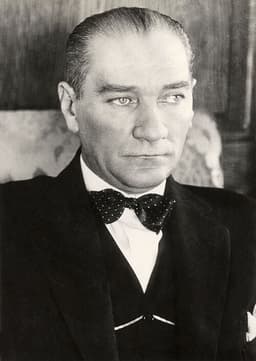
Mustafa Kemal Ataturk
Politician · Modern
80.0Total
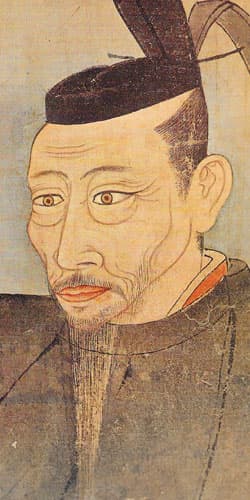
Toyotomi Hideyoshi
General · Modern
82.0Total
Basic Information
Born
1881
1537
Died
1938
1598
Era
Modern
Modern
Nationality
Turkey
Japan
Occupation
Politician
General
Civilization
Middle Eastern
Eastern
Score Comparison
Military (10%)
75.0
79.9
Political (20%)
85.0
78.0
Influence (20%)
75.0
88.0
Legacy (20%)
90.0
80.0
Leadership (15%)
80.0
82.0
Strategy (15%)
65.0
80.4
TOTAL
80.0
82.0
Mustafa Kemal Ataturk — Complete Timeline
1915 AD
Battle of GallipoliWar
As a colonel, Mustafa Kemal commanded Ottoman forces at Gallipoli, successfully repelling Allied landings. His leadership at critical points like Chunuk Bair made him a national hero and laid the foundation for his political career.
World War IOttoman EmpireMilitary Victory
Impact: regional
1919 AD
Turkish War of IndependenceWar
Kemal organized and led the Turkish National Movement against the Allied occupation of Anatolia and the Treaty of S
Independence WarNational MovementAnkara
Impact: nationalconstructive
1922 AD
Abolition of the SultanatePolitical Action◆ Major
The Grand National Assembly of Turkey, under Kemal's leadership, abolished the Ottoman Sultanate, ending 600 years of imperial rule. This severed the link with the old regime and paved the way for the proclamation of the Republic.
SultanateRepublicPolitical Reform
Impact: nationalprogressive
1923 AD
Proclamation of the Republic of TurkeyPolitical Action
Kemal declared Turkey a republic, becoming its first president. He moved the capital to Ankara and initiated a series of radical reforms to modernize and secularize the state, including the adoption of a new legal code and the Latin alphabet.
RepublicModernizationSecularism
Impact: globalprogressive
1925 AD
Adoption of the Hat LawReform◆ Major
Kemal introduced the Hat Law, banning the fez and encouraging Western-style hats. This was part of his broader cultural revolution to secularize and Westernize Turkish society, symbolizing the break with Ottoman traditions.
Cultural ReformSecularismWesternization
Impact: nationalprogressive
1934 AD
Granting of Women's SuffrageReform◆ Major
Kemal's government granted women the right to vote and stand for election in national elections, ahead of many European countries. This reform was part of his commitment to gender equality and modernization of Turkish society.
Women's RightsSuffrageModernization
Impact: nationalprogressive
Toyotomi Hideyoshi — Complete Timeline
1583 AD
Battle of ShizugatakeWar◆ Major
Hideyoshi defeated his rival Shibata Katsuie at the Battle of Shizugatake, solidifying his control over central Japan. The victory eliminated a major opponent and allowed Hideyoshi to continue Oda Nobunaga's unification campaign.
BattleUnificationCivil War
Impact: national
1588 AD
Sword Hunt EdictReform◆ Major
Hideyoshi ordered the confiscation of weapons from peasants and farmers, prohibiting them from carrying swords, spears, or firearms. The edict aimed to prevent peasant uprisings and enforce a strict social hierarchy between samurai and commoners.
Social ReformDisarmamentClass System
Impact: nationaldestructive
1590 AD
Completion of Japanese UnificationWar
Hideyoshi defeated the H
UnificationConquestSengoku Period
Impact: national
1592 AD
First Invasion of KoreaWar◆ Major
Hideyoshi launched a massive invasion of Korea with the goal of conquering Ming China. Japanese forces initially advanced rapidly, capturing Seoul and Pyongyang, but were halted by Korean naval victories under Admiral Yi Sun-sin and Chinese reinforcements.
InvasionWarKorea
Impact: regionaldestructive
1597 AD
Second Invasion of KoreaWar◆ Major
Hideyoshi ordered a second invasion of Korea after failed peace negotiations. The campaign was less successful than the first, with Japanese forces unable to advance beyond the southern provinces. The invasion ended with Hideyoshi's death in 1598.
InvasionWarKorea
Impact: regionaldestructive
Expert Analysis
Origins
Toyotomi Hideyoshi (1537–1598) was born a peasant in Nakamura, Owari Province, during the chaotic Sengoku period. His humble beginnings shaped his relentless ambition and pragmatic approach to power. In contrast, Mustafa Kemal Ataturk (1881–1938) was born in Salonika (then Ottoman Empire) to a middle-class family; his father was a customs officer. Ataturk received a modern military education, which instilled in him secular and nationalist ideals. Both men rose from modest backgrounds, but Hideyoshi's ascent from "son of a peasant" to "Shogun" is more dramatic, while Ataturk's path was facilitated by the Ottoman military's modernization.
Rise to Power
Hideyoshi started as a sandal-bearer for Oda Nobunaga, quickly proving his military and diplomatic skills. After Nobunaga's death in 1582, Hideyoshi defeated rivals like Akechi Mitsuhide at the Battle of Shizugatake and Shibata Katsuie, consolidating power. He became the de facto ruler by 1585, securing the title of Kampaku (Imperial Regent). Ataturk rose through the Ottoman military, distinguishing himself at the Battle of Gallipoli (1915) as a brilliant commander. After World War I, he organized resistance against Allied occupation, leading the Turkish War of Independence (1919–1923). He established a rival government in Ankara, defeated Greek forces, and negotiated the Treaty of Lausanne, abolishing the Sultanate in 1922. Both seized opportunities in times of chaos, but Hideyoshi's rise was more ruthless and politically cunning, while Ataturk's was a nationalist struggle against foreign powers.
Leadership & Governance
Hideyoshi unified Japan through a mix of military conquest and diplomacy. He implemented the Sword Hunt (1588) to disarm peasants, the land survey (Taiko Kenchi) to assess productivity, and the Separation Edict (1591) to freeze social classes. He centralized power under his rule, but his governance was autocratic and relied on feudal alliances. Ataturk, as first president of Turkey, enacted sweeping reforms: abolition of the caliphate (1924), adoption of the Swiss Civil Code, Latin alphabet, Western dress (Hat Law), and women's suffrage. He established a secular, nationalist republic. Hideyoshi's governance was more about consolidation and control, while Ataturk's was transformative, aiming to modernize a traditional society. Hideyoshi scores 80 in leadership, Ataturk 90, reflecting the latter's more profound institutional changes.
Triumph & Tragedy
Hideyoshi's greatest triumph was completing Japan's unification, ending centuries of civil war. However, his tragic flaw was hubris: he launched two disastrous invasions of Korea (1592–1598) that drained resources, alienated allies, and ultimately failed. His death led to the collapse of his regime and the rise of the Tokugawa shogunate. Ataturk's triumph was the successful creation of a modern, independent Turkey from the ashes of the Ottoman Empire. His tragedy lies in the authoritarian nature of his reforms, which suppressed dissent and imposed secularism sometimes violently. Yet, his legacy endured. Hideyoshi's tragedy was more personal and immediate; Ataturk's was a trade-off between modernization and democratic freedoms.
Character & Destiny
Hideyoshi was charismatic, ambitious, and shrewd, but also vain and prone to overreach. His famous "Monkey" nickname reflected his cleverness. He believed in his destiny to rule, and his rise from peasant to ruler is a classic rags-to-riches story. Ataturk was disciplined, visionary, and decisive, with a cult of personality that persists in Turkey. He saw his destiny as saving the Turkish nation and modernizing it. Both were strong-willed, but Ataturk's character was more ideologically driven (secular nationalism), while Hideyoshi was pragmatic and opportunistic.
Legacy
Hideyoshi's legacy is mixed: he unified Japan but his invasions weakened his regime. He is remembered as a great unifier, but his policies also set the stage for Tokugawa isolation. Ataturk's legacy is profound: he is revered as the father of modern Turkey, with his image and ideals still central to Turkish identity. His reforms had lasting impacts on education, law, and culture. In terms of lasting influence, Ataturk's scores higher (90 vs 80 in legacy). Hideyoshi's unification was crucial but temporary; Ataturk's reforms created a nation that endures.
Conclusion
While Hideyoshi was a brilliant military unifier and administrator, Ataturk's transformative reforms and lasting national foundation give him the edge. Hideyoshi's scores: M=80, P=78, I=88, L=80, D=82, S=80, T=82. Ataturk's: M=75, P=85, I=75, L=90, D=80, S=65, T=80. Ataturk leads in leadership (90 vs 80) and legacy (90 vs 80), while Hideyoshi leads in intelligence (88 vs 75) and military (80 vs 75). Given Ataturk's profound and enduring impact on a nation's modernization, he emerges as the more significant historical figure. Hideyoshi's unification was impressive but ultimately transient; Ataturk's reforms reshaped Turkey permanently. Thus, Ataturk wins this comparison.
Rankings
🥇
Toyotomi HideyoshiLeader
Mil: 79.9Pol: 78.0Inf: 88.0
82.0
🥈
Mustafa Kemal Ataturk
Mil: 75.0Pol: 85.0Inf: 75.0
80.0
+2.0 behind
How This Comparison Works
Algorithm
Each figure is scored on 6 dimensions (0—100 scale) based on structured historical data: Military (10%), Political (20%), Influence (20%), Legacy (20%), Leadership (15%), Strategy (15%). The weighted total produces the final ranking.
Data Sources
Scores are computed from structured sub-indicators in the database. Scale factors adjust for era (Ancient ×0.85, Modern ×1.0) and civilization size (Eastern ×1.05, Other ×0.80) to account for differences in population and military scale.
Maximum 3 Figures
Comparisons are limited to 2—3 figures to ensure readability and statistical meaningfulness.
Error Margins
±5 points per dimension — Sub-scores are derived from historical records with inherent uncertainty. Two figures within 5 points on a dimension should be considered roughly equivalent in that area.
Total Score Accuracy
±3 points overall — The weighted combination of 6 dimensions produces a total score with approximately ±3 points of uncertainty. Differences of less than 3 points are not statistically significant— the figures are effectively tied.
Known Limitations
- Historical records are incomplete and uneven across civilizations
- Figures from oral-tradition societies may be underrepresented
- Occupation labels can misclassify multi-role figures
- Scores measure capability and impact, not moral character
- Quantitative scoring is a comparison tool, not absolute truth
Capability Radar
Military (10%) — Battles & Warfare
Battles
85
85
Win Rate
90
88
Expansion
60
80
Political (20%) — Governance & Reform
Reform
98
95
Diplomacy
85
80
Economy
75
90
Influence (20%) — Cultural & Global Reach
Cultural
90
85
Global
80
70
Legacy (20%) — Historical Impact
Historical
95
90
Longevity
85
85
Leadership (15%) — Power & Stability
Tenure
85
85
Stability
70
75
Strategy (15%) — Tactics & Innovation
Strategy
85
92
Tactics
88
90
Reform
80
95
Similar Comparisons
Comments & Discussion
No comments yet. Be the first to share your thoughts!