Loading...
Mustafa Kemal Ataturk vs Toussaint Louverture
Mustafa Kemal Ataturk leads by 1.5 pts · 2 figures compared
…
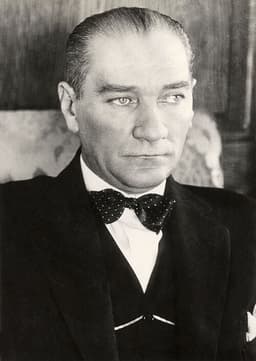
Mustafa Kemal Ataturk
Politician · Modern
80.0Total
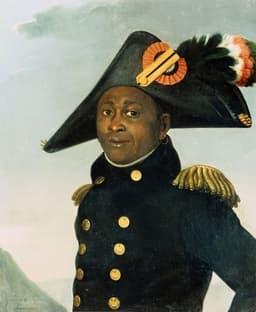
Toussaint Louverture
General · Modern
78.5Total
Basic Information
Born
1881
1743
Died
1938
1803
Era
Modern
Modern
Nationality
Turkey
Haiti
Occupation
Politician
General
Civilization
Middle Eastern
Western
Score Comparison
Military (10%)
75.0
85.0
Political (20%)
85.0
70.3
Influence (20%)
75.0
84.0
Legacy (20%)
90.0
82.0
Leadership (15%)
80.0
72.0
Strategy (15%)
65.0
72.0
TOTAL
80.0
78.5
Mustafa Kemal Ataturk — Complete Timeline
1915 AD
Battle of GallipoliWar
As a colonel, Mustafa Kemal commanded Ottoman forces at Gallipoli, successfully repelling Allied landings. His leadership at critical points like Chunuk Bair made him a national hero and laid the foundation for his political career.
World War IOttoman EmpireMilitary Victory
Impact: regional
1919 AD
Turkish War of IndependenceWar
Kemal organized and led the Turkish National Movement against the Allied occupation of Anatolia and the Treaty of S
Independence WarNational MovementAnkara
Impact: nationalconstructive
1922 AD
Abolition of the SultanatePolitical Action◆ Major
The Grand National Assembly of Turkey, under Kemal's leadership, abolished the Ottoman Sultanate, ending 600 years of imperial rule. This severed the link with the old regime and paved the way for the proclamation of the Republic.
SultanateRepublicPolitical Reform
Impact: nationalprogressive
1923 AD
Proclamation of the Republic of TurkeyPolitical Action
Kemal declared Turkey a republic, becoming its first president. He moved the capital to Ankara and initiated a series of radical reforms to modernize and secularize the state, including the adoption of a new legal code and the Latin alphabet.
RepublicModernizationSecularism
Impact: globalprogressive
1925 AD
Adoption of the Hat LawReform◆ Major
Kemal introduced the Hat Law, banning the fez and encouraging Western-style hats. This was part of his broader cultural revolution to secularize and Westernize Turkish society, symbolizing the break with Ottoman traditions.
Cultural ReformSecularismWesternization
Impact: nationalprogressive
1934 AD
Granting of Women's SuffrageReform◆ Major
Kemal's government granted women the right to vote and stand for election in national elections, ahead of many European countries. This reform was part of his commitment to gender equality and modernization of Turkish society.
Women's RightsSuffrageModernization
Impact: nationalprogressive
Toussaint Louverture — Complete Timeline
1791 AD
Haitian Revolution LeadershipWar
Louverture joined the slave revolt in Saint-Domingue, quickly rising to leadership. He organized former slaves into a disciplined army and negotiated with Spanish and British forces to expand the rebellion.
Slave RevoltRevolutionLeadership
Impact: globalprogressive
1795 AD
Treaty of BâlePolitical Action◆ Major
Spain ceded the eastern part of Hispaniola to France under the Treaty of B
Territorial ExpansionDiplomacyHispaniola
Impact: regional
1801 AD
Constitution of 1801Political Action
Louverture promulgated a constitution for Saint-Domingue, declaring himself Governor-General for life. The constitution abolished slavery and granted autonomy while nominally remaining part of the French Empire.
ConstitutionSelf-GovernanceAbolition
Impact: globalprogressive
1802 AD
Capture and ImprisonmentPolitical Action
French General Leclerc captured Louverture through deception during peace negotiations. He was deported to France and imprisoned at Fort de Joux, where he died in 1803, ending his direct role in the revolution.
BetrayalImprisonmentFrench Repression
Impact: globaltragic
Expert Analysis
Origins
Mustafa Kemal Ataturk was born in 1881 in Salonika, then part of the Ottoman Empire. He came from a middle-class family; his father was a customs officer. He attended military schools, embracing secular and nationalist ideas. Toussaint Louverture was born into slavery around 1743 in Saint-Domingue (Haiti). He gained freedom and became a planter. He was well-read in Enlightenment philosophy, which shaped his vision of liberty and equality. Both emerged from oppressive systems—Ottoman decline and colonial slavery—but their origins reflect different social strata: Ataturk from a free, military background; Toussaint from enslavement.
Rise to Power
Ataturk rose to prominence through military prowess in World War I, especially at Gallipoli (1915), where his defensive tactics earned him fame. After the Ottoman defeat, he organized nationalist resistance against Allied occupation and the Greek invasion, leading the Turkish War of Independence (1919-1923). His political acumen unified disparate groups under the Turkish Grand National Assembly. Toussaint Louverture emerged as a leader during the Haitian Revolution (1791-1804). Initially allied with the Spanish, he switched to the French when they abolished slavery. He outmaneuvered rivals like Jean-Jacques Dessalines and Henri Christophe, becoming the de facto ruler by 1799. Both used military and political skills, but Ataturk's rise was within a structured military, while Toussaint's was in a chaotic slave revolt.
Leadership & Governance
Ataturk governed as president from 1923 to 1938, implementing radical reforms: abolishing the sultanate and caliphate, adopting secular laws, replacing Arabic script with Latin, granting women suffrage, and promoting industrialization. His leadership was authoritarian, suppressing dissent, but his reforms modernized Turkey. Toussaint governed Saint-Domingue from 1800 to 1802 as governor-general. He restored order, revived the plantation economy using forced labor, and drafted the Constitution of 1801, which abolished slavery and made himself governor for life. He maintained ties with France while asserting autonomy. Both centralized power, but Ataturk's reforms were more transformative, while Toussaint's governance was constrained by colonial pressures and economic dependence.
Triumph & Tragedy
Ataturk's triumph was founding the Republic of Turkey and surviving multiple wars. His tragedy was perhaps the authoritarian measures and the destruction of Ottoman multiculturalism. He died in 1938 from cirrhosis. Toussaint's triumph was leading the only successful slave revolt, establishing a free state. His tragedy came in 1802 when he was captured by Napoleon's forces, deported to France, and died in prison in 1803. He never saw Haiti's independence. Both faced betrayal—Ataturk from former allies, Toussaint from the French—but Toussaint's end was more tragic.
Character & Destiny
Ataturk was pragmatic, disciplined, and visionary, but also ruthless and ambitious. His destiny was to create a secular nation-state from an empire's ashes. Toussaint was charismatic, strategic, and diplomatic, but also authoritarian and ambitious. His destiny was to liberate a people but die in captivity. Both believed in their missions; Ataturk succeeded in establishing a lasting republic, while Toussaint's revolution succeeded but he lost his life. Their characters reflect their contexts: Ataturk's military discipline versus Toussaint's revolutionary cunning.
Legacy
Ataturk's legacy is immense: he is revered as the father of modern Turkey; his principles (Kemalism) guide the state; his reforms endure. However, his secularism faces challenges from religious movements. Toussaint's legacy is as a hero of anti-colonialism and black liberation; he inspired later movements. But his reputation is complex due to his authoritarian methods and economic policies. Both are iconic, but Ataturk's impact is more tangible in Turkey's institutions, while Toussaint's symbolizes resistance.
Conclusion
Ataturk scores higher overall (M=75, P=85, I=75, L=90, D=80, S=65, T=80) vs Toussaint (M=85, P=70, I=84, L=82, D=72, S=72, T=78). Ataturk leads in Politics (85 vs 70), Leadership (90 vs 82), and Defense (80 vs 72). Toussaint excels in Military (85 vs 75) and Influence (84 vs 75). The score gap is 1.5 points favoring Ataturk. Ataturk's enduring institutional reforms and nation-building give him a slight edge over Toussaint's revolutionary but truncated legacy. However, Toussaint's achievement against slavery is unparalleled. Both are giants, but Ataturk's broader governance impact earns him the win.
Rankings
🥇
Mustafa Kemal AtaturkLeader
Mil: 75.0Pol: 85.0Inf: 75.0
80.0
🥈
Toussaint Louverture
Mil: 85.0Pol: 70.3Inf: 84.0
78.5
+1.5 behind
How This Comparison Works
Algorithm
Each figure is scored on 6 dimensions (0—100 scale) based on structured historical data: Military (10%), Political (20%), Influence (20%), Legacy (20%), Leadership (15%), Strategy (15%). The weighted total produces the final ranking.
Data Sources
Scores are computed from structured sub-indicators in the database. Scale factors adjust for era (Ancient ×0.85, Modern ×1.0) and civilization size (Eastern ×1.05, Other ×0.80) to account for differences in population and military scale.
Maximum 3 Figures
Comparisons are limited to 2—3 figures to ensure readability and statistical meaningfulness.
Error Margins
±5 points per dimension — Sub-scores are derived from historical records with inherent uncertainty. Two figures within 5 points on a dimension should be considered roughly equivalent in that area.
Total Score Accuracy
±3 points overall — The weighted combination of 6 dimensions produces a total score with approximately ±3 points of uncertainty. Differences of less than 3 points are not statistically significant— the figures are effectively tied.
Known Limitations
- Historical records are incomplete and uneven across civilizations
- Figures from oral-tradition societies may be underrepresented
- Occupation labels can misclassify multi-role figures
- Scores measure capability and impact, not moral character
- Quantitative scoring is a comparison tool, not absolute truth
Capability Radar
Military (10%) — Battles & Warfare
Battles
85
85
Win Rate
90
80
Expansion
60
70
Political (20%) — Governance & Reform
Reform
98
85
Diplomacy
85
80
Economy
75
60
Influence (20%) — Cultural & Global Reach
Cultural
90
85
Global
80
85
Legacy (20%) — Historical Impact
Historical
95
95
Longevity
85
90
Leadership (15%) — Power & Stability
Tenure
85
65
Stability
70
55
Strategy (15%) — Tactics & Innovation
Strategy
85
85
Tactics
88
90
Reform
80
75
Similar Comparisons
Comments & Discussion
No comments yet. Be the first to share your thoughts!