Loading...
Mustafa Kemal Ataturk vs Tokugawa Ieyasu
Tokugawa Ieyasu leads by 1.8 pts · 2 figures compared
…
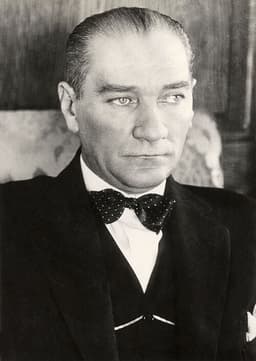
Mustafa Kemal Ataturk
Politician · Modern
80.0Total
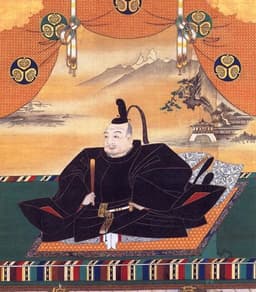
Tokugawa Ieyasu
General · Modern
81.8Total
Basic Information
Born
1881
1543
Died
1938
1616
Era
Modern
Modern
Nationality
Turkey
Japan
Occupation
Politician
General
Civilization
Middle Eastern
Eastern
Score Comparison
Military (10%)
75.0
78.0
Political (20%)
85.0
82.0
Influence (20%)
75.0
88.0
Legacy (20%)
90.0
75.0
Leadership (15%)
80.0
85.0
Strategy (15%)
65.0
82.0
TOTAL
80.0
81.8
Mustafa Kemal Ataturk — Complete Timeline
1915 AD
Battle of GallipoliWar
As a colonel, Mustafa Kemal commanded Ottoman forces at Gallipoli, successfully repelling Allied landings. His leadership at critical points like Chunuk Bair made him a national hero and laid the foundation for his political career.
World War IOttoman EmpireMilitary Victory
Impact: regional
1919 AD
Turkish War of IndependenceWar
Kemal organized and led the Turkish National Movement against the Allied occupation of Anatolia and the Treaty of S
Independence WarNational MovementAnkara
Impact: nationalconstructive
1922 AD
Abolition of the SultanatePolitical Action◆ Major
The Grand National Assembly of Turkey, under Kemal's leadership, abolished the Ottoman Sultanate, ending 600 years of imperial rule. This severed the link with the old regime and paved the way for the proclamation of the Republic.
SultanateRepublicPolitical Reform
Impact: nationalprogressive
1923 AD
Proclamation of the Republic of TurkeyPolitical Action
Kemal declared Turkey a republic, becoming its first president. He moved the capital to Ankara and initiated a series of radical reforms to modernize and secularize the state, including the adoption of a new legal code and the Latin alphabet.
RepublicModernizationSecularism
Impact: globalprogressive
1925 AD
Adoption of the Hat LawReform◆ Major
Kemal introduced the Hat Law, banning the fez and encouraging Western-style hats. This was part of his broader cultural revolution to secularize and Westernize Turkish society, symbolizing the break with Ottoman traditions.
Cultural ReformSecularismWesternization
Impact: nationalprogressive
1934 AD
Granting of Women's SuffrageReform◆ Major
Kemal's government granted women the right to vote and stand for election in national elections, ahead of many European countries. This reform was part of his commitment to gender equality and modernization of Turkish society.
Women's RightsSuffrageModernization
Impact: nationalprogressive
Tokugawa Ieyasu — Complete Timeline
1600 AD
Battle of SekigaharaWar
Tokugawa Ieyasu led the Eastern Army to victory over Ishida Mitsunari's Western Army at Sekigahara. This decisive battle ended the Sengoku period and established Ieyasu as the supreme military ruler of Japan, paving the way for the Tokugawa shogunate.
Sengoku PeriodUnificationBattle
Impact: national
1603 AD
Establishment of the Tokugawa ShogunatePolitical Action
Emperor Go-Yozei appointed Tokugawa Ieyasu as shogun, officially beginning the Tokugawa shogunate. Ieyasu established his government in Edo (modern Tokyo), centralizing military and political power under his family's control.
ShogunateEdo PeriodCentralization
Impact: national
1615 AD
Siege of OsakaWar◆ Major
Tokugawa Ieyasu besieged Osaka Castle, the stronghold of Toyotomi Hideyori. The castle fell, and Hideyori committed suicide. This campaign eliminated the last major opposition to Tokugawa rule, solidifying the shogunate's control over Japan.
Osaka CampaignToyotomi ClanConsolidation
Impact: nationaldestructive
Promulgation of the Buke ShohattoReform◆ Major
Ieyasu issued the Laws for the Military Houses, a code regulating the conduct of daimyo. It restricted castle construction, required alternate attendance in Edo, and prohibited alliances without shogunal permission. This law helped control the feudal lords.
Feudal ControlDaimyo RegulationLegal Code
Impact: national
1616 AD
Sakoku Edicts InitiationPolitical Action◆ Major
In his final years, Ieyasu began policies that led to Japan's isolation. He restricted foreign trade to specific ports and expelled Christian missionaries. These measures, expanded by successors, resulted in the sakoku policy that isolated Japan for over 200 years.
IsolationismForeign PolicyChristianity
Impact: national
Expert Analysis
Origins
Tokugawa Ieyasu (1543–1616) was born into a minor samurai family amid Japan's Warring States period. His early life as a hostage taught him patience and strategic calculation. Mustafa Kemal Ataturk (1881–1938) was born in Ottoman Salonika to a moderate Muslim family, his early military education exposing him to Western ideas. Both emerged from crumbling old orders—Ieyasu from feudal chaos, Ataturk from the 'sick man of Europe.'
Rise to Power
Ieyasu rose through alliances and military skill, serving under Oda Nobunaga and Toyotomi Hideyoshi. His pivotal victory at the Battle of Sekigahara (1600) gave him control of Japan. Ataturk distinguished himself at Gallipoli (1915), becoming a national hero. He then organized resistance against Allied occupation, leading the Turkish War of Independence (1919–1923). Both turned military fame into political supremacy.
Leadership & Governance
Ieyasu established the Tokugawa shogunate, a feudal system that centralized power under his family. He implemented the Buke Shohatto (laws for samurai) and initiated the Sakoku edicts, sealing Japan from foreign influence. Ataturk founded the Republic of Turkey, abolishing the sultanate and caliphate. He enacted sweeping reforms: secularization, adoption of the Latin alphabet, women's suffrage, and industrialization. Ieyasu's governance was conservative, preserving social hierarchy; Ataturk's was revolutionary, aiming to Westernize Turkey.
Triumph & Tragedy
Ieyasu's greatest triumph was the Siege of Osaka (1615), eliminating the last opposition and securing the shogunate. His tragedy was the long-term isolation that left Japan technologically behind. Ataturk's triumph was winning independence and modernizing Turkey. His tragedy was the authoritarian means, suppressing dissent and Kurdish identity. Both succeeded in stabilizing their nations but at the cost of certain freedoms.
Character & Destiny
Ieyasu was patient, calculating, and pragmatic—earning the nickname 'the old badger.' He bided his time, outliving rivals. Ataturk was charismatic, visionary, and ruthless—a man who remade a nation in his image. Ieyasu's destiny was to unify Japan after centuries of war; Ataturk's was to rescue Turkey from collapse and forge a modern identity. Both were decisive leaders who shaped their nations' trajectories.
Legacy
Ieyasu's shogunate brought 250 years of peace (Edo period), fostering economic growth and culture, but also isolation and rigidity. Ataturk's republic created a secular, modern state that remains Turkey's foundation, though his reforms remain contested. Ieyasu's legacy is stability; Ataturk's is transformation.
Conclusion
Tokugawa Ieyasu scores higher overall (82 vs 80), reflecting his immense impact on Japan's long-term stability. Ataturk's achievements were revolutionary but left a more divisive legacy. However, in terms of modernizing vision, Ataturk surpasses Ieyasu. The choice depends on valuing stability (Ieyasu) versus progress (Ataturk). Here, Ieyasu's sustained peace gives him the edge, but Ataturk's reforms were bolder.
Rankings
🥇
Tokugawa IeyasuLeader
Mil: 78.0Pol: 82.0Inf: 88.0
81.8
🥈
Mustafa Kemal Ataturk
Mil: 75.0Pol: 85.0Inf: 75.0
80.0
+1.8 behind
How This Comparison Works
Algorithm
Each figure is scored on 6 dimensions (0—100 scale) based on structured historical data: Military (10%), Political (20%), Influence (20%), Legacy (20%), Leadership (15%), Strategy (15%). The weighted total produces the final ranking.
Data Sources
Scores are computed from structured sub-indicators in the database. Scale factors adjust for era (Ancient ×0.85, Modern ×1.0) and civilization size (Eastern ×1.05, Other ×0.80) to account for differences in population and military scale.
Maximum 3 Figures
Comparisons are limited to 2—3 figures to ensure readability and statistical meaningfulness.
Error Margins
±5 points per dimension — Sub-scores are derived from historical records with inherent uncertainty. Two figures within 5 points on a dimension should be considered roughly equivalent in that area.
Total Score Accuracy
±3 points overall — The weighted combination of 6 dimensions produces a total score with approximately ±3 points of uncertainty. Differences of less than 3 points are not statistically significant— the figures are effectively tied.
Known Limitations
- Historical records are incomplete and uneven across civilizations
- Figures from oral-tradition societies may be underrepresented
- Occupation labels can misclassify multi-role figures
- Scores measure capability and impact, not moral character
- Quantitative scoring is a comparison tool, not absolute truth
Capability Radar
Military (10%) — Battles & Warfare
Battles
85
85
Win Rate
90
90
Expansion
60
75
Political (20%) — Governance & Reform
Reform
98
90
Diplomacy
85
85
Economy
75
88
Influence (20%) — Cultural & Global Reach
Cultural
90
85
Global
80
70
Legacy (20%) — Historical Impact
Historical
95
90
Longevity
85
95
Leadership (15%) — Power & Stability
Tenure
85
95
Stability
70
95
Strategy (15%) — Tactics & Innovation
Strategy
85
92
Tactics
88
88
Reform
80
80
Similar Comparisons
Comments & Discussion
No comments yet. Be the first to share your thoughts!