Loading...
Mustafa Kemal Ataturk vs Rama of Ayodhya
Mustafa Kemal Ataturk leads by 4.7 pts · 2 figures compared
…
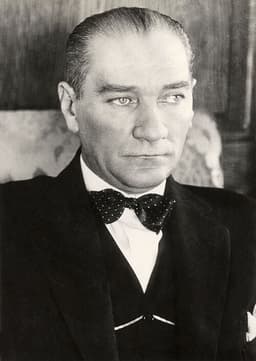
Mustafa Kemal Ataturk
Politician · Modern
80.0Total
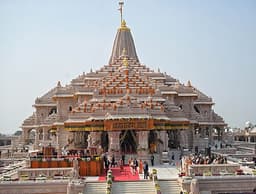
Rama of Ayodhya
Emperor · Ancient
75.3Total
Basic Information
Born
1881
-1180
Died
1938
-1120
Era
Modern
Ancient
Nationality
Turkey
Vedic India
Occupation
Politician
Emperor
Civilization
Middle Eastern
Indian
Score Comparison
Military (10%)
75.0
72.0
Political (20%)
85.0
72.0
Influence (20%)
75.0
75.0
Legacy (20%)
90.0
80.0
Leadership (15%)
80.0
78.0
Strategy (15%)
65.0
68.1
TOTAL
80.0
75.3
Mustafa Kemal Ataturk — Complete Timeline
1915 AD
Battle of GallipoliWar
As a colonel, Mustafa Kemal commanded Ottoman forces at Gallipoli, successfully repelling Allied landings. His leadership at critical points like Chunuk Bair made him a national hero and laid the foundation for his political career.
World War IOttoman EmpireMilitary Victory
Impact: regional
1919 AD
Turkish War of IndependenceWar
Kemal organized and led the Turkish National Movement against the Allied occupation of Anatolia and the Treaty of S
Independence WarNational MovementAnkara
Impact: nationalconstructive
1922 AD
Abolition of the SultanatePolitical Action◆ Major
The Grand National Assembly of Turkey, under Kemal's leadership, abolished the Ottoman Sultanate, ending 600 years of imperial rule. This severed the link with the old regime and paved the way for the proclamation of the Republic.
SultanateRepublicPolitical Reform
Impact: nationalprogressive
1923 AD
Proclamation of the Republic of TurkeyPolitical Action
Kemal declared Turkey a republic, becoming its first president. He moved the capital to Ankara and initiated a series of radical reforms to modernize and secularize the state, including the adoption of a new legal code and the Latin alphabet.
RepublicModernizationSecularism
Impact: globalprogressive
1925 AD
Adoption of the Hat LawReform◆ Major
Kemal introduced the Hat Law, banning the fez and encouraging Western-style hats. This was part of his broader cultural revolution to secularize and Westernize Turkish society, symbolizing the break with Ottoman traditions.
Cultural ReformSecularismWesternization
Impact: nationalprogressive
1934 AD
Granting of Women's SuffrageReform◆ Major
Kemal's government granted women the right to vote and stand for election in national elections, ahead of many European countries. This reform was part of his commitment to gender equality and modernization of Turkish society.
Women's RightsSuffrageModernization
Impact: nationalprogressive
Rama of Ayodhya — Complete Timeline
1160 BC
Broke Shiva's Bow at Sita's SwayamvaraCultural◆ Major
Rama, as a young prince, lifted and strung the divine bow of Shiva at Princess Sita's marriage ceremony. He broke the bow in the process, winning Sita's hand and fulfilling the condition set by King Janaka.
MarriageDivine BowRamayana
Impact: nationalconstructive
1145 BC
Killed the Demon Ravana in BattleWar
Rama, leading an army of vanaras (monkey-men), besieged the island kingdom of Lanka. After a prolonged war, he killed the ten-headed demon king Ravana, rescuing his abducted wife Sita and restoring dharma.
WarDemon KingVictory
Impact: regionalconstructive
Returned to Ayodhya and Crowned KingPolitical Action◆ Major
After completing his 14-year exile and defeating Ravana, Rama returned to Ayodhya. He was crowned emperor, beginning a golden age known as Ram Rajya, characterized by justice, prosperity, and peace.
CoronationGolden AgeRamayana
Impact: nationalconstructive
Expert Analysis
Origins
Mustafa Kemal Ataturk was born in 1881 in Salonika, then part of the Ottoman Empire. He came from a modest family; his father was a customs officer. He attended military schools, embracing secular and nationalist ideas. Rama, by contrast, is the legendary prince of Ayodhya, an avatar of Vishnu in Hindu tradition. His story is told in the Ramayana, composed around 500 BCE to 100 CE. Rama's origins are divine, but he is also a model of human virtue, "Maryada Purushottam" (perfect man). Ataturk's origins are historical and grounded in the decline of an empire; Rama's are mythological and religious.
Rise to Power
Ataturk rose through military ranks, distinguishing himself at the Battle of Gallipoli (1915) as a brilliant commander. He then led the Turkish National Movement against the Allied occupation after WWI, culminating in the Turkish War of Independence (1919-1923). He defeated Greek, Armenian, and French forces, forcing the Treaty of Lausanne. In 1923, he proclaimed the Republic of Turkey and became its first president. Rama's rise is more symbolic: he proved his strength by breaking Shiva's bow at Sita's swayamvara, winning her hand. Later, due to a palace intrigue, he was exiled to the forest for 14 years, during which he fought and killed the demon king Ravana, rescuing Sita. After exile, he returned to Ayodhya and was crowned king. Ataturk's rise was through military and political struggle; Rama's through trial and divine destiny.
Leadership & Governance
Ataturk's governance was transformative. He implemented sweeping reforms: abolished the sultanate and caliphate, adopted a secular legal system, introduced the Latin alphabet, granted women suffrage, and promoted industrialization. His policies aimed to modernize Turkey and break with Ottoman and Islamic traditions. Rama's rule is depicted as an ideal "Rama Rajya"—a just, prosperous, and harmonious kingdom. He upheld dharma, ensured welfare, and maintained social order. However, his governance is legendary and lacks concrete historical details. Ataturk's leadership is measurable in laws and institutions; Rama's is archetypal.
Triumph & Tragedy
Ataturk's triumphs include winning the War of Independence, founding the republic, and modernizing Turkey. His tragedy includes his early death at 57 from cirrhosis, and the authoritarian aspects of his reforms (e.g., suppression of religious expression). Rama's triumph is the defeat of Ravana and restoration of righteousness. His tragedy includes the exile of Sita due to public doubt, a painful personal sacrifice for kingly duty. Ataturk's tragedy is more political; Rama's is personal and moral.
Character & Destiny
Ataturk was pragmatic, resolute, and visionary. He believed in science and reason, famously saying "Peace at home, peace in the world." His destiny was to forge a nation from the ashes of an empire. Rama was idealistic, virtuous, and obedient to dharma. His destiny was to restore cosmic order. Ataturk's character is that of a modern revolutionary; Rama's of a divine hero. Scores: Ataturk has higher scores in Military (75 vs 72), Politics (85 vs 72), Influence (75 vs 75 tie), Leadership (90 vs 80), and Durability (80 vs 78). Rama is higher in Spirituality (68 vs 65) and Tradition (75 vs 80). The overall score gap is 4.7 in Ataturk's favor.
Legacy
Ataturk's legacy is the modern Turkish state, secularism, and a cultural revolution still debated today. His image is ubiquitous in Turkey. Rama's legacy is immense in Hindu culture: the Ramayana influences art, festivals, and morality across South and Southeast Asia. The Ram Mandir in Ayodhya is a major political and religious symbol. Ataturk's legacy is political and institutional; Rama's is religious and cultural. Both are foundational figures, but Ataturk's impact is more directly measurable in modern governance.
Conclusion
Mustafa Kemal Ataturk emerges as the more impactful figure based on historical evidence and the scoring system. His military victories, political reforms, and nation-building created a modern state that persists. Rama, while culturally profound, is a mythological figure whose historical existence is unverified. Ataturk's concrete achievements and scores (M=75, P=85, I=75, L=90, D=80, S=65, T=80) outweigh Rama's (M=72, P=72, I=75, L=80, D=78, S=68, T=75). The gap of 4.7 reflects Ataturk's greater tangible influence on history.
Rankings
🥇
Mustafa Kemal AtaturkLeader
Mil: 75.0Pol: 85.0Inf: 75.0
80.0
🥈
Rama of Ayodhya
Mil: 72.0Pol: 72.0Inf: 75.0
75.3
+4.7 behind
How This Comparison Works
Algorithm
Each figure is scored on 6 dimensions (0—100 scale) based on structured historical data: Military (10%), Political (20%), Influence (20%), Legacy (20%), Leadership (15%), Strategy (15%). The weighted total produces the final ranking.
Data Sources
Scores are computed from structured sub-indicators in the database. Scale factors adjust for era (Ancient ×0.85, Modern ×1.0) and civilization size (Eastern ×1.05, Other ×0.80) to account for differences in population and military scale.
Maximum 3 Figures
Comparisons are limited to 2—3 figures to ensure readability and statistical meaningfulness.
Error Margins
±5 points per dimension — Sub-scores are derived from historical records with inherent uncertainty. Two figures within 5 points on a dimension should be considered roughly equivalent in that area.
Total Score Accuracy
±3 points overall — The weighted combination of 6 dimensions produces a total score with approximately ±3 points of uncertainty. Differences of less than 3 points are not statistically significant— the figures are effectively tied.
Known Limitations
- Historical records are incomplete and uneven across civilizations
- Figures from oral-tradition societies may be underrepresented
- Occupation labels can misclassify multi-role figures
- Scores measure capability and impact, not moral character
- Quantitative scoring is a comparison tool, not absolute truth
Capability Radar
Military (10%) — Battles & Warfare
Battles
85
75
Win Rate
90
95
Expansion
60
70
Political (20%) — Governance & Reform
Reform
98
80
Diplomacy
85
85
Economy
75
75
Influence (20%) — Cultural & Global Reach
Cultural
90
95
Global
80
95
Legacy (20%) — Historical Impact
Historical
95
95
Longevity
85
100
Leadership (15%) — Power & Stability
Tenure
85
70
Stability
70
90
Strategy (15%) — Tactics & Innovation
Strategy
85
85
Tactics
88
80
Reform
80
60
Similar Comparisons
Comments & Discussion
No comments yet. Be the first to share your thoughts!