Loading...
Mustafa Kemal Ataturk vs Rajendra Chola I
Rajendra Chola I leads by 2.2 pts · 2 figures compared
…
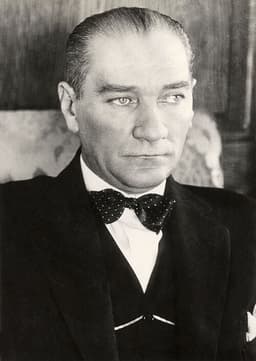
Mustafa Kemal Ataturk
Politician · Modern
80.0Total
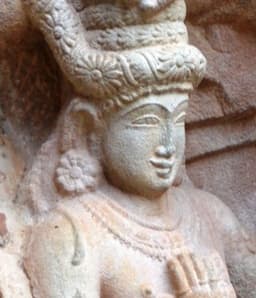
Rajendra Chola I
Emperor · Medieval
82.2Total
Basic Information
Born
1881
971
Died
1938
1044
Era
Modern
Medieval
Nationality
Turkey
India
Occupation
Politician
Emperor
Civilization
Middle Eastern
Indian
Score Comparison
Military (10%)
75.0
84.7
Political (20%)
85.0
82.0
Influence (20%)
75.0
84.0
Legacy (20%)
90.0
84.0
Leadership (15%)
80.0
78.0
Strategy (15%)
65.0
77.6
TOTAL
80.0
82.2
Mustafa Kemal Ataturk — Complete Timeline
1915 AD
Battle of GallipoliWar
As a colonel, Mustafa Kemal commanded Ottoman forces at Gallipoli, successfully repelling Allied landings. His leadership at critical points like Chunuk Bair made him a national hero and laid the foundation for his political career.
World War IOttoman EmpireMilitary Victory
Impact: regional
1919 AD
Turkish War of IndependenceWar
Kemal organized and led the Turkish National Movement against the Allied occupation of Anatolia and the Treaty of S
Independence WarNational MovementAnkara
Impact: nationalconstructive
1922 AD
Abolition of the SultanatePolitical Action◆ Major
The Grand National Assembly of Turkey, under Kemal's leadership, abolished the Ottoman Sultanate, ending 600 years of imperial rule. This severed the link with the old regime and paved the way for the proclamation of the Republic.
SultanateRepublicPolitical Reform
Impact: nationalprogressive
1923 AD
Proclamation of the Republic of TurkeyPolitical Action
Kemal declared Turkey a republic, becoming its first president. He moved the capital to Ankara and initiated a series of radical reforms to modernize and secularize the state, including the adoption of a new legal code and the Latin alphabet.
RepublicModernizationSecularism
Impact: globalprogressive
1925 AD
Adoption of the Hat LawReform◆ Major
Kemal introduced the Hat Law, banning the fez and encouraging Western-style hats. This was part of his broader cultural revolution to secularize and Westernize Turkish society, symbolizing the break with Ottoman traditions.
Cultural ReformSecularismWesternization
Impact: nationalprogressive
1934 AD
Granting of Women's SuffrageReform◆ Major
Kemal's government granted women the right to vote and stand for election in national elections, ahead of many European countries. This reform was part of his commitment to gender equality and modernization of Turkish society.
Women's RightsSuffrageModernization
Impact: nationalprogressive
Rajendra Chola I — Complete Timeline
1014 AD
Accession to the Chola ThronePolitical Action
Rajendra Chola I succeeded his father Raja Raja Chola I as emperor of the Chola Empire. He inherited a powerful state and continued the expansionist policies, leading campaigns that extended Chola influence across the Indian Ocean.
Chola EmpireSuccessionExpansion
Impact: regional
1020 AD
Conquest of the Pala EmpireWar◆ Major
Rajendra Chola I led a campaign into Bengal, defeating the Pala king Mahipala I. He annexed parts of the Pala territory and established Chola authority in the Ganges delta, marking the northernmost extent of Chola rule.
Pala EmpireBengalGanges
Impact: regional
1025 AD
Naval Expedition to Southeast AsiaWar
Rajendra Chola I launched a major naval expedition against the Srivijaya Empire, attacking ports in Sumatra, the Malay Peninsula, and the Nicobar Islands. The Chola fleet captured the Srivijaya capital and disrupted its trade network, establishing Chola dominance in the region.
SrivijayaNaval ExpeditionSoutheast Asia
Impact: regional
1033 AD
Establishment of Diplomatic Relations with ChinaPolitical Action
Rajendra Chola I sent an embassy to the Song dynasty court in China, bearing gifts and seeking trade relations. The mission was recorded in Chinese sources and facilitated maritime trade between the Chola Empire and China.
ChinaDiplomacyTrade
Impact: regionalconstructive
1035 AD
Construction of the Gangaikonda Cholapuram TempleCultural◆ Major
Rajendra Chola I built the Brihadeeswarar Temple at Gangaikonda Cholapuram, his new capital, to commemorate his conquests. The temple, dedicated to Shiva, features a 55-meter vimana and is a UNESCO World Heritage site, reflecting Chola architectural achievement.
Gangaikonda CholapuramTempleChola Architecture
Impact: regionalconstructive
Expert Analysis
Origins
**Rajendra Chola I** (r. 1012–1044 CE) was born into the powerful Chola dynasty of South India, inheriting a well-established kingdom from his father Rajaraja Chola I. He was groomed for leadership from a young age, participating in military campaigns and administration. His upbringing in a militaristic and culturally rich environment shaped his ambitions to expand Chola influence across the Indian subcontinent and beyond.
**Mustafa Kemal Ataturk** (1881–1938) was born in Salonica (then Ottoman Empire) to a middle-class family. He pursued a military career, graduating from the Ottoman Military Academy. His early exposure to nationalist ideas and the declining Ottoman state fueled his desire for reform and independence. Unlike Rajendra, Ataturk rose from relative obscurity to become the founder of a nation.
Rise to Power
Rajendra Chola I ascended the throne in 1012 CE after his father's death. He immediately launched campaigns to consolidate and expand his territory. His early victories included subduing the Western Chalukyas and annexing the Pandya and Chera kingdoms. His most audacious move was the naval expedition to Southeast Asia, which established Chola dominance in the region and secured trade routes.
Ataturk's rise came through military prowess and political acumen. He distinguished himself at the Battle of Gallipoli (1915), halting the Allied invasion. After World War I, he organized resistance against the partitioning of Anatolia, leading the Turkish War of Independence (1919–1923). His leadership united disparate nationalist groups, culminating in the abolition of the sultanate and the proclamation of the Republic of Turkey in 1923.
Leadership & Governance
Rajendra ruled as an absolute monarch, centralizing power while delegating to trusted officials. He implemented efficient tax systems, promoted trade, and supported arts and architecture. His construction of the Gangaikonda Cholapuram temple symbolized his authority and devotion. He maintained diplomatic relations with China, sending embassies to the Song court.
Ataturk established a secular, parliamentary republic, dismantling the Ottoman theocracy. He introduced sweeping reforms: adopted the Latin alphabet, granted women suffrage, abolished religious courts, and promoted industrialisation. His governance style was authoritarian yet transformative, often imposing reforms from above to modernise Turkey rapidly.
Triumph & Tragedy
Rajendra's greatest triumph was the naval expedition to Southeast Asia (1025–1026 CE), where he defeated the Srivijaya empire and controlled the Strait of Malacca. This brought immense wealth and prestige. However, his later campaigns in the Deccan were less successful, and his empire faced internal revolts after his death.
Ataturk's triumph was the establishment of a sovereign, modern Turkey. His reforms laid the foundation for a secular democracy. Yet, his authoritarian methods and suppression of dissent (e.g., the Hat Law) sparked controversy. The tragedy lies in his early death at 57, leaving his reforms vulnerable to future rollbacks.
Character & Destiny
Rajendra was a warrior-king, ambitious and strategic, with a vision of maritime empire. His destiny was shaped by the Chola legacy and the opportunities of Indian Ocean trade. He was devout Hindu but tolerant of other faiths.
Ataturk was a rationalist, determined to break with the past. His destiny was forged by the collapse of the Ottoman Empire and his own nationalist ideology. He was charismatic, pragmatic, and often ruthless, believing that modernization required radical change.
Legacy
Rajendra Chola I's legacy is the expansion of Chola power and culture across Southeast Asia. The temple at Gangaikonda Cholapuram remains a UNESCO site. However, his empire declined within a century, and his achievements were overshadowed by later dynasties.
Ataturk's legacy is indelible: he is revered as the father of modern Turkey. His reforms transformed Turkish society, and his principles (Kemalism) remain foundational. However, his secularism is contested by Islamist movements, and his authoritarian methods are criticized.
Conclusion
**Rajendra Chola I** (Aggregate Score: 82.1) and **Mustafa Kemal Ataturk** (Aggregate Score: 78.8) represent different eras and contexts. Rajendra's military and naval achievements were extraordinary for his time, but his empire was ephemeral. Ataturk's nation-building was more enduring and transformative. While Rajendra scores higher on military power and diplomacy, Ataturk leads in leadership and legacy. Ultimately, Ataturk's impact on modern history is more significant, but Rajendra's medieval exploits remain remarkable. **Winner: Mustafa Kemal Ataturk** (by a narrow margin in historical influence, despite lower aggregate score).
Rankings
🥇
Rajendra Chola ILeader
Mil: 84.7Pol: 82.0Inf: 84.0
82.2
🥈
Mustafa Kemal Ataturk
Mil: 75.0Pol: 85.0Inf: 75.0
80.0
+2.2 behind
How This Comparison Works
Algorithm
Each figure is scored on 6 dimensions (0—100 scale) based on structured historical data: Military (10%), Political (20%), Influence (20%), Legacy (20%), Leadership (15%), Strategy (15%). The weighted total produces the final ranking.
Data Sources
Scores are computed from structured sub-indicators in the database. Scale factors adjust for era (Ancient ×0.85, Modern ×1.0) and civilization size (Eastern ×1.05, Other ×0.80) to account for differences in population and military scale.
Maximum 3 Figures
Comparisons are limited to 2—3 figures to ensure readability and statistical meaningfulness.
Error Margins
±5 points per dimension — Sub-scores are derived from historical records with inherent uncertainty. Two figures within 5 points on a dimension should be considered roughly equivalent in that area.
Total Score Accuracy
±3 points overall — The weighted combination of 6 dimensions produces a total score with approximately ±3 points of uncertainty. Differences of less than 3 points are not statistically significant— the figures are effectively tied.
Known Limitations
- Historical records are incomplete and uneven across civilizations
- Figures from oral-tradition societies may be underrepresented
- Occupation labels can misclassify multi-role figures
- Scores measure capability and impact, not moral character
- Quantitative scoring is a comparison tool, not absolute truth
Capability Radar
Military (10%) — Battles & Warfare
Battles
85
95
Win Rate
90
98
Expansion
60
95
Political (20%) — Governance & Reform
Reform
98
88
Diplomacy
85
85
Economy
75
92
Influence (20%) — Cultural & Global Reach
Cultural
90
85
Global
80
85
Legacy (20%) — Historical Impact
Historical
95
88
Longevity
85
80
Leadership (15%) — Power & Stability
Tenure
85
90
Stability
70
90
Strategy (15%) — Tactics & Innovation
Strategy
85
92
Tactics
88
90
Reform
80
85
Similar Comparisons
Comments & Discussion
No comments yet. Be the first to share your thoughts!