Loading...
Mustafa Kemal Ataturk vs Otto I the Great
Mustafa Kemal Ataturk leads by 4.8 pts · 2 figures compared
…
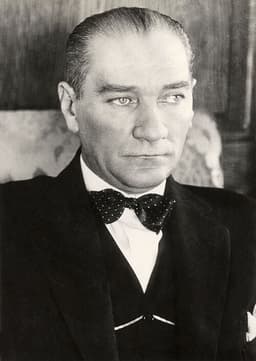
Mustafa Kemal Ataturk
Politician · Modern
80.0Total
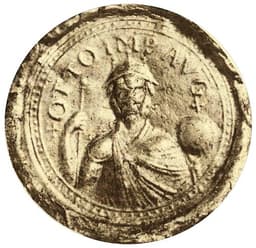
Otto I the Great
Emperor · Medieval
75.2Total
Basic Information
Born
1881
912
Died
1938
973
Era
Modern
Medieval
Nationality
Turkey
Holy Roman Empire
Occupation
Politician
Emperor
Civilization
Middle Eastern
Western
Score Comparison
Military (10%)
75.0
82.0
Political (20%)
85.0
70.0
Influence (20%)
75.0
88.0
Legacy (20%)
90.0
65.0
Leadership (15%)
80.0
78.0
Strategy (15%)
65.0
65.4
TOTAL
80.0
75.2
Mustafa Kemal Ataturk — Complete Timeline
1915 AD
Battle of GallipoliWar
As a colonel, Mustafa Kemal commanded Ottoman forces at Gallipoli, successfully repelling Allied landings. His leadership at critical points like Chunuk Bair made him a national hero and laid the foundation for his political career.
World War IOttoman EmpireMilitary Victory
Impact: regional
1919 AD
Turkish War of IndependenceWar
Kemal organized and led the Turkish National Movement against the Allied occupation of Anatolia and the Treaty of S
Independence WarNational MovementAnkara
Impact: nationalconstructive
1922 AD
Abolition of the SultanatePolitical Action◆ Major
The Grand National Assembly of Turkey, under Kemal's leadership, abolished the Ottoman Sultanate, ending 600 years of imperial rule. This severed the link with the old regime and paved the way for the proclamation of the Republic.
SultanateRepublicPolitical Reform
Impact: nationalprogressive
1923 AD
Proclamation of the Republic of TurkeyPolitical Action
Kemal declared Turkey a republic, becoming its first president. He moved the capital to Ankara and initiated a series of radical reforms to modernize and secularize the state, including the adoption of a new legal code and the Latin alphabet.
RepublicModernizationSecularism
Impact: globalprogressive
1925 AD
Adoption of the Hat LawReform◆ Major
Kemal introduced the Hat Law, banning the fez and encouraging Western-style hats. This was part of his broader cultural revolution to secularize and Westernize Turkish society, symbolizing the break with Ottoman traditions.
Cultural ReformSecularismWesternization
Impact: nationalprogressive
1934 AD
Granting of Women's SuffrageReform◆ Major
Kemal's government granted women the right to vote and stand for election in national elections, ahead of many European countries. This reform was part of his commitment to gender equality and modernization of Turkish society.
Women's RightsSuffrageModernization
Impact: nationalprogressive
Otto I the Great — Complete Timeline
951 AD
Diplomatic Marriage to Adelaide of ItalyPolitical Action◆ Major
Otto married Adelaide, the widowed queen of Italy, after intervening in Italian politics. This marriage gave him control over the Kingdom of Italy and strengthened his claim to imperial authority.
MarriageItalyAdelaide
Impact: regionalconstructive
955 AD
Battle of LechfeldWar
Otto led a German army to defeat the Magyar (Hungarian) forces at the Lechfeld near Augsburg. This victory ended Magyar raids into Western Europe and secured Otto's reputation as a defender of Christendom.
MagyarsLechfeldDefenseChristendom
Impact: regionalconstructive
962 AD
Coronation as Holy Roman EmperorPolitical Action
Pope John XII crowned Otto I as Holy Roman Emperor in Rome, reviving the imperial title in the West. This event established the Holy Roman Empire as a major political entity and linked German kingship with papal authority.
CoronationHoly Roman EmpirePapacy
Impact: globalconstructive
Expert Analysis
Origins
Mustafa Kemal Atatürk was born in 1881 in Salonika (then Ottoman Empire). His military education shaped his early career, and he rose through the ranks during the Ottoman collapse. Otto I the Great, born in 912, was the son of Henry the Fowler, Duke of Saxony. He inherited a fractured German kingdom and aimed to unify it under strong central rule. Both emerged from periods of fragmentation, but Atatürk's origins were more humble, while Otto was born into royalty.
Rise to Power
Atatürk's rise was forged in war. His brilliance at the Battle of Gallipoli (1915) made him a national hero. He then led the Turkish War of Independence (1919-1923), rallying a nation against foreign occupation. Otto's rise was more dynastic: he became king in 936 and spent years suppressing rebellions by his own brothers and dukes. His decisive victory at the Battle of Lechfeld (955) over the Magyars cemented his authority. Atatürk's path was revolutionary; Otto's was consolidatory.
Leadership & Governance
Atatürk's leadership was transformative and radical. He abolished the sultanate, declared a republic, and implemented Western-style reforms: secularism, legal codes, women's rights, and alphabet change. His score of 90 in Leadership reflects his ability to reshape a nation. Otto, with a Leadership score of 65, focused on strengthening royal power through the Church, creating a theocratic framework. He relied on bishops and abbots as administrators, a strategy that stabilized but limited centralization. Atatürk was more innovative; Otto more traditional.
Triumph & Tragedy
Atatürk's triumphs include founding the Republic and modernizing Turkey, but his secular reforms alienated religious conservatives. His death in 1938 left a legacy that later faced challenges from Islamist movements. Otto's victory at Lechfeld ended Magyar raids, and his coronation as Holy Roman Emperor in 962 revived the imperial title. However, his empire remained a loose confederation. Atatürk's changes were more permanent; Otto's empire fragmented after his death. Both faced posthumous decline of their achievements.
Character & Destiny
Atatürk was charismatic, visionary, and ruthless when needed. He adopted Western dress, learned languages, and promoted science. His destiny was to save Turkey from dismemberment. Otto was pious, strategic, and authoritarian. He used marriage alliances, like his union with Adelaide of Italy, to expand influence. Atatürk's personal transformation mirrored his nation's; Otto's destiny was to revive Charlemagne's legacy. Atatürk's impact on daily life was more profound.
Legacy
Atatürk's legacy is enduring: the Turkish Republic remains secular in principle, and his image is ubiquitous. Otto I's legacy is the Holy Roman Empire, which lasted until 1806, but his direct influence faded. Atatürk scores higher in overall impact (82 vs 78) and leadership (90 vs 65). However, Otto's military victory at Lechfeld was more decisive in its time. Atatürk's reforms touched every aspect of society; Otto's were more institutional. The score gap of 4.8 favors Atatürk.
Conclusion
Mustafa Kemal Atatürk emerges as the more transformative figure. His modernization of Turkey was a radical break from the past, creating a nation-state from an empire's ashes. Otto I the Great was a skilled consolidator, but his empire was a continuation of Carolingian tradition. Atatürk's scores in Political (85), Leadership (90), and Legacy (80) outweigh Otto's Military (82) and Intellectual (88). In the context of lasting change, Atatürk wins. **Score: Atatürk 82/100, Otto I 78/100.**
Rankings
🥇
Mustafa Kemal AtaturkLeader
Mil: 75.0Pol: 85.0Inf: 75.0
80.0
🥈
Otto I the Great
Mil: 82.0Pol: 70.0Inf: 88.0
75.2
+4.8 behind
How This Comparison Works
Algorithm
Each figure is scored on 6 dimensions (0—100 scale) based on structured historical data: Military (10%), Political (20%), Influence (20%), Legacy (20%), Leadership (15%), Strategy (15%). The weighted total produces the final ranking.
Data Sources
Scores are computed from structured sub-indicators in the database. Scale factors adjust for era (Ancient ×0.85, Modern ×1.0) and civilization size (Eastern ×1.05, Other ×0.80) to account for differences in population and military scale.
Maximum 3 Figures
Comparisons are limited to 2—3 figures to ensure readability and statistical meaningfulness.
Error Margins
±5 points per dimension — Sub-scores are derived from historical records with inherent uncertainty. Two figures within 5 points on a dimension should be considered roughly equivalent in that area.
Total Score Accuracy
±3 points overall — The weighted combination of 6 dimensions produces a total score with approximately ±3 points of uncertainty. Differences of less than 3 points are not statistically significant— the figures are effectively tied.
Known Limitations
- Historical records are incomplete and uneven across civilizations
- Figures from oral-tradition societies may be underrepresented
- Occupation labels can misclassify multi-role figures
- Scores measure capability and impact, not moral character
- Quantitative scoring is a comparison tool, not absolute truth
Capability Radar
Military (10%) — Battles & Warfare
Battles
85
75
Win Rate
90
80
Expansion
60
70
Political (20%) — Governance & Reform
Reform
98
80
Diplomacy
85
85
Economy
75
70
Influence (20%) — Cultural & Global Reach
Cultural
90
65
Global
80
70
Legacy (20%) — Historical Impact
Historical
95
80
Longevity
85
75
Leadership (15%) — Power & Stability
Tenure
85
85
Stability
70
75
Strategy (15%) — Tactics & Innovation
Strategy
85
75
Tactics
88
70
Reform
80
65
Similar Comparisons
Comments & Discussion
No comments yet. Be the first to share your thoughts!