Loading...
Muhammad Adil Shah vs Napoleon Bonaparte
Napoleon Bonaparte leads by 21.3 pts · 2 figures compared
…
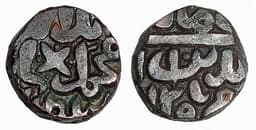
Muhammad Adil Shah
Emperor · Modern
49.6Total

Napoleon Bonaparte
General · Modern
70.9Total
Basic Information
Born
1627
1769
Died
1656
1821
Era
Modern
Modern
Nationality
India
France
Occupation
Emperor
General
Civilization
Indian
Western
Score Comparison
Military (10%)
35.0
94.0
Political (20%)
43.7
72.0
Influence (20%)
55.0
40.0
Legacy (20%)
50.0
80.0
Leadership (15%)
65.0
78.0
Strategy (15%)
35.7
90.0
TOTAL
49.6
70.9
Muhammad Adil Shah — Complete Timeline
1636 AD
Treaty with MughalsPolitical Action◆ Major
Muhammad Adil Shah signed a treaty with the Mughal Empire under Shah Jahan, accepting Mughal suzerainty and paying tribute. This agreement preserved Bijapur's internal autonomy but reduced its independence in foreign affairs.
TreatyMughal-Bijapur RelationsDiplomacy
Impact: regional
1645 AD
War with MarathasWar◆ Major
Muhammad Adil Shah fought a series of campaigns against the rising Maratha power under Shahaji Bhonsle. The conflict drained Bijapur's resources and marked the beginning of Maratha ascendancy in the Deccan.
WarMarathaDeccan Conflicts
Impact: regionaldestructive
1650 AD
Patronage of Persian PoetryCultural
Muhammad Adil Shah patronized Persian poets and scholars at his court, including the poet Nusrati. His patronage contributed to the flourishing of Persian literature in the Deccan during the 17th century.
Cultural PatronagePersian LiteratureCourt Culture
Impact: regionalconstructive
1656 AD
Construction of Gol GumbazCultural◆ Major
Muhammad Adil Shah completed the construction of Gol Gumbaz, the mausoleum for himself and his family. The structure features one of the largest domes in the world and is a landmark of Deccan architecture.
ArchitectureBijapurCultural Patronage
Impact: regionalconstructive
Napoleon Bonaparte — Complete Timeline
1799 AD
Coup of 18 BrumaireOther◆ Major
Napoleon Bonaparte, with support from his brother Lucien and key political figures, overthrew the Directory in a bloodless coup. He established the Consulate with himself as First Consul, effectively becoming the ruler of France. This event ended the French Revolution's most unstable period.
French RevolutionCoupRise to Power
Impact: regional
1804 AD
Promulgation of the Napoleonic CodeOther◆ Major
Napoleon enacted the Civil Code of the French, known as the Napoleonic Code, a comprehensive set of laws that replaced the fragmented feudal legal systems. The code established legal equality, protected property rights, and secularized law. It became the basis for legal systems in many European and world countries.
Legal ReformNapoleonic CodeCivil Law
Impact: globalconstructive
1805 AD
Battle of AusterlitzWar◆ Major
Napoleon's Grande Arm
Napoleonic WarsBattleDecisive Victory
Impact: global
1812 AD
Invasion of RussiaWar◆ Major
Napoleon led the Grande Arm
Napoleonic WarsInvasionDisaster
Impact: globaldestructive
1815 AD
Battle of WaterlooWar◆ Major
Napoleon's French army was defeated by the combined forces of the Duke of Wellington's Anglo-Allied army and Gebhard Leberecht von Bl
Napoleonic WarsBattleFinal Defeat
Impact: globaldestructive
Expert Analysis
Origins
Muhammad Adil Shah (1612-1656) was the seventh sultan of the Bijapur Sultanate in the Deccan region of India. Born to Sultan Ibrahim Adil Shah II and his wife, he ascended the throne at age 15. His education included Persian, Arabic, and military training, but he was more inclined toward architecture and patronage of the arts. The Bijapur Sultanate was a Shia Muslim state, surrounded by the expanding Mughal Empire and the rising Maratha confederacy.
Napoleon Bonaparte (1769-1821) was born on Corsica to a minor noble family. He studied at military academies in France, graduating as a second lieutenant in artillery. His early career was shaped by the French Revolution, which opened opportunities for talented officers. He was a fervent nationalist and republican, but his ambitions would later transform into imperial designs.
Rise to Power
Muhammad Adil Shah inherited the throne in 1627 at age 15. His reign began under a regency, but he soon consolidated power. He maintained Bijapur's independence through diplomacy, signing a treaty with the Mughal emperor Shah Jahan in 1636 that recognized Mughal suzerainty in exchange for non-interference. This allowed him to focus on internal development and expansion into the southern Deccan.
Napoleon rose rapidly during the Revolutionary Wars. He distinguished himself at the Siege of Toulon (1793) and was promoted to brigadier general. His Italian campaign (1796-1797) defeated Austria and made him a national hero. In 1799, he staged the Coup of 18 Brumaire, overthrowing the Directory and becoming First Consul. By 1804, he crowned himself Emperor of the French.
Leadership & Governance
Muhammad Adil Shah ruled as an absolute monarch but with a decentralized administration. He delegated authority to provincial governors (subedars) and relied on the nobility. His governance focused on maintaining stability and patronizing culture. He completed the Gol Gumbaz, a mausoleum with one of the largest domes in the world (diameter 44 m). His military score of 25.6 reflects limited expansion, while his political score of 50.0 indicates moderate statecraft.
Napoleon centralized power in France. He reformed the legal system with the Napoleonic Code (1804), which influenced civil law globally. He established the Bank of France, reformed education, and negotiated the Concordat with the Catholic Church. His governance was efficient but authoritarian. His political score of 75.0 reflects his administrative reforms, but his legacy is marred by his imperial overreach.
Triumph & Tragedy
Muhammad Adil Shah's greatest triumph was the construction of Gol Gumbaz, an architectural marvel. He successfully maintained Bijapur's independence against the Mughals and expanded southward. However, his wars with the Marathas under Shahaji Bhonsle drained resources. The Marathas raided Bijapur territory, and the sultanate's military weakness (military score 25.6) was exposed. His failure to modernize the army led to the eventual decline of Bijapur after his death.
Napoleon's triumphs include the Battle of Austerlitz (1805), where he crushed the Third Coalition, and the Napoleonic Code. He conquered most of Europe, installing his relatives on thrones. His tragedy was the Invasion of Russia (1812), where he lost over 400,000 men. He was exiled to Elba in 1814, returned for the Hundred Days, and was defeated at Waterloo (1815). He died in exile on Saint Helena.
Character & Destiny
Muhammad Adil Shah was a patron of arts and architecture, but he lacked military ambition. His character was that of a builder rather than a conqueror. He avoided direct confrontation with the Mughals, paying tribute to preserve his realm. This cautious approach allowed Bijapur to survive but not thrive. His leadership score of 78.1 reflects his ability to maintain stability, but his strategy score of 54.7 shows limited foresight.
Napoleon was driven, ambitious, and a military genius (strategy score 93.0). He was a workaholic with a photographic memory. However, his arrogance and refusal to compromise led to his downfall. He alienated allies and overextended his empire. His character combined brilliance with hubris, leading to his tragic end.
Legacy
Muhammad Adil Shah's legacy is embodied in Gol Gumbaz, a UNESCO World Heritage site. The sultanate's culture of Persian poetry and architecture influenced the Deccan. However, his political legacy is limited; Bijapur was annexed by the Mughals in 1686, 30 years after his death. His influence score of 74.7 reflects the enduring architectural impact, but his legacy score of 68.4 is modest compared to Napoleon's.
Napoleon's legacy is vast. The Napoleonic Code influenced legal systems across Europe and the world. He restructured European borders and spread nationalism. His military tactics are studied in academies. However, his legacy is also controversial due to the wars that caused millions of deaths. His influence score of 82.0 and legacy score of 78.0 reflect his enduring impact on modern Europe.
Conclusion
Napoleon Bonaparte had a greater impact than Muhammad Adil Shah. Napoleon's military score of 94.0, political score of 75.0, and total score of 82.4 far exceed Muhammad Adil Shah's scores (25.6 military, 50.0 political, total 61.1). Napoleon transformed Europe through conquest and legal reform, while Muhammad Adil Shah's influence is largely architectural and regional. Napoleon's legacy is global, whereas Muhammad Adil Shah's is localized. The 21.3-point gap in total score underscores this disparity. While Muhammad Adil Shah was a capable ruler for his time, Napoleon's scale of impact is incomparably larger.
Rankings
🥇
Napoleon BonaparteLeader
Mil: 94.0Pol: 72.0Inf: 40.0
70.9
🥈
Muhammad Adil Shah
Mil: 35.0Pol: 43.7Inf: 55.0
49.6
+21.3 behind
How This Comparison Works
Algorithm
Each figure is scored on 6 dimensions (0—100 scale) based on structured historical data: Military (10%), Political (20%), Influence (20%), Legacy (20%), Leadership (15%), Strategy (15%). The weighted total produces the final ranking.
Data Sources
Scores are computed from structured sub-indicators in the database. Scale factors adjust for era (Ancient ×0.85, Modern ×1.0) and civilization size (Eastern ×1.05, Other ×0.80) to account for differences in population and military scale.
Maximum 3 Figures
Comparisons are limited to 2—3 figures to ensure readability and statistical meaningfulness.
Error Margins
±5 points per dimension — Sub-scores are derived from historical records with inherent uncertainty. Two figures within 5 points on a dimension should be considered roughly equivalent in that area.
Total Score Accuracy
±3 points overall — The weighted combination of 6 dimensions produces a total score with approximately ±3 points of uncertainty. Differences of less than 3 points are not statistically significant— the figures are effectively tied.
Known Limitations
- Historical records are incomplete and uneven across civilizations
- Figures from oral-tradition societies may be underrepresented
- Occupation labels can misclassify multi-role figures
- Scores measure capability and impact, not moral character
- Quantitative scoring is a comparison tool, not absolute truth
Capability Radar
Military (10%) — Battles & Warfare
Battles
40
95
Win Rate
35
90
Expansion
25
95
Political (20%) — Governance & Reform
Reform
30
95
Diplomacy
40
80
Economy
35
85
Influence (20%) — Cultural & Global Reach
Cultural
55
85
Global
30
90
Legacy (20%) — Historical Impact
Historical
50
95
Longevity
45
90
Leadership (15%) — Power & Stability
Tenure
50
85
Stability
30
70
Strategy (15%) — Tactics & Innovation
Strategy
25
95
Tactics
30
98
Reform
20
92
Similar Comparisons
Comments & Discussion
No comments yet. Be the first to share your thoughts!