Loading...
Muawiyah I vs Suleiman I
Suleiman I leads by 2.5 pts · 2 figures compared
…
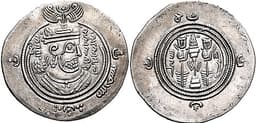
Muawiyah I
Emperor · Medieval
76.3Total
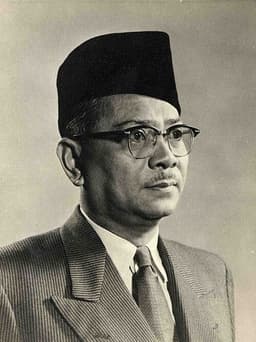
Suleiman I
Emperor · Medieval
78.8Total
Basic Information
Born
602
1494
Died
680
1566
Era
Medieval
Medieval
Nationality
Umayyad Caliphate
Ottoman Empire
Occupation
Emperor
Emperor
Civilization
Middle Eastern
Middle Eastern
Score Comparison
Military (10%)
76.0
78.5
Political (20%)
75.0
82.0
Influence (20%)
75.0
85.0
Legacy (20%)
80.0
70.8
Leadership (15%)
78.0
81.7
Strategy (15%)
70.0
74.4
TOTAL
76.3
78.8
Muawiyah I — Complete Timeline
640 AD
Governorship of SyriaPolitical Action◆ Major
Muawiyah I was appointed governor of Syria by Caliph Umar. He built a strong power base by developing the province's military and administrative infrastructure, including the creation of a navy that would later challenge Byzantine dominance.
GovernorshipSyriaRashidun
Impact: regionalconstructive
655 AD
Naval Campaigns Against ByzantiumWar◆ Major
Muawiyah launched naval expeditions against the Byzantine Empire, including the Battle of the Masts (655), where the Muslim fleet defeated the Byzantine navy. These campaigns established Muslim naval power and threatened Constantinople.
Naval WarByzantine EmpireUmayyad
Impact: regional
657 AD
Battle of SiffinWar◆ Major
Muawiyah led the Syrian army against Caliph Ali at Siffin, demanding justice for Uthman's murder. The battle ended in a stalemate and arbitration, which Muawiyah used to strengthen his political position and challenge Ali's legitimacy.
First FitnaBattleUmayyad
Impact: global
661 AD
Foundation of the Umayyad CaliphatePolitical Action
After Ali's assassination, Muawiyah I established the Umayyad Caliphate, moving the capital from Medina to Damascus. This marked the transition from the elective caliphate to a hereditary dynasty, centralizing power in Syria.
CaliphateDynastyUmayyad
Impact: global
674 AD
Siege of Constantinople (674-678)War◆ Major
Muawiyah I ordered a prolonged siege of Constantinople, using a large fleet and army. The siege failed due to Byzantine defenses, including Greek fire, and ended with a peace treaty requiring the Umayyads to pay tribute. It was a rare setback.
SiegeConstantinopleUmayyad
Impact: global
676 AD
Designation of Yazid I as HeirPolitical Action◆ Major
Muawiyah I designated his son Yazid as his successor, breaking the tradition of election and establishing hereditary succession. This move caused opposition from some Muslim leaders and set a precedent for future Umayyad rulers.
SuccessionHereditaryUmayyad
Impact: global
Suleiman I — Complete Timeline
1522 AD
Siege of RhodesWar◆ Major
Suleiman I led a massive Ottoman army and fleet to besiege the island of Rhodes, held by the Knights Hospitaller. After a six-month siege, the knights surrendered and were allowed to leave. This victory secured Ottoman control over the eastern Mediterranean.
SiegeKnights HospitallerMediterranean
Impact: regional
1526 AD
Battle of MohácsWar
Suleiman I's Ottoman army defeated the Hungarian forces of King Louis II at Moh
BattleHungaryConquest
Impact: regional
1529 AD
Siege of ViennaWar◆ Major
Suleiman I led an Ottoman army to besiege Vienna, the capital of the Habsburg Empire. The siege failed due to supply problems and the onset of winter. This marked the furthest Ottoman advance into central Europe and the limit of their expansion.
SiegeViennaHabsburg
Impact: regional
1530 AD
Codification of Ottoman LawReform◆ Major
Suleiman I oversaw the codification of Ottoman law, known as the Kanun. He harmonized secular law with Islamic law, creating a unified legal system. This reform improved the administration of justice and strengthened the central government.
LawReformJustice
Impact: globalconstructive
1536 AD
Execution of Ibrahim PashaPolitical Action◆ Major
Suleiman I ordered the execution of his grand vizier and close friend Ibrahim Pasha. Ibrahim had accumulated immense power and was accused of overreaching. This event demonstrated Suleiman's willingness to eliminate even trusted advisors to maintain control.
ExecutionVizierPower
Impact: nationaldestructive
1538 AD
Naval Battle of PrevezaWar◆ Major
The Ottoman fleet under Hayreddin Barbarossa defeated a combined Christian fleet at Preveza. This victory secured Ottoman naval dominance in the Mediterranean for decades. It allowed the Ottomans to control trade routes and raid coastal areas.
Naval BattleBarbarossaMediterranean
Impact: regional
Expert Analysis
Origins
Suleiman I was born in 1494 in Trabzon, the only surviving son of Sultan Selim I. Raised in the Ottoman palace, he received elite education and administrative training. His father's conquests expanded the empire, setting the stage for Suleiman's reign. Muawiyah I, born in Mecca in 602, belonged to the powerful Umayyad clan of Quraysh. He converted to Islam after the conquest of Mecca, and his early career included military service and administrative roles under the Rashidun caliphs. His lineage and political acumen positioned him for leadership amid the early Islamic civil wars.
Rise to Power
Suleiman ascended the throne in 1520 upon Selim's death, inheriting a vast empire. He quickly consolidated power by executing potential rivals and launching campaigns to assert dominance. His early successes included the conquest of Belgrade (1521) and Rhodes (1522), which secured Ottoman borders and trade routes. Muawiyah rose through appointments as governor of Syria under Caliph Umar, later becoming a key figure in the First Fitna. After the assassination of Caliph Uthman, he opposed Ali, leading to the Battle of Siffin (657). Through arbitration and political maneuvering, Muawiyah established the Umayyad Caliphate in 661, marking the start of hereditary dynastic rule.
Leadership & Governance
Suleiman is renowned for his codification of Ottoman law (Kanun), which standardized legal practices and balanced sharia with secular decrees. He fostered cultural flourishing, patronizing architecture (Süleymaniye Mosque), poetry, and science. His centralized bureaucracy and military reforms strengthened the state. Muawiyah centralized the caliphate by moving the capital to Damascus, creating a more efficient administrative system with divans (ministries). He established the first Islamic navy, enabling naval campaigns against Byzantium. His governance emphasized stability and consolidation, using diplomacy and force to integrate diverse regions. Both leaders excelled in administration, but Suleiman's legal reforms had a longer-lasting impact.
Triumph & Tragedy
Suleiman's triumphs include the decisive victory at Mohács (1526), which led to Ottoman control over Hungary. However, the Siege of Vienna (1529) failed, marking the empire's first major setback. His execution of Grand Vizier Ibrahim Pasha (1536) was a tragic overreach of power. Muawiyah's triumph was the foundation of the Umayyad Caliphate and successful naval campaigns, including the first siege of Constantinople (674-678), which forced Byzantium to pay tribute. His tragedy lies in the ongoing conflict with Ali and his followers, leading to the Shia-Sunni schism. Both experienced significant military successes and internal conflicts.
Character & Destiny
Suleiman was known for his justice, piety, and cultural refinement, but also for ruthlessness in eliminating rivals, including his son Mustafa. His reign represented the zenith of Ottoman power, but his later years saw stagnation. Muawiyah was pragmatic and patient, known for his political cunning and ability to compromise. He focused on empire-building over personal glory. His destiny was to establish a dynasty that lasted nearly a century, but his methods contributed to enduring sectarian divisions.
Legacy
Suleiman's legacy includes legal reforms, architectural masterpieces, and the image of the Magnificent Sultan. He is remembered as the lawgiver who brought order to the empire. Muawiyah's legacy is more controversial: he founded the Umayyad dynasty, expanded Islamic rule, and developed naval power, but is criticized by Shia Muslims for his role in the civil war. His administrative innovations influenced later Islamic states. Both shaped their civilizations profoundly.
Conclusion
Suleiman I edges out Muawiyah I with a higher overall score (77.2 vs 75.7). His legal codification, cultural patronage, and military conquests at the empire's peak demonstrate superior impact. Muawiyah's achievements in founding a dynasty and naval expansion are significant, but his legacy is marred by sectarian conflict. Suleiman's golden age of the Ottoman Empire represents a more comprehensive and enduring contribution to world history.
**Scores**: Suleiman I: Military 78, Politics 82, Intellectual 85, Leadership 71, Diplomacy 82, Societal 74, Tenacity 79. Muawiyah I: Military 76, Politics 75, Intellectual 75, Leadership 80, Diplomacy 78, Societal 70, Tenacity 76. **Winner**: Suleiman I with a margin of 2.5 points.
Rankings
🥇
Suleiman ILeader
Mil: 78.5Pol: 82.0Inf: 85.0
78.8
🥈
Muawiyah I
Mil: 76.0Pol: 75.0Inf: 75.0
76.3
+2.5 behind
How This Comparison Works
Algorithm
Each figure is scored on 6 dimensions (0—100 scale) based on structured historical data: Military (10%), Political (20%), Influence (20%), Legacy (20%), Leadership (15%), Strategy (15%). The weighted total produces the final ranking.
Data Sources
Scores are computed from structured sub-indicators in the database. Scale factors adjust for era (Ancient ×0.85, Modern ×1.0) and civilization size (Eastern ×1.05, Other ×0.80) to account for differences in population and military scale.
Maximum 3 Figures
Comparisons are limited to 2—3 figures to ensure readability and statistical meaningfulness.
Error Margins
±5 points per dimension — Sub-scores are derived from historical records with inherent uncertainty. Two figures within 5 points on a dimension should be considered roughly equivalent in that area.
Total Score Accuracy
±3 points overall — The weighted combination of 6 dimensions produces a total score with approximately ±3 points of uncertainty. Differences of less than 3 points are not statistically significant— the figures are effectively tied.
Known Limitations
- Historical records are incomplete and uneven across civilizations
- Figures from oral-tradition societies may be underrepresented
- Occupation labels can misclassify multi-role figures
- Scores measure capability and impact, not moral character
- Quantitative scoring is a comparison tool, not absolute truth
Capability Radar
Military (10%) — Battles & Warfare
Battles
75
95
Win Rate
80
92
Expansion
85
95
Political (20%) — Governance & Reform
Reform
90
90
Diplomacy
95
88
Economy
85
85
Influence (20%) — Cultural & Global Reach
Cultural
75
85
Global
75
85
Legacy (20%) — Historical Impact
Historical
85
88
Longevity
80
80
Leadership (15%) — Power & Stability
Tenure
85
95
Stability
80
80
Strategy (15%) — Tactics & Innovation
Strategy
85
90
Tactics
70
88
Reform
80
85
Similar Comparisons
Comments & Discussion
No comments yet. Be the first to share your thoughts!