Loading...
Muawiyah I vs Qin Shi Huang
Qin Shi Huang leads by 8.9 pts · 2 figures compared
…
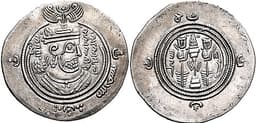
Muawiyah I
Emperor · Medieval
76.3Total
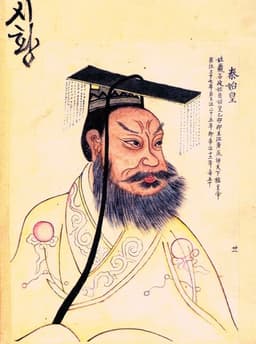
Qin Shi Huang
Emperor · Ancient
85.2Total
Basic Information
Born
602
-259
Died
680
-210
Era
Medieval
Ancient
Nationality
Umayyad Caliphate
China
Occupation
Emperor
Emperor
Civilization
Middle Eastern
Eastern
Score Comparison
Military (10%)
76.0
80.0
Political (20%)
75.0
90.0
Influence (20%)
75.0
85.0
Legacy (20%)
80.0
90.0
Leadership (15%)
78.0
78.0
Strategy (15%)
70.0
82.0
TOTAL
76.3
85.2
Muawiyah I — Complete Timeline
640 AD
Governorship of SyriaPolitical Action◆ Major
Muawiyah I was appointed governor of Syria by Caliph Umar. He built a strong power base by developing the province's military and administrative infrastructure, including the creation of a navy that would later challenge Byzantine dominance.
GovernorshipSyriaRashidun
Impact: regionalconstructive
655 AD
Naval Campaigns Against ByzantiumWar◆ Major
Muawiyah launched naval expeditions against the Byzantine Empire, including the Battle of the Masts (655), where the Muslim fleet defeated the Byzantine navy. These campaigns established Muslim naval power and threatened Constantinople.
Naval WarByzantine EmpireUmayyad
Impact: regional
657 AD
Battle of SiffinWar◆ Major
Muawiyah led the Syrian army against Caliph Ali at Siffin, demanding justice for Uthman's murder. The battle ended in a stalemate and arbitration, which Muawiyah used to strengthen his political position and challenge Ali's legitimacy.
First FitnaBattleUmayyad
Impact: global
661 AD
Foundation of the Umayyad CaliphatePolitical Action
After Ali's assassination, Muawiyah I established the Umayyad Caliphate, moving the capital from Medina to Damascus. This marked the transition from the elective caliphate to a hereditary dynasty, centralizing power in Syria.
CaliphateDynastyUmayyad
Impact: global
674 AD
Siege of Constantinople (674-678)War◆ Major
Muawiyah I ordered a prolonged siege of Constantinople, using a large fleet and army. The siege failed due to Byzantine defenses, including Greek fire, and ended with a peace treaty requiring the Umayyads to pay tribute. It was a rare setback.
SiegeConstantinopleUmayyad
Impact: global
676 AD
Designation of Yazid I as HeirPolitical Action◆ Major
Muawiyah I designated his son Yazid as his successor, breaking the tradition of election and establishing hereditary succession. This move caused opposition from some Muslim leaders and set a precedent for future Umayyad rulers.
SuccessionHereditaryUmayyad
Impact: global
Qin Shi Huang — Complete Timeline
246 BC
Construction of the Mausoleum and Terracotta ArmyOther◆ Major
Qin Shi Huang commissioned a vast mausoleum complex near Xi'an, guarded by thousands of life-sized terracotta soldiers, horses, and chariots. The project employed hundreds of thousands of workers and reflected his obsession with immortality and imperial power.
Impact: global
230 BC
Conquest of the Six Warring StatesWar
From 230 to 221 BCE, Ying Zheng led the Qin state in a series of campaigns that conquered the Han, Zhao, Wei, Chu, Yan, and Qi states. This unified China under a single ruler for the first time, ending the Warring States period.
Impact: global
221 BC
Standardization of Writing, Currency, and MeasurementsReform◆ Major
Qin Shi Huang ordered the standardization of Chinese script, currency, and weights and measures across the unified empire. This facilitated administration, trade, and cultural integration, laying a foundation for future dynasties.
Impact: globalconstructive
Proclamation of the Qin DynastyPolitical Action
After conquering the last independent state, Ying Zheng declared himself Shi Huangdi (First Emperor), founding the Qin Dynasty. He adopted a new title to signify his supreme authority and initiated centralized imperial rule.
Impact: global
214 BC
Initiation of the Great Wall ConstructionOther◆ Major
Qin Shi Huang ordered the connection and extension of existing northern fortifications to create a unified defensive wall against nomadic Xiongnu raids. This project involved massive conscripted labor and became the precursor to the later Great Wall.
Impact: regional
213 BC
Burning of Books and Burying of ScholarsPolitical Action◆ Major
On the advice of Li Si, Qin Shi Huang ordered the burning of historical records and philosophical texts not aligned with Legalist doctrine. He also had 460 Confucian scholars buried alive to suppress dissent and consolidate ideological control.
Impact: nationaldestructive
Expert Analysis
Origins
Qin Shi Huang was born Ying Zheng in 259 BC, the son of King Zhuangxiang of Qin and Lady Zhao. His early life was marked by political intrigue and hostage situations, shaping a ruthless and ambitious character. He ascended the throne at age 13, with Lü Buwei as regent. In contrast, Muawiyah I was born in Mecca in 602 AD into the powerful Umayyad clan of the Quraysh tribe. His father, Abu Sufyan, was a leading opponent of Prophet Muhammad before converting to Islam. Muawiyah grew up in a milieu of tribal politics and warfare, becoming a skilled diplomat and administrator. Both figures emerged from turbulent backgrounds that forged their leadership styles.
Rise to Power
Qin Shi Huang's rise was meteoric: by 221 BC, at age 38, he had conquered the six other warring states (Han, Zhao, Wei, Chu, Yan, Qi), ending centuries of feudal conflict. He proclaimed himself "Shi Huangdi" (First Emperor), centralizing power and abolishing feudalism. His military strategy combined overwhelming force with psychological warfare. Muawiyah's path was more gradual. He became Governor of Syria under Caliph Uthman, building a loyal power base. After Uthman's assassination, he opposed Caliph Ali, leading to the Battle of Siffin (657 AD). Through political maneuvering and arbitration, Muawiyah secured recognition as caliph in 661 AD, founding the Umayyad dynasty. His rise hinged on patience, diplomacy, and strategic alliances.
Leadership & Governance
Qin Shi Huang was an absolute autocrat. He imposed Legalist philosophy, standardizing writing, currency, weights, and measures across China. He ordered the burning of books and burying of scholars to suppress dissent. His administrative reforms created a centralized bureaucracy with commanderies and counties. Muawiyah, by contrast, was a pragmatic ruler who decentralized power. He moved the capital to Damascus, established a hereditary succession (breaking Islamic tradition), and built a professional army and navy. He tolerated Christians and other minorities, fostering stability. While Qin ruled through fear and uniformity, Muawiyah governed through negotiation and adaptation.
Triumph & Tragedy
Qin Shi Huang's greatest triumph was unifying China and creating a template for imperial rule that lasted millennia. His standardization projects and the Great Wall's foundation were monumental achievements. However, his tyranny sparked revolts, and his dynasty collapsed within four years of his death. His obsession with immortality led him to consume mercury pills, likely causing his death. Muawiyah's triumph was founding the Umayyad Caliphate, which expanded Islamic rule from Spain to India. His naval campaigns against Byzantium, including the siege of Constantinople (674-678), challenged the Roman Empire. Yet his establishment of hereditary rule created long-term dynastic conflicts and alienated Shia Muslims. His legacy is mixed: a unifier but also a source of sectarian division.
Character & Destiny
Qin Shi Huang was paranoid, megalomaniacal, and ruthless, but also visionary. He believed his destiny was to create an eternal empire. His character is reflected in the Terracotta Army—a testament to his obsession with control beyond death. Muawiyah was cunning, patient, and pragmatic. He was known as "the clement" (al-Hilm) for his forbearance. His destiny was to establish a dynasty that would rule for nearly a century. Both men were shaped by their times: Qin by the brutal Warring States period, Muawiyah by the fractured early Islamic community.
Legacy
Qin Shi Huang's legacy is foundational: "China" derives from his state's name. His standardized systems became the bedrock of Chinese civilization. The Great Wall remains an iconic symbol. However, his book burning and suppression of thought are dark chapters. Muawiyah's legacy includes the Umayyad Caliphate's administrative and military innovations. He transformed the caliphate into a secular empire. Yet his rule deepened the Sunni-Shia split. In historical rankings, Qin Shi Huang scores higher (overall score 82.9 vs 74.0) due to his transformative impact on Chinese civilization, despite his tyranny. Muawiyah's achievements were significant but less revolutionary.
Conclusion
In the contest between Qin Shi Huang and Muawiyah I, the First Emperor emerges as the more consequential figure. His unification of China and standardization projects had a deeper and more lasting impact on world history. Muawiyah's founding of the Umayyad Caliphate was crucial for Islamic expansion, but his methods were less innovative and his legacy more contested. Qin's vision of a centralized, uniform state proved more enduring, while Muawiyah's dynasty ultimately fell to internal divisions. The score gap of 8.9 points reflects this assessment: Qin's 82.9 versus Muawiyah's 74.0. Both were great leaders, but Qin Shi Huang's scale of achievement and influence on subsequent millennia places him in a higher tier of historical significance.
Rankings
🥇
Qin Shi HuangLeader
Mil: 80.0Pol: 90.0Inf: 85.0
85.2
🥈
Muawiyah I
Mil: 76.0Pol: 75.0Inf: 75.0
76.3
+8.9 behind
How This Comparison Works
Algorithm
Each figure is scored on 6 dimensions (0—100 scale) based on structured historical data: Military (10%), Political (20%), Influence (20%), Legacy (20%), Leadership (15%), Strategy (15%). The weighted total produces the final ranking.
Data Sources
Scores are computed from structured sub-indicators in the database. Scale factors adjust for era (Ancient ×0.85, Modern ×1.0) and civilization size (Eastern ×1.05, Other ×0.80) to account for differences in population and military scale.
Maximum 3 Figures
Comparisons are limited to 2—3 figures to ensure readability and statistical meaningfulness.
Error Margins
±5 points per dimension — Sub-scores are derived from historical records with inherent uncertainty. Two figures within 5 points on a dimension should be considered roughly equivalent in that area.
Total Score Accuracy
±3 points overall — The weighted combination of 6 dimensions produces a total score with approximately ±3 points of uncertainty. Differences of less than 3 points are not statistically significant— the figures are effectively tied.
Known Limitations
- Historical records are incomplete and uneven across civilizations
- Figures from oral-tradition societies may be underrepresented
- Occupation labels can misclassify multi-role figures
- Scores measure capability and impact, not moral character
- Quantitative scoring is a comparison tool, not absolute truth
Capability Radar
Military (10%) — Battles & Warfare
Battles
75
85
Win Rate
80
90
Expansion
85
90
Political (20%) — Governance & Reform
Reform
90
95
Diplomacy
95
75
Economy
85
90
Influence (20%) — Cultural & Global Reach
Cultural
75
95
Global
75
85
Legacy (20%) — Historical Impact
Historical
85
95
Longevity
80
95
Leadership (15%) — Power & Stability
Tenure
85
70
Stability
80
65
Strategy (15%) — Tactics & Innovation
Strategy
85
85
Tactics
70
80
Reform
80
95
Similar Comparisons
Comments & Discussion
No comments yet. Be the first to share your thoughts!