Loading...
Muammar Gaddafi vs Simonetta Sommaruga
Simonetta Sommaruga leads by 6.0 pts · 2 figures compared
…
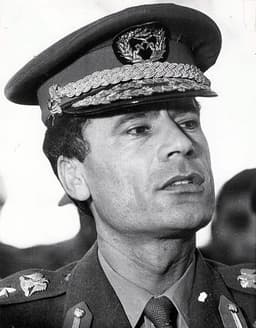
Muammar Gaddafi
Politician · Modern
49.3Total
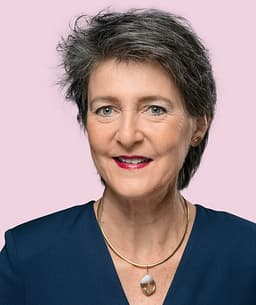
Simonetta Sommaruga
Politician · Modern
55.3Total
Basic Information
Born
1942
1960
Died
—
—
Era
Modern
Modern
Nationality
Libya
Switzerland
Occupation
Politician
Politician
Civilization
Middle Eastern
Western
Score Comparison
Military (10%)
20.0
49.5
Political (20%)
48.0
60.0
Influence (20%)
58.0
54.9
Legacy (20%)
46.7
45.0
Leadership (15%)
68.0
79.8
Strategy (15%)
36.8
43.7
TOTAL
49.3
55.3
Muammar Gaddafi — Complete Timeline
1969 AD
1969 Libyan Coup d'ÉtatPolitical Action
Muammar Gaddafi led a group of young military officers in a bloodless coup against King Idris I. The Free Officers Movement seized control of the government, ending the Libyan monarchy and establishing the Libyan Arab Republic with Gaddafi as its de facto leader.
CoupLibyan RevolutionFree Officers
Impact: regional
1973 AD
Nationalization of Libyan OilPolitical Action◆ Major
Gaddafi's government nationalized foreign oil companies operating in Libya, taking majority control of oil production. This policy dramatically increased state revenues and gave Libya leverage in international affairs, funding social programs and military expansion.
OilNationalizationEconomic Policy
Impact: global
1988 AD
Lockerbie BombingOther◆ Major
Pan Am Flight 103 exploded over Lockerbie, Scotland, killing 270 people. Libyan intelligence agents were later implicated. Gaddafi's government initially refused to extradite suspects, leading to UN sanctions and international isolation for Libya.
TerrorismSanctionsInternational Relations
Impact: globaldestructive
2003 AD
Renunciation of WMD ProgramsPolitical Action◆ Major
Gaddafi announced Libya's decision to abandon its weapons of mass destruction programs and allow international inspections. This move led to the lifting of UN sanctions and a normalization of relations with Western countries, including the United States.
WMDDiplomacySanctions
Impact: globalconstructive
2011 AD
Libyan Civil War and DeathWar
During the Arab Spring, a popular uprising escalated into a civil war. NATO forces intervened militarily. Gaddafi was captured and killed by rebel forces near Sirte on October 20, 2011, ending his 42-year rule and plunging Libya into prolonged instability.
Civil WarArab SpringNATO Intervention
Impact: regionaltragic
Simonetta Sommaruga — Complete Timeline
2010 AD
Election to Federal CouncilPolitical Action◆ Major
Sommaruga was elected to the Swiss Federal Council on September 22, 2010, representing the Social Democratic Party. She took over the Federal Department of Justice and Police, later moving to the Department of Environment, Transport, Energy and Communications in 2019.
Federal CouncilElectionSocial Democratic Party
Impact: nationalconstructive
2019 AD
Climate policy leadershipReform◆ Major
As head of the Federal Department of the Environment, Transport, Energy and Communications from 2019, Sommaruga oversaw Swiss climate policy, including the implementation of the CO2 Act and promotion of renewable energy. She advocated for the 2021 climate referendum, which was narrowly rejected.
Climate PolicyCO2 ActEnvironment
Impact: nationalconstructive
2020 AD
Presidency of the Swiss ConfederationPolitical Action◆ Major
Simonetta Sommaruga served as President of the Swiss Confederation in 2020, a year marked by the COVID-19 pandemic. She chaired the Federal Council and represented Switzerland internationally, while continuing her role as head of the Federal Department of the Environment, Transport, Energy and Communications.
Swiss PresidencyCOVID-19Rotating Presidency
Impact: national
Expert Analysis
Origins
Muammar Gaddafi was born in 1942 near Sirte, Libya, into a Bedouin family. His father was a goat herder, and Gaddafi grew up in a traditional desert environment. He attended a religious elementary school and later a secular secondary school, where he was influenced by Egyptian President Gamal Abdel Nasser's pan-Arabism. He entered the Libyan military academy in Benghazi and graduated in 1965, later training in the UK.
Simonetta Sommaruga was born in 1960 in Zug, Switzerland, into a middle-class family. She studied piano at the Lucerne Conservatory and later worked as a pianist and in publishing. She became involved in politics through consumer protection and environmental activism, serving on the board of the Swiss Consumer Protection Foundation. She studied at the University of Fribourg, earning a degree in English and Romance languages.
Rise to Power
Gaddafi's rise came through the 1969 Libyan coup d'état. On September 1, 1969, he led the Free Officers Movement, a group of young military officers, in a bloodless overthrow of King Idris I. Gaddafi, then a 27-year-old captain, became the de facto leader, initially as Chairman of the Revolutionary Command Council. He consolidated power by purging rivals and establishing a unique political system based on his "Third International Theory," outlined in his Green Book.
Sommaruga's rise was gradual within Swiss consensus politics. She was elected to the Swiss Federal Council on September 22, 2010, as the Social Democratic Party's representative. She had previously served as a member of the National Council (1999-2010) and as President of the Council of States (2008-2009). Her election was part of the "magic formula" power-sharing arrangement, and she initially headed the Federal Department of Justice and Police (2010-2018).
Leadership & Governance
Gaddafi's leadership was autocratic and idiosyncratic. He centralized power, abolished the constitution, and replaced it with the "Jamahiriya" (state of the masses), though in practice he held all authority. He nationalized Libya's oil industry in the 1970s, increasing state revenue, but also suppressed dissent through a network of security forces. His governance scored 68.0 in leadership, reflecting his tight control, but political score was only 48.0 due to lack of democratic institutions. He used oil wealth to provide social services but also funded militant groups abroad.
Sommaruga's leadership was consensual and collaborative, typical of Swiss federalism. As President in 2020, she managed the COVID-19 crisis by coordinating with cantons and implementing gradual restrictions. Her leadership score is 79.8, the highest among her metrics. She oversaw climate policy, including the 2021 CO2 Act (though rejected in a referendum), and promoted renewable energy. Her political score is 60.0, reflecting effectiveness within a multiparty system.
Triumph & Tragedy
Gaddafi's greatest triumph was nationalizing Libyan oil, which raised living standards and gave Libya international leverage. His renunciation of WMD programs in 2003 ended sanctions and reintegrated Libya into the global community. However, his greatest failure was the Lockerbie bombing (1988), which killed 270 people and led to isolation. His brutal suppression of the 2011 Arab Spring protests triggered a civil war and NATO intervention, resulting in his capture and death on October 20, 2011.
Sommaruga's triumphs include successfully steering Switzerland through the COVID-19 pandemic as President, maintaining stability. She advanced climate policies, such as the 2021 CO2 Act (though it failed in a referendum) and the expansion of public transport. Her failures are less dramatic; the rejection of the CO2 Act was a setback. She faced criticism for slow action on climate, but overall her tenure was competent.
Character & Destiny
Gaddafi was charismatic, erratic, and paranoid. He cultivated a cult of personality, wore flamboyant uniforms, and made unpredictable policy shifts. His character led to isolation and eventual downfall; he misjudged the Arab Spring's strength. Historical assessments view him as a dictator who squandered Libya's potential.
Sommaruga is seen as pragmatic, steady, and principled. Her character fits the Swiss consensus model; she is known for her calm demeanor and ability to build bridges. Her destiny was to be a respected but not transformative leader in a stable democracy.
Legacy
Gaddafi's legacy is mixed. He left Libya a failed state after his death, with ongoing civil war. His oil nationalization model influenced other resource-rich nations, but his support for terrorism tarnished his reputation. He scored 46.7 in legacy.
Sommaruga's legacy is modest but positive. She advanced climate policy within Switzerland and maintained institutional stability. Her influence on global climate policy is limited, but her scores (legacy 45.0, influence 54.9) reflect a quieter impact.
Conclusion
While Simonetta Sommaruga has a higher overall score (55.3 to 49.3), Gaddafi's impact on global events was more profound. Gaddafi's actions—oil nationalization, terrorism sponsorship, and the Lockerbie bombing—shaped international relations for decades. Sommaruga's influence was confined to Switzerland's domestic sphere. In terms of historical significance, Gaddafi's impact is greater, but for leadership quality and governance, Sommaruga's consensus style is superior. The clear position is that Gaddafi had more impact on the world stage, despite his lower score.
Rankings
🥇
Simonetta SommarugaLeader
Mil: 49.5Pol: 60.0Inf: 54.9
55.3
🥈
Muammar Gaddafi
Mil: 20.0Pol: 48.0Inf: 58.0
49.3
+6.0 behind
How This Comparison Works
Algorithm
Each figure is scored on 6 dimensions (0—100 scale) based on structured historical data: Military (10%), Political (20%), Influence (20%), Legacy (20%), Leadership (15%), Strategy (15%). The weighted total produces the final ranking.
Data Sources
Scores are computed from structured sub-indicators in the database. Scale factors adjust for era (Ancient ×0.85, Modern ×1.0) and civilization size (Eastern ×1.05, Other ×0.80) to account for differences in population and military scale.
Maximum 3 Figures
Comparisons are limited to 2—3 figures to ensure readability and statistical meaningfulness.
Error Margins
±5 points per dimension — Sub-scores are derived from historical records with inherent uncertainty. Two figures within 5 points on a dimension should be considered roughly equivalent in that area.
Total Score Accuracy
±3 points overall — The weighted combination of 6 dimensions produces a total score with approximately ±3 points of uncertainty. Differences of less than 3 points are not statistically significant— the figures are effectively tied.
Known Limitations
- Historical records are incomplete and uneven across civilizations
- Figures from oral-tradition societies may be underrepresented
- Occupation labels can misclassify multi-role figures
- Scores measure capability and impact, not moral character
- Quantitative scoring is a comparison tool, not absolute truth
Capability Radar
Military (10%) — Battles & Warfare
Battles
15
31
Win Rate
10
31
Expansion
20
34
Political (20%) — Governance & Reform
Reform
40
55
Diplomacy
45
65
Economy
35
60
Influence (20%) — Cultural & Global Reach
Cultural
40
30
Global
50
40
Legacy (20%) — Historical Impact
Historical
50
40
Longevity
30
30
Leadership (15%) — Power & Stability
Tenure
85
60
Stability
20
70
Strategy (15%) — Tactics & Innovation
Strategy
25
39
Tactics
20
43
Reform
30
44
Similar Comparisons
Comments & Discussion
No comments yet. Be the first to share your thoughts!