Loading...
Moro Aldo vs Raul Alberto Lastiri
Moro Aldo leads by 12.0 pts · 2 figures compared
…

Moro Aldo
Politician · Modern
50.1Total
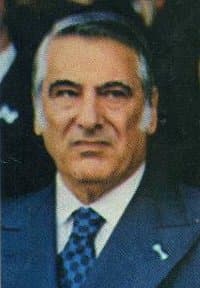
Raul Alberto Lastiri
Politician · Modern
38.1Total
Basic Information
Born
1916
1915
Died
1978
1978
Era
Modern
Modern
Nationality
Italy
Argentina
Occupation
Politician
Politician
Civilization
Western
Western
Score Comparison
Military (10%)
48.6
49.6
Political (20%)
48.0
26.4
Influence (20%)
54.1
45.5
Legacy (20%)
47.5
35.8
Leadership (15%)
55.3
31.2
Strategy (15%)
43.0
42.0
TOTAL
50.1
38.1
Moro Aldo — Complete Timeline
1963 AD
Formation of the Center-Left GovernmentPolitical Action◆ Major
Moro became prime minister in 1963, leading the first center-left coalition government in Italy, which included the Socialist Party. His government implemented social reforms, including the nationalization of the electricity industry and improvements in education and housing, marking a shift in Italian politics.
CoalitionSocial ReformItaly
Impact: nationalconstructive
1976 AD
Historic Compromise with the Communist PartyPolitical Action◆ Major
As prime minister, Aldo Moro pursued the 'Historic Compromise', a political strategy to bring the Italian Communist Party (PCI) into the governing majority. This aimed to stabilize Italy's fragile democracy and address economic challenges, but it faced strong opposition from the US and conservative factions, and ultimately failed to fully integrate the PCI.
CoalitionCommunismItalian Politics
Impact: nationalconstructive
1978 AD
Kidnapping by the Red BrigadesPolitical Action
On March 16, 1978, former Prime Minister Aldo Moro was kidnapped in Rome by the left-wing terrorist group Red Brigades. His five bodyguards were killed in the attack. The kidnapping plunged Italy into a national crisis, with the government refusing to negotiate with the terrorists.
KidnappingTerrorismPolitical Violence
Impact: nationaltragic
Assassination of Aldo MoroPolitical Action
After 55 days of captivity, Aldo Moro was murdered by the Red Brigades on May 9, 1978. His body was found in the trunk of a car in central Rome. The assassination shocked Italy and the world, leading to a crackdown on terrorism and a lasting impact on Italian politics.
AssassinationTerrorismPolitical Violence
Impact: nationaltragic
Raul Alberto Lastiri — Complete Timeline
1973 AD
Appointment as Minister of Social WelfarePolitical Action◆ Major
Raul Alberto Lastiri was appointed Minister of Social Welfare under President Juan Per
Social WelfarePerón GovernmentLópez Rega
Impact: national
Assumed Interim Presidency of ArgentinaOther◆ Major
Lastiri became interim president of Argentina after President H
Interim PresidencyPerónPolitical Transition
Impact: national
Role in the Ezeiza MassacreOther◆ Major
Lastiri was implicated in the planning of the Ezeiza massacre, where Peronist right-wing snipers opened fire on left-wing Peronists at the airport during Per
Ezeiza MassacrePeronist ViolenceRight-WingFactionalism
Impact: nationaldestructive
1976 AD
Exile After the 1976 CoupOther
Following the military coup that overthrew Isabel Per
ExileMilitary CoupTriple AProsecution
Impact: nationaldestructive
Expert Analysis
Origins
Aldo Moro was born on September 23, 1916, in Maglie, Italy, into a middle-class family. He studied law at the University of Bari, graduating with honors, and became a professor of criminal law. His early involvement in Catholic student organizations shaped his political ideology, emphasizing dialogue and compromise.
Raúl Alberto Lastiri was born on October 11, 1915, in Buenos Aires, Argentina. He studied law and entered politics through his father-in-law, José López Rega, a powerful figure in Peronist circles. Lastiri's early career was marked by administrative roles rather than electoral prominence.
Rise to Power
Moro rose through the ranks of the Christian Democracy party. He served as Minister of Justice and Minister of Education before becoming Prime Minister in 1963. His key achievement was forming the first center-left coalition, including the Socialist Party. By the 1970s, he was a senior statesman, advocating for the "Historic Compromise" to integrate the Communist Party into government.
Lastiri's rise was tied to the Peronist movement. He became Minister of Social Welfare under President Héctor Cámpora in 1973. After Cámpora's resignation, Lastiri served as interim president from July 13 to October 12, 1973, until Juan Perón's election. His appointment was orchestrated by López Rega.
Leadership & Governance
Moro's leadership was defined by coalition-building and dialogue. He scored 55.3 in Leadership and 48.0 in Political. His governance focused on social reforms and political inclusion, but faced opposition from both left-wing radicals and right-wing factions. The Historic Compromise aimed to stabilize Italy but was seen as a threat by anti-communists.
Lastiri's brief tenure (score 31.2 in Leadership) was marked by internal Peronist conflicts. As interim president, he oversaw the transition to Perón but was implicated in right-wing violence. His governance was overshadowed by the Ezeiza Massacre in June 1973, where snipers killed left-wing Peronists. He scored 26.4 in Political, reflecting his lack of independent authority.
Triumph & Tragedy
Moro's triumph was his role in shaping Italy's post-war democracy through the center-left coalition and the Historic Compromise. His tragedy was his kidnapping and murder by the Red Brigades in 1978, after 55 days of captivity. The state's refusal to negotiate led to his death, a failure that scarred Italian politics.
Lastiri's triumph was his brief presidency, but it was tainted by association with violence. His tragedy includes the Ezeiza Massacre and his subsequent exile after the 1976 coup. He faced no major criminal charges but lived in obscurity.
Character & Destiny
Moro was a cautious, intellectual leader who believed in dialogue. His persistence in seeking compromise with the Communist Party alienated hardliners. His character — principled but inflexible — contributed to his tragic fate. Historians view him as a martyr for democratic values.
Lastiri was a loyalist to López Rega, lacking independent political vision. His destiny was shaped by his father-in-law's influence and the violent factionalism of Peronism. He scored 45.5 in Influence, but his impact was negative, tied to repression.
Legacy
Moro's legacy (score 47.5) endures as a symbol of democratic resilience against terrorism. His Historic Compromise influenced later Italian politics, though not fully realized. He is remembered for his sacrifice and pursuit of unity.
Lastiri's legacy (score 35.8) is minimal. He is a footnote in Argentine history, overshadowed by Perón and the dictatorship. His involvement in the Triple A paramilitary group tarnishes his reputation.
Conclusion
Aldo Moro had greater impact (total score 50.1 vs. 38.1). His political vision and tragic death shaped Italy's anti-terrorism policies and democratic discourse. Lastiri's brief tenure and negative legacy cannot compare. Moro's influence on Italian history is far more significant.
Rankings
🥇
Moro AldoLeader
Mil: 48.6Pol: 48.0Inf: 54.1
50.1
🥈
Raul Alberto Lastiri
Mil: 49.6Pol: 26.4Inf: 45.5
38.1
+12.0 behind
How This Comparison Works
Algorithm
Each figure is scored on 6 dimensions (0—100 scale) based on structured historical data: Military (10%), Political (20%), Influence (20%), Legacy (20%), Leadership (15%), Strategy (15%). The weighted total produces the final ranking.
Data Sources
Scores are computed from structured sub-indicators in the database. Scale factors adjust for era (Ancient ×0.85, Modern ×1.0) and civilization size (Eastern ×1.05, Other ×0.80) to account for differences in population and military scale.
Maximum 3 Figures
Comparisons are limited to 2—3 figures to ensure readability and statistical meaningfulness.
Error Margins
±5 points per dimension — Sub-scores are derived from historical records with inherent uncertainty. Two figures within 5 points on a dimension should be considered roughly equivalent in that area.
Total Score Accuracy
±3 points overall — The weighted combination of 6 dimensions produces a total score with approximately ±3 points of uncertainty. Differences of less than 3 points are not statistically significant— the figures are effectively tied.
Known Limitations
- Historical records are incomplete and uneven across civilizations
- Figures from oral-tradition societies may be underrepresented
- Occupation labels can misclassify multi-role figures
- Scores measure capability and impact, not moral character
- Quantitative scoring is a comparison tool, not absolute truth
Capability Radar
Military (10%) — Battles & Warfare
Battles
31
30
Win Rate
31
29
Expansion
36
37
Political (20%) — Governance & Reform
Reform
40
5
Diplomacy
35
10
Economy
30
5
Influence (20%) — Cultural & Global Reach
Cultural
25
5
Global
30
5
Legacy (20%) — Historical Impact
Historical
45
10
Longevity
30
5
Leadership (15%) — Power & Stability
Tenure
30
10
Stability
20
5
Strategy (15%) — Tactics & Innovation
Strategy
40
40
Tactics
43
38
Reform
42
43
Similar Comparisons
Comments & Discussion
No comments yet. Be the first to share your thoughts!