Loading...
This comparison has not been analyzed yet.
One-time AI generation (~1 minute). Scores and timeline are already available below.
Monte Melkonian vs Oleksandr Syrskyi
Oleksandr Syrskyi leads by 2.3 pts · 2 figures compared
…
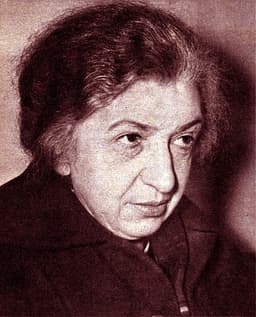
Monte Melkonian
General · Modern
44.6Total
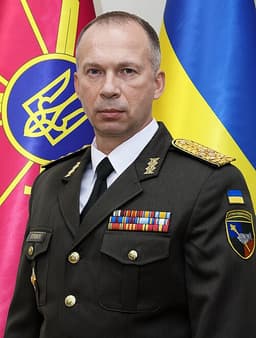
Oleksandr Syrskyi
General · Modern
46.9Total
Basic Information
Born
1957
1965
Died
—
—
Era
Modern
Modern
Nationality
Armenia
Ukraine
Occupation
General
General
Civilization
Western
Western
Score Comparison
Military (10%)
40.0
55.0
Political (20%)
32.2
35.1
Influence (20%)
56.4
53.3
Legacy (20%)
45.0
41.7
Leadership (15%)
40.4
47.3
Strategy (15%)
43.3
52.5
TOTAL
44.6
46.9
Monte Melkonian — Complete Timeline
1975 AD
Participation in the Lebanese Civil WarWar◆ Major
Melkonian fought in the Lebanese Civil War as a member of the Armenian Secret Army for the Liberation of Armenia (ASALA) and other leftist groups. He was involved in guerrilla operations against Turkish targets.
Lebanese Civil WarASALAGuerrilla Warfare
Impact: regionaldestructive
1985 AD
Imprisonment in FranceOther
Melkonian was arrested in France in 1985 and sentenced to six years in prison for possession of explosives and false documents. He was released in 1989 and subsequently moved to Armenia.
ImprisonmentLegalActivism
destructive
1991 AD
Leadership in the First Nagorno-Karabakh WarWar◆ Major
Melkonian served as a commander in the Nagorno-Karabakh Defense Army during the First Nagorno-Karabakh War. He led Armenian forces in several key battles, including the capture of Shusha in May 1992.
Nagorno-Karabakh WarMilitary CommandBattle of Shusha
Impact: regionalconstructive
1993 AD
Death in battle at MerziliWar
Melkonian was killed in action on June 12, 1993, near the village of Merzili in Nagorno-Karabakh, during a battle with Azerbaijani forces. His death made him a national hero in Armenia and Karabakh.
Death in BattleNagorno-Karabakh WarHero
Impact: regionaltragic
Oleksandr Syrskyi — Complete Timeline
2022 AD
Commander of Ukrainian Ground Forces during the Kharkiv CounteroffensiveWar◆ Major
As Commander of the Ukrainian Ground Forces, Syrskyi oversaw the successful Kharkiv counteroffensive in September 2022. Ukrainian forces recaptured thousands of square kilometers of territory in the Kharkiv region from Russian forces, marking a major turning point in the war.
Russo-Ukrainian WarCounteroffensiveMilitary Victory
Impact: regionalconstructive
2023 AD
Commander of Ukrainian Forces in the Battle of BakhmutWar◆ Major
Syrskyi commanded Ukrainian forces during the prolonged and costly Battle of Bakhmut. The city was eventually captured by Russian forces in May 2023 after months of intense fighting, resulting in heavy casualties on both sides and significant destruction.
Russo-Ukrainian WarBattleUrban Warfare
Impact: regionaltragic
2024 AD
Appointed Commander-in-Chief of the Armed Forces of UkrainePolitical Action◆ Major
President Zelenskyy appointed Syrskyi as the Commander-in-Chief of the Armed Forces of Ukraine, replacing Valerii Zaluzhnyi. This change occurred during the ongoing Russo-Ukrainian War, amid debates over military strategy and the need for a new approach to the conflict.
Russo-Ukrainian WarMilitary LeadershipPersonnel Change
Impact: national
This comparison has not been analyzed yet.
One-time AI generation (~1 minute). Scores and timeline are already available below.
Rankings
🥇
Oleksandr SyrskyiLeader
Mil: 55.0Pol: 35.1Inf: 53.3
46.9
🥈
Monte Melkonian
Mil: 40.0Pol: 32.2Inf: 56.4
44.6
+2.3 behind
How This Comparison Works
Algorithm
Each figure is scored on 6 dimensions (0—100 scale) based on structured historical data: Military (10%), Political (20%), Influence (20%), Legacy (20%), Leadership (15%), Strategy (15%). The weighted total produces the final ranking.
Data Sources
Scores are computed from structured sub-indicators in the database. Scale factors adjust for era (Ancient ×0.85, Modern ×1.0) and civilization size (Eastern ×1.05, Other ×0.80) to account for differences in population and military scale.
Maximum 3 Figures
Comparisons are limited to 2—3 figures to ensure readability and statistical meaningfulness.
Error Margins
±5 points per dimension — Sub-scores are derived from historical records with inherent uncertainty. Two figures within 5 points on a dimension should be considered roughly equivalent in that area.
Total Score Accuracy
±3 points overall — The weighted combination of 6 dimensions produces a total score with approximately ±3 points of uncertainty. Differences of less than 3 points are not statistically significant— the figures are effectively tied.
Known Limitations
- Historical records are incomplete and uneven across civilizations
- Figures from oral-tradition societies may be underrepresented
- Occupation labels can misclassify multi-role figures
- Scores measure capability and impact, not moral character
- Quantitative scoring is a comparison tool, not absolute truth
Capability Radar
Military (10%) — Battles & Warfare
Battles
35
55
Win Rate
40
50
Expansion
25
30
Political (20%) — Governance & Reform
Reform
15
15
Diplomacy
25
35
Economy
10
10
Influence (20%) — Cultural & Global Reach
Cultural
30
20
Global
20
30
Legacy (20%) — Historical Impact
Historical
35
25
Longevity
25
15
Leadership (15%) — Power & Stability
Tenure
20
20
Stability
15
25
Strategy (15%) — Tactics & Innovation
Strategy
40
55
Tactics
45
60
Reform
20
40
Similar Comparisons
Comments & Discussion
No comments yet. Be the first to share your thoughts!