Loading...
This comparison has not been analyzed yet.
One-time AI generation (~1 minute). Scores and timeline are already available below.
Mohammad Omar vs Ruganzu II Ndoli
Mohammad Omar leads by 3.0 pts · 2 figures compared
…

Mohammad Omar
Emperor · Modern
51.1Total
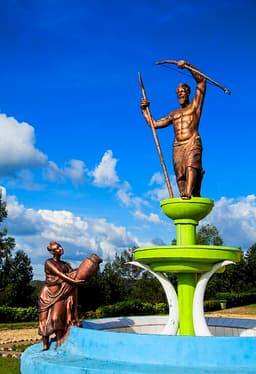
Ruganzu II Ndoli
Emperor · Modern
48.1Total
Basic Information
Born
1960
1550
Died
—
1600
Era
Modern
Modern
Nationality
Afghanistan
Rwanda
Occupation
Emperor
Emperor
Civilization
Middle Eastern
Other
Score Comparison
Military (10%)
50.0
50.0
Political (20%)
35.1
43.7
Influence (20%)
58.0
57.2
Legacy (20%)
45.8
47.5
Leadership (15%)
65.0
40.0
Strategy (15%)
51.7
43.3
TOTAL
51.1
48.1
Mohammad Omar — Complete Timeline
1994 AD
Founded the Taliban MovementPolitical Action
Mullah Omar founded the Taliban movement in Kandahar, Afghanistan, with a group of religious students. The movement aimed to end the chaos of the post-Soviet civil war and impose a strict interpretation of Islamic law.
Taliban FoundingAfghanistanIslamic Movement
Impact: global
1996 AD
Captured KabulWar◆ Major
Taliban forces under Mullah Omar's leadership captured Kabul in September 1996, overthrowing the Burhanuddin Rabbani government. This established the Islamic Emirate of Afghanistan, with Omar as its de facto leader.
Afghan Civil WarKabulTaliban Victory
Impact: national
2001 AD
Ordered Destruction of Bamiyan BuddhasCultural◆ Major
Mullah Omar issued a decree ordering the destruction of the ancient Bamiyan Buddha statues in central Afghanistan. The statues were demolished in March 2001, drawing widespread international condemnation.
Cultural DestructionBamiyan BuddhasIconoclasm
Impact: globaldestructive
Refused to Hand Over Osama bin LadenPolitical Action
Following the September 11 attacks, Mullah Omar refused US demands to extradite Osama bin Laden from Afghanistan. This refusal led to the US-led invasion of Afghanistan in October 2001, which toppled the Taliban regime.
9/11US InvasionOsama bin Laden
Impact: global
Ruganzu II Ndoli — Complete Timeline
1575 AD
Expansion of Rwanda into the Eastern RegionWar◆ Major
Ruganzu II Ndoli led military campaigns that expanded the Rwandan kingdom eastward, conquering territories inhabited by the Gisaka and other groups. This expansion increased the kingdom's size and population, establishing Rwanda as a regional power.
ExpansionConquestRwanda
Impact: regional
This comparison has not been analyzed yet.
One-time AI generation (~1 minute). Scores and timeline are already available below.
Rankings
🥇
Mohammad OmarLeader
Mil: 50.0Pol: 35.1Inf: 58.0
51.1
🥈
Ruganzu II Ndoli
Mil: 50.0Pol: 43.7Inf: 57.2
48.1
+3.0 behind
How This Comparison Works
Algorithm
Each figure is scored on 6 dimensions (0—100 scale) based on structured historical data: Military (10%), Political (20%), Influence (20%), Legacy (20%), Leadership (15%), Strategy (15%). The weighted total produces the final ranking.
Data Sources
Scores are computed from structured sub-indicators in the database. Scale factors adjust for era (Ancient ×0.85, Modern ×1.0) and civilization size (Eastern ×1.05, Other ×0.80) to account for differences in population and military scale.
Maximum 3 Figures
Comparisons are limited to 2—3 figures to ensure readability and statistical meaningfulness.
Error Margins
±5 points per dimension — Sub-scores are derived from historical records with inherent uncertainty. Two figures within 5 points on a dimension should be considered roughly equivalent in that area.
Total Score Accuracy
±3 points overall — The weighted combination of 6 dimensions produces a total score with approximately ±3 points of uncertainty. Differences of less than 3 points are not statistically significant— the figures are effectively tied.
Known Limitations
- Historical records are incomplete and uneven across civilizations
- Figures from oral-tradition societies may be underrepresented
- Occupation labels can misclassify multi-role figures
- Scores measure capability and impact, not moral character
- Quantitative scoring is a comparison tool, not absolute truth
Capability Radar
Military (10%) — Battles & Warfare
Battles
55
45
Win Rate
50
50
Expansion
55
55
Political (20%) — Governance & Reform
Reform
20
40
Diplomacy
25
35
Economy
15
30
Influence (20%) — Cultural & Global Reach
Cultural
40
55
Global
50
30
Legacy (20%) — Historical Impact
Historical
55
50
Longevity
30
45
Leadership (15%) — Power & Stability
Tenure
60
50
Stability
20
45
Strategy (15%) — Tactics & Innovation
Strategy
50
45
Tactics
45
40
Reform
30
35
Similar Comparisons
Comments & Discussion
No comments yet. Be the first to share your thoughts!