Loading...
This comparison has not been analyzed yet.
One-time AI generation (~1 minute). Scores and timeline are already available below.
Mohamed Waheed Hassan vs Mohammed Shia al-Sudani
Mohammed Shia al-Sudani leads by 8.6 pts · 2 figures compared
…
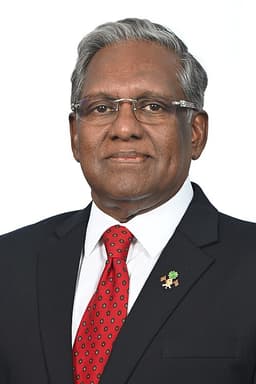
Mohamed Waheed Hassan
Politician · Modern
37.4Total

Mohammed Shia al-Sudani
Politician · Modern
46.0Total
Basic Information
Born
1953
1970
Died
—
—
Era
Modern
Modern
Nationality
Maldives
Iraq
Occupation
Politician
Politician
Civilization
Other
Middle Eastern
Score Comparison
Military (10%)
40.4
48.1
Political (20%)
25.0
48.0
Influence (20%)
47.1
49.4
Legacy (20%)
35.0
36.7
Leadership (15%)
31.2
55.3
Strategy (15%)
44.5
41.9
TOTAL
37.4
46.0
Mohamed Waheed Hassan — Complete Timeline
2005 AD
Appointed Minister of EducationPolitical Action◆ Major
Mohamed Waheed Hassan was appointed Minister of Education in the Maldives under President Maumoon Abdul Gayoom. He oversaw education reforms and modernization of the school system.
MinisterEducation reform
Impact: nationalconstructive
2008 AD
Worked as a UNICEF officialOther
After leaving the government, Waheed worked as a senior education advisor for UNICEF in various countries. This international experience shaped his later political views and approach to governance.
UNICEFInternational development
Impact: regionalconstructive
Became Vice President of the MaldivesPolitical Action◆ Major
Waheed was elected Vice President of the Maldives as the running mate of President Mohamed Nasheed. He served as Vice President from 2008 to 2012.
Vice PresidentElection
Impact: national
2012 AD
Became President of the Maldives after a controversial coupPolitical Action
Following the resignation of President Mohamed Nasheed under disputed circumstances, Waheed assumed the presidency. His ascension was widely seen as a coup by Nasheed's supporters, leading to political instability and international criticism.
CoupPresidencyPolitical crisis
Impact: nationaldestructive
2013 AD
Lost re-election bidPolitical Action◆ Major
Waheed ran for re-election as president in the 2013 elections but lost to Abdulla Yameen. He finished third in the first round and did not advance to the runoff.
Election lossPresidency
Impact: national
Mohammed Shia al-Sudani — Complete Timeline
2022 AD
Appointed Prime MinisterPolitical Action◆ Major
Mohammed Shia al-Sudani was appointed Prime Minister of Iraq after a prolonged political crisis. His government was formed with support from the Coordination Framework, a coalition of Shia parties.
Prime MinisterGovernment Formation
Impact: national
2023 AD
Launched Development Road ProjectReform◆ Major
Sudani launched the Development Road project, a major infrastructure initiative to connect Iraq to Turkey and Europe via rail and road. The project aims to boost economic integration and reduce dependence on oil.
InfrastructureEconomic Development
Impact: regionalconstructive
This comparison has not been analyzed yet.
One-time AI generation (~1 minute). Scores and timeline are already available below.
Rankings
🥇
Mohammed Shia al-SudaniLeader
Mil: 48.1Pol: 48.0Inf: 49.4
46.0
🥈
Mohamed Waheed Hassan
Mil: 40.4Pol: 25.0Inf: 47.1
37.4
+8.6 behind
How This Comparison Works
Algorithm
Each figure is scored on 6 dimensions (0—100 scale) based on structured historical data: Military (10%), Political (20%), Influence (20%), Legacy (20%), Leadership (15%), Strategy (15%). The weighted total produces the final ranking.
Data Sources
Scores are computed from structured sub-indicators in the database. Scale factors adjust for era (Ancient ×0.85, Modern ×1.0) and civilization size (Eastern ×1.05, Other ×0.80) to account for differences in population and military scale.
Maximum 3 Figures
Comparisons are limited to 2—3 figures to ensure readability and statistical meaningfulness.
Error Margins
±5 points per dimension — Sub-scores are derived from historical records with inherent uncertainty. Two figures within 5 points on a dimension should be considered roughly equivalent in that area.
Total Score Accuracy
±3 points overall — The weighted combination of 6 dimensions produces a total score with approximately ±3 points of uncertainty. Differences of less than 3 points are not statistically significant— the figures are effectively tied.
Known Limitations
- Historical records are incomplete and uneven across civilizations
- Figures from oral-tradition societies may be underrepresented
- Occupation labels can misclassify multi-role figures
- Scores measure capability and impact, not moral character
- Quantitative scoring is a comparison tool, not absolute truth
Capability Radar
Military (10%) — Battles & Warfare
Battles
20
23
Win Rate
26
24
Expansion
27
27
Political (20%) — Governance & Reform
Reform
10
40
Diplomacy
20
45
Economy
10
35
Influence (20%) — Cultural & Global Reach
Cultural
5
10
Global
5
15
Legacy (20%) — Historical Impact
Historical
5
10
Longevity
5
10
Leadership (15%) — Power & Stability
Tenure
10
30
Stability
5
20
Strategy (15%) — Tactics & Innovation
Strategy
32
30
Tactics
31
33
Reform
36
39
Similar Comparisons
Comments & Discussion
No comments yet. Be the first to share your thoughts!