Loading...
This comparison has not been analyzed yet.
One-time AI generation (~1 minute). Scores and timeline are already available below.
Mohamed Naguib vs Myint Swe
Mohamed Naguib leads by 11.1 pts · 2 figures compared
…

Mohamed Naguib
General · Modern
46.4Total
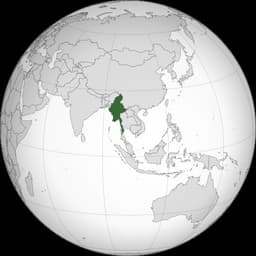
Myint Swe
General · Modern
35.3Total
Basic Information
Born
1901
1951
Died
1984
—
Era
Modern
Modern
Nationality
Egypt
Myanmar
Occupation
General
General
Civilization
Middle Eastern
Eastern
Score Comparison
Military (10%)
50.0
10.2
Political (20%)
39.4
26.4
Influence (20%)
54.9
47.1
Legacy (20%)
43.3
37.5
Leadership (15%)
45.0
34.6
Strategy (15%)
41.7
39.6
TOTAL
46.4
35.3
Mohamed Naguib — Complete Timeline
1952 AD
Led the 1952 Egyptian RevolutionPolitical Action
General Mohamed Naguib was the public face of the Free Officers movement that overthrew King Farouk in the 1952 Egyptian Revolution. He became the first president of Egypt, leading the transition from monarchy to republic.
RevolutionFree OfficersRepublic
Impact: nationalconstructive
1953 AD
Became First President of EgyptPolitical Action◆ Major
Naguib was appointed as the first president of the Republic of Egypt on June 18, 1953. His presidency was marked by efforts to establish democratic institutions and land reform, but he faced increasing opposition from Gamal Abdel Nasser.
PresidencyRepublicReform
Impact: nationalconstructive
1954 AD
Deposed by Gamal Abdel NasserPolitical Action◆ Major
Naguib was forced to resign as president in November 1954 after a power struggle with Nasser. He was placed under house arrest, where he remained for nearly 30 years, effectively ending his political career.
CoupNasserHouse Arrest
Impact: nationaltragic
1984 AD
Released from House ArrestPolitical Action
Naguib was released from house arrest by President Anwar Sadat in 1972, but remained politically inactive. He died in 1984, having been largely forgotten by the public, but later recognized as a key figure in Egypt's modern history.
ReleaseLegacyRecognition
Impact: national
Myint Swe — Complete Timeline
2016 AD
Appointed as Vice President of MyanmarPolitical Action◆ Major
Myint Swe was appointed as First Vice President of Myanmar under President Htin Kyaw, representing the military's interests. His appointment was part of the power-sharing arrangement following the 2015 elections that brought the NLD to power.
Myanmar PoliticsMilitaryPower Sharing
Impact: national
2021 AD
Assumed Acting Presidency After CoupPolitical Action
Following the February 1 military coup that detained elected leaders, Myint Swe was appointed acting president by the military. He delegated his powers to coup leader Min Aung Hlaing, legitimizing the junta's takeover and triggering widespread civil disobedience.
CoupMilitary JuntaConstitutional Crisis
Impact: nationaldestructive
Declared State of EmergencyPolitical Action◆ Major
As acting president, Myint Swe declared a one-year state of emergency, granting the military full legislative, executive, and judicial powers. This declaration suspended the constitution and enabled the junta to suppress pro-democracy protests violently.
State of EmergencyRepressionConstitution
Impact: nationaldestructive
This comparison has not been analyzed yet.
One-time AI generation (~1 minute). Scores and timeline are already available below.
Rankings
🥇
Mohamed NaguibLeader
Mil: 50.0Pol: 39.4Inf: 54.9
46.4
🥈
Myint Swe
Mil: 10.2Pol: 26.4Inf: 47.1
35.3
+11.1 behind
How This Comparison Works
Algorithm
Each figure is scored on 6 dimensions (0—100 scale) based on structured historical data: Military (10%), Political (20%), Influence (20%), Legacy (20%), Leadership (15%), Strategy (15%). The weighted total produces the final ranking.
Data Sources
Scores are computed from structured sub-indicators in the database. Scale factors adjust for era (Ancient ×0.85, Modern ×1.0) and civilization size (Eastern ×1.05, Other ×0.80) to account for differences in population and military scale.
Maximum 3 Figures
Comparisons are limited to 2—3 figures to ensure readability and statistical meaningfulness.
Error Margins
±5 points per dimension — Sub-scores are derived from historical records with inherent uncertainty. Two figures within 5 points on a dimension should be considered roughly equivalent in that area.
Total Score Accuracy
±3 points overall — The weighted combination of 6 dimensions produces a total score with approximately ±3 points of uncertainty. Differences of less than 3 points are not statistically significant— the figures are effectively tied.
Known Limitations
- Historical records are incomplete and uneven across civilizations
- Figures from oral-tradition societies may be underrepresented
- Occupation labels can misclassify multi-role figures
- Scores measure capability and impact, not moral character
- Quantitative scoring is a comparison tool, not absolute truth
Capability Radar
Military (10%) — Battles & Warfare
Battles
20
5
Win Rate
25
5
Expansion
10
5
Political (20%) — Governance & Reform
Reform
30
5
Diplomacy
25
10
Economy
20
5
Influence (20%) — Cultural & Global Reach
Cultural
20
5
Global
20
5
Legacy (20%) — Historical Impact
Historical
30
10
Longevity
20
5
Leadership (15%) — Power & Stability
Tenure
20
15
Stability
15
5
Strategy (15%) — Tactics & Innovation
Strategy
25
10
Tactics
20
10
Reform
30
5
Similar Comparisons
Comments & Discussion
No comments yet. Be the first to share your thoughts!