Loading...
Modibbo Adama vs Napoleon Bonaparte
Napoleon Bonaparte leads by 20.1 pts · 2 figures compared
…
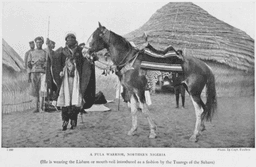
Modibbo Adama
Emperor · Modern
50.8Total

Napoleon Bonaparte
General · Modern
70.9Total
Basic Information
Born
1786
1769
Died
1847
1821
Era
Modern
Modern
Nationality
Adamawa
France
Occupation
Emperor
General
Civilization
Other
Western
Score Comparison
Military (10%)
10.0
94.0
Political (20%)
68.0
72.0
Influence (20%)
53.3
40.0
Legacy (20%)
47.5
80.0
Leadership (15%)
68.0
78.0
Strategy (15%)
41.7
90.0
TOTAL
50.8
70.9
Modibbo Adama — Complete Timeline
1809 AD
Receipt of the Flag from Usman dan FodioPolitical Action
Modibbo Adama received a flag from Usman dan Fodio, authorizing him to lead the jihad in the eastern region. This act formally established the Adamawa Emirate as part of the Sokoto Caliphate. It gave Modibbo Adama religious and political legitimacy for his campaigns.
FlagAuthorizationAdamawa
Impact: regionalconstructive
1815 AD
Conquest of the Fombina RegionWar◆ Major
Modibbo Adama led a series of campaigns to conquer the Fombina region (the area south of the Benue River). He defeated local chieftaincies and incorporated their lands into the Adamawa Emirate. This conquest opened up new territories for Fulani settlement and trade.
ConquestFombinaExpansion
Impact: regional
1820 AD
Establishment of Yola as CapitalPolitical Action◆ Major
Modibbo Adama formally established Yola as the capital of the Adamawa Emirate, building a palace and a mosque. The city became the administrative and commercial center of the emirate. Its location on the Benue River facilitated trade and communication with other emirates.
CapitalYolaAdministration
Impact: regionalconstructive
1825 AD
Conflict with the Bata KingdomWar◆ Major
Modibbo Adama engaged in a prolonged conflict with the Bata kingdom, which resisted Fulani rule. The war involved multiple battles and sieges, eventually resulting in the subjugation of the Bata. The conflict caused significant destruction and loss of life on both sides.
ConflictBataSubjugation
destructive
Napoleon Bonaparte — Complete Timeline
1799 AD
Coup of 18 BrumaireOther◆ Major
Napoleon Bonaparte, with support from his brother Lucien and key political figures, overthrew the Directory in a bloodless coup. He established the Consulate with himself as First Consul, effectively becoming the ruler of France. This event ended the French Revolution's most unstable period.
French RevolutionCoupRise to Power
Impact: regional
1804 AD
Promulgation of the Napoleonic CodeOther◆ Major
Napoleon enacted the Civil Code of the French, known as the Napoleonic Code, a comprehensive set of laws that replaced the fragmented feudal legal systems. The code established legal equality, protected property rights, and secularized law. It became the basis for legal systems in many European and world countries.
Legal ReformNapoleonic CodeCivil Law
Impact: globalconstructive
1805 AD
Battle of AusterlitzWar◆ Major
Napoleon's Grande Arm
Napoleonic WarsBattleDecisive Victory
Impact: global
1812 AD
Invasion of RussiaWar◆ Major
Napoleon led the Grande Arm
Napoleonic WarsInvasionDisaster
Impact: globaldestructive
1815 AD
Battle of WaterlooWar◆ Major
Napoleon's French army was defeated by the combined forces of the Duke of Wellington's Anglo-Allied army and Gebhard Leberecht von Bl
Napoleonic WarsBattleFinal Defeat
Impact: globaldestructive
Expert Analysis
modibbo-adama-vs-napoleon-bonaparte
# The Conqueror and the Scholar-Emir: Napoleon and Modibbo Adama
On a June morning in 1815, Napoleon Bonaparte surveyed the muddy fields near Waterloo, his Grande Armée poised for what would be his final gamble. Half a world away, in the same year, Modibbo Adama—a Fulani scholar who had never commanded more than a few thousand horsemen—was consolidating his conquest of the Fombina region south of the Benue River. One man’s name would echo through every European capital for centuries; the other’s would be remembered only by the people whose land he transformed. Yet both were empire-builders, both were men of faith in their own ways, and both rose from modest beginnings to reshape the political map of their worlds. What separates a Napoleon from an Adama is not merely scale, but the very nature of their ambitions and the worlds they sought to conquer.
Origins
Napoleon Bonaparte was born in 1769 on the island of Corsica, a rocky Mediterranean territory that France had acquired only a year earlier. His family were minor Italian nobility, but they were poor, and young Napoleon grew up speaking Corsican dialect, not French—an outsider in the nation he would one day rule. The French Revolution of 1789 shattered the old order and opened paths that birth alone could never have granted. A lieutenant of artillery at twenty, he was a product of Enlightenment rationalism: he believed in merit, in law, in the power of the human mind to impose order on chaos.
Modibbo Adama was born in 1786 in the Sahel, the vast savanna stretching across West Africa. His name, “Modibbo,” means “learned one” in Fulfulde—a title earned through years of Quranic study. He was a scholar of Islamic jurisprudence, not a soldier by training. The world he knew was one of decentralized kingdoms, animist traditions, and the rising tide of the Sokoto jihad led by Usman dan Fodio, a reformist cleric who sought to purify Islam and establish a caliphate. Where Napoleon’s revolution was secular and national, Adama’s was religious and communal. One man’s fuel was ambition; the other’s was faith.
Rise to Power
Napoleon’s ascent was meteoric and violent. In 1795, he saved the revolutionary government from a royalist uprising with a “whiff of grapeshot”—a single, decisive artillery barrage. By 1796, at twenty-six, he commanded the Army of Italy. His Italian campaign was a masterpiece of speed and audacity: he defeated larger Austrian armies by striking at their flanks and rear, living off the land, and inspiring his troops with promises of glory. By 1799, he had seized power in a coup d’état, naming himself First Consul. He was not elected; he took. The path was open because the old world had collapsed.
Modibbo Adama’s rise was slower and sanctioned by authority. In 1809, he traveled to Sokoto and received a flag from Usman dan Fodio himself—a symbol of religious mandate to lead jihad in the eastern region. This was not a seizure of power but a delegation of it. Adama’s authority came from his piety and his learning, not from any battlefield brilliance. He began his campaigns not with a grand army but with a small band of followers, mostly Fulani herders and scholars, who shared his vision of a purified Islamic state. The turning point came in 1815, when he conquered the Fombina region—a vast territory of diverse peoples, including the Bata kingdom, which resisted fiercely. Adama’s wars were not swift Napoleonic campaigns but grinding conflicts of attrition, fought with spears and horses over years.
Leadership & Governance
Napoleon ruled as emperor, centralizing power in Paris and imposing his will through a bureaucracy that reached every corner of France. His Napoleonic Code—enacted in 1804—standardized law across Europe, abolishing feudal privileges and enshrining property rights, but also restricting women’s rights and re-establishing slavery in French colonies. He was a military genius (score: 94) who personally led armies into battle, but his political wisdom (score: 75) was marred by arrogance. He believed he could conquer and hold any territory, that his will alone could bend nations.
Modibbo Adama governed as an emir, not an emperor. His Adamawa Emirate was a vassal of the Sokoto Caliphate, and his rule was built on Islamic law and local customs. In 1820, he established Yola as his capital, building a palace and a mosque—centers of both governance and worship. His leadership score (80.2) is comparable to Napoleon’s (80), but his military score (30.2) is far lower. Adama did not seek personal glory; he sought to extend the reach of the caliphate. His wars were religious obligations, not campaigns of personal ambition. Where Napoleon’s strategy (93) was about speed and decisive battle, Adama’s (69.4) was about persistence and gradual absorption.
Triumph & Tragedy
Napoleon’s greatest triumph was the Battle of Austerlitz in 1805, where he crushed the combined armies of Russia and Austria, cementing his control over Central Europe. His tragedy was the invasion of Russia in 1812—a catastrophic miscalculation that cost half a million lives and destroyed his Grande Armée. He was exiled to Elba, escaped, and then met final defeat at Waterloo in 1815. He died in 1821 on the remote island of Saint Helena, a prisoner of the British.
Adama’s triumph was the conquest of Fombina and the establishment of a stable emirate that would endure for over a century. His tragedy was the prolonged conflict with the Bata kingdom, which refused to submit and required multiple campaigns. He died in 1847, still the emir, having never suffered a Waterloo. His emirate survived him, but it was eventually absorbed into British colonial rule in the early 20th century. Where Napoleon’s end was dramatic and lonely, Adama’s was quiet and respected.
Character & Destiny
Napoleon was driven by an insatiable hunger for glory. “Impossible is a word to be found only in the dictionary of fools,” he once said. He believed he could shape history through sheer force of will, and for a time, he was right. But his character—arrogant, impatient, contemptuous of limits—led him to overreach. He could not stop.
Modibbo Adama was driven by duty. He was a scholar first, a warrior second. His jihad was not about personal power but about fulfilling a religious mandate. He accepted the authority of Sokoto, built alliances, and governed with a sense of communal responsibility. His character—patient, pious, pragmatic—allowed him to build something that lasted not just his lifetime but generations.
Legacy
Napoleon’s legacy is global: the Napoleonic Code, the modern nation-state, the metric system, the very concept of a military genius. He is remembered as both a liberator and a tyrant, a man who spread revolutionary ideals and then crushed them under his boot. His scores reflect this: influence (82), legacy (78). He changed the world, but he also exhausted it.
Modibbo Adama’s legacy is regional but profound. The Adamawa Emirate gave its name to the modern Adamawa State in Nigeria and the Adamawa Region in Cameroon. He is remembered as a founder, a pious leader, and a unifier of diverse peoples under Islam. His scores: influence (70.3), legacy (62.3)—lower than Napoleon’s, but measured by different standards. He did not change the world; he changed a part of it, and that part remembers him.
Conclusion
Standing on the fields of Waterloo, Napoleon Bonaparte saw only himself—his glory, his ambition, his destiny. Modibbo Adama, standing on the banks of the Benue, saw a community, a faith, a mandate from God. One built an empire that crumbled in a generation; the other built a state that outlived him by a century. Perhaps the difference between them is not scale but purpose. Napoleon sought to conquer the world; Modibbo Adama sought to serve his. And in the end, the world remembers both—but for very different reasons.
Rankings
🥇
Napoleon BonaparteLeader
Mil: 94.0Pol: 72.0Inf: 40.0
70.9
🥈
Modibbo Adama
Mil: 10.0Pol: 68.0Inf: 53.3
50.8
+20.1 behind
How This Comparison Works
Algorithm
Each figure is scored on 6 dimensions (0—100 scale) based on structured historical data: Military (10%), Political (20%), Influence (20%), Legacy (20%), Leadership (15%), Strategy (15%). The weighted total produces the final ranking.
Data Sources
Scores are computed from structured sub-indicators in the database. Scale factors adjust for era (Ancient ×0.85, Modern ×1.0) and civilization size (Eastern ×1.05, Other ×0.80) to account for differences in population and military scale.
Maximum 3 Figures
Comparisons are limited to 2—3 figures to ensure readability and statistical meaningfulness.
Error Margins
±5 points per dimension — Sub-scores are derived from historical records with inherent uncertainty. Two figures within 5 points on a dimension should be considered roughly equivalent in that area.
Total Score Accuracy
±3 points overall — The weighted combination of 6 dimensions produces a total score with approximately ±3 points of uncertainty. Differences of less than 3 points are not statistically significant— the figures are effectively tied.
Known Limitations
- Historical records are incomplete and uneven across civilizations
- Figures from oral-tradition societies may be underrepresented
- Occupation labels can misclassify multi-role figures
- Scores measure capability and impact, not moral character
- Quantitative scoring is a comparison tool, not absolute truth
Capability Radar
Military (10%) — Battles & Warfare
Battles
35
95
Win Rate
40
90
Expansion
45
95
Political (20%) — Governance & Reform
Reform
40
95
Diplomacy
50
80
Economy
30
85
Influence (20%) — Cultural & Global Reach
Cultural
40
85
Global
20
90
Legacy (20%) — Historical Impact
Historical
45
95
Longevity
40
90
Leadership (15%) — Power & Stability
Tenure
55
85
Stability
45
70
Strategy (15%) — Tactics & Innovation
Strategy
35
95
Tactics
30
98
Reform
25
92
Similar Comparisons
Comments & Discussion
BattlefieldButcher6/17/2026
Comparing these two is like comparing a guillotine to a pruning knife. Napoleon crushed entire dynasties with massed artillery; at Waterloo, he lost nearly 50,000 men in a single day. Adama’s horse raids barely registered as skirmishes by Napoleonic standards. Scale matters, and the Corsican was a surgical destroyer on a continental stage, not a tribal emir nudging borders in the bush.
ScalpelSkeptic6/17/2026
The analysis sells Adama short by ignoring their shared legacy of religious statecraft. Napoleon was an atheist who cynically signed the Concordat of 1801 to control the Catholic Church, while Adama led a jihad to establish an Islamic emirate from Sokoto’s mandate. Both used faith as a tool—Napoleon for legitimacy in Paris, Adama for survival in sub-Saharan chaos—but Adama’s project was purer, less bloody per capita, and lasted longer in local memory.
历史猎手6/17/2026
拿破仑在滑铁卢输了,但阿达玛在福姆比纳赢了。用欧洲几万人的尸体堆帝国的逻辑,套非洲几千骑兵的领袖,这是傲慢。阿达玛的征服没留下断头台,却塑造了今天尼日利亚和喀麦隆边界的穆斯林社群。拿破仑的帝国碎成灰,阿达玛的印迹还活在族群记忆里。欧洲史爱好者别拿大炮衡量一切。
档案外科医生6/17/2026
数据说服不了我。拿破仑动员了六十万大军征俄,死了四十万;阿达玛的“大军”最多几千人,伤亡?记录都模糊。拿一个靠印刷术和官僚系统撑起的帝国,对比一个口传历史的酋长,根本是数字游戏。历史比较不是谁死人多谁牛逼,是看谁手里的工具能重建秩序——阿达玛的秩序更持久。
反叛评史人6/17/2026
别把神圣战争和世俗野心混为一谈。拿破仑签米兰教令时封教皇,转头就囚禁他;阿达玛却直接听命于乌斯曼·丹·福迪奥,为信仰扩张而不为个人虚荣。一个在枫丹白露退位,一个老死在王座上。谁更值得被记住?不是看谁上过多少教科书,而是谁的名字现在还被人视作引路人。