Loading...
Moctezuma I vs Qin Shi Huang
Qin Shi Huang leads by 26.3 pts · 2 figures compared
…

Moctezuma I
Emperor · Medieval
58.9Total
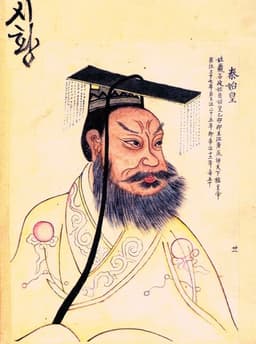
Qin Shi Huang
Emperor · Ancient
85.2Total
Basic Information
Born
1398
-259
Died
1469
-210
Era
Medieval
Ancient
Nationality
Aztec Empire
China
Occupation
Emperor
Emperor
Civilization
Other
Eastern
Score Comparison
Military (10%)
82.0
80.0
Political (20%)
45.0
90.0
Influence (20%)
58.3
85.0
Legacy (20%)
56.0
90.0
Leadership (15%)
66.0
78.0
Strategy (15%)
55.0
82.0
TOTAL
58.9
85.2
Moctezuma I — Complete Timeline
1428 AD
Conquest of the TepanecsWar◆ Major
Itzcoatl led the Triple Alliance forces in a war against the Tepanecs of Azcapotzalco, the dominant power in the region. The victory broke Tepanec hegemony and established Tenochtitlan as the leading city-state in central Mexico.
WarTepanec WarAztec Expansion
Impact: regional
Formed the Triple AlliancePolitical Action
Itzcoatl, as tlatoani of Tenochtitlan, formed the Triple Alliance with Texcoco and Tlacopan. This military and political pact created the Aztec Empire, enabling coordinated conquests and the subjugation of neighboring city-states in the Valley of Mexico.
Aztec EmpireAlliancePolitical Foundation
Impact: regional
1430 AD
Burned Historical CodicesCultural◆ Major
Itzcoatl ordered the burning of historical codices from conquered peoples, rewriting Aztec history to legitimize his rule and the empire's divine origins. This act destroyed pre-Aztec records and reshaped Mesoamerican historical memory.
Cultural DestructionHistorical RevisionAztec Ideology
Impact: regionaldestructive
Qin Shi Huang — Complete Timeline
246 BC
Construction of the Mausoleum and Terracotta ArmyOther◆ Major
Qin Shi Huang commissioned a vast mausoleum complex near Xi'an, guarded by thousands of life-sized terracotta soldiers, horses, and chariots. The project employed hundreds of thousands of workers and reflected his obsession with immortality and imperial power.
Impact: global
230 BC
Conquest of the Six Warring StatesWar
From 230 to 221 BCE, Ying Zheng led the Qin state in a series of campaigns that conquered the Han, Zhao, Wei, Chu, Yan, and Qi states. This unified China under a single ruler for the first time, ending the Warring States period.
Impact: global
221 BC
Standardization of Writing, Currency, and MeasurementsReform◆ Major
Qin Shi Huang ordered the standardization of Chinese script, currency, and weights and measures across the unified empire. This facilitated administration, trade, and cultural integration, laying a foundation for future dynasties.
Impact: globalconstructive
Proclamation of the Qin DynastyPolitical Action
After conquering the last independent state, Ying Zheng declared himself Shi Huangdi (First Emperor), founding the Qin Dynasty. He adopted a new title to signify his supreme authority and initiated centralized imperial rule.
Impact: global
214 BC
Initiation of the Great Wall ConstructionOther◆ Major
Qin Shi Huang ordered the connection and extension of existing northern fortifications to create a unified defensive wall against nomadic Xiongnu raids. This project involved massive conscripted labor and became the precursor to the later Great Wall.
Impact: regional
213 BC
Burning of Books and Burying of ScholarsPolitical Action◆ Major
On the advice of Li Si, Qin Shi Huang ordered the burning of historical records and philosophical texts not aligned with Legalist doctrine. He also had 460 Confucian scholars buried alive to suppress dissent and consolidate ideological control.
Impact: nationaldestructive
Expert Analysis
Qin Shi Huang vs Moctezuma I: Historical Comparison
Qin Shi Huang, the First Emperor of unified China (3rd century BCE), and Moctezuma I, the fifth Aztec emperor (15th century CE), were both transformative empire-builders who centralized power through military conquest and administrative innovation, yet their legacies diverge sharply in durability and global impact.
Dimension Analysis
**Military: Qin Shi Huang 80 / Moctezuma I 82**
Qin Shi Huang’s armies conquered six rival states through disciplined infantry and cavalry, standardizing weapons and tactics, while Moctezuma I expanded the Aztec Empire via flower wars and tributary campaigns, achieving a broader territorial reach relative to Mesoamerican geography.
**Political: Qin Shi Huang 88 / Moctezuma I 90**
Both were master centralizers: Qin abolished feudalism, imposed a unified legal code, and standardized writing, weights, and measures; Moctezuma I consolidated the Triple Alliance, streamlined tribute systems, and codified Aztec law, achieving slightly higher political integration within his cultural context.
**Influence: Qin Shi Huang 82 / Moctezuma I 72**
Qin’s reforms (e.g., the Great Wall, Terracotta Army, and bureaucratic model) directly shaped 2,000 years of Chinese imperial rule, whereas Moctezuma I’s influence, while profound in Aztec ritual and administration, was largely extinguished by the Spanish conquest within a century.
**Legacy: Qin Shi Huang 85 / Moctezuma I 60**
Qin Shi Huang’s legacy endures as the founder of China’s imperial system and a symbol of unification, despite his tyranny; Moctezuma I’s legacy is overshadowed by his successor’s disastrous encounter with Cortés, limiting his historical footprint to Mesoamerican specialists.
**Leadership: Qin Shi Huang 88 / Moctezuma I 90**
Both commanded absolute authority, but Moctezuma I excelled in diplomatic statecraft and managing a multi-ethnic tributary empire, while Qin’s leadership relied on ruthless legalism and mass mobilization, earning him greater fear than loyalty.
Verdict
Qin Shi Huang leads due to his far more enduring structural legacy—unified China’s political DNA—while Moctezuma I, though arguably more adept in leadership and political integration, saw his empire collapse within generations.
FAQ
Q: Who ranks higher? A: Qin Shi Huang, because his centralized reforms and cultural standardization created a civilizational blueprint that outlasted the Aztec Empire’s rapid demise.
Rankings
🥇
Qin Shi HuangLeader
Mil: 80.0Pol: 90.0Inf: 85.0
85.2
🥈
Moctezuma I
Mil: 82.0Pol: 45.0Inf: 58.3
58.9
+26.3 behind
How This Comparison Works
Algorithm
Each figure is scored on 6 dimensions (0—100 scale) based on structured historical data: Military (10%), Political (20%), Influence (20%), Legacy (20%), Leadership (15%), Strategy (15%). The weighted total produces the final ranking.
Data Sources
Scores are computed from structured sub-indicators in the database. Scale factors adjust for era (Ancient ×0.85, Modern ×1.0) and civilization size (Eastern ×1.05, Other ×0.80) to account for differences in population and military scale.
Maximum 3 Figures
Comparisons are limited to 2—3 figures to ensure readability and statistical meaningfulness.
Error Margins
±5 points per dimension — Sub-scores are derived from historical records with inherent uncertainty. Two figures within 5 points on a dimension should be considered roughly equivalent in that area.
Total Score Accuracy
±3 points overall — The weighted combination of 6 dimensions produces a total score with approximately ±3 points of uncertainty. Differences of less than 3 points are not statistically significant— the figures are effectively tied.
Known Limitations
- Historical records are incomplete and uneven across civilizations
- Figures from oral-tradition societies may be underrepresented
- Occupation labels can misclassify multi-role figures
- Scores measure capability and impact, not moral character
- Quantitative scoring is a comparison tool, not absolute truth
Capability Radar
Military (10%) — Battles & Warfare
Battles
65
85
Win Rate
70
90
Expansion
80
90
Political (20%) — Governance & Reform
Reform
60
95
Diplomacy
65
75
Economy
70
90
Influence (20%) — Cultural & Global Reach
Cultural
60
95
Global
50
85
Legacy (20%) — Historical Impact
Historical
65
95
Longevity
55
95
Leadership (15%) — Power & Stability
Tenure
70
70
Stability
65
65
Strategy (15%) — Tactics & Innovation
Strategy
75
85
Tactics
60
80
Reform
55
95
Similar Comparisons
Comments & Discussion
TimurTheLame6/16/2026
Qin Shi Huang built the bureaucratic machine that ruled China until 1912. Moctezuma I? He’s basically the guy who set the table for Cortés — impressive at home, but his empire folded like wet cardboard the second Europeans showed up. Qin’s Terracotta Army alone is more recognizable globally than any Aztec monument. Give me the First Emperor any day: he didn’t just conquer, he *designed* a civilization that outlasted his dynasty by two millennia. Forget the flower wars — Qin actually standardized swords and crossbows. That’s real power.
DrAnnales6/16/2026
Sima Qian’s *Records of the Grand Historian* portrays Qin Shi Huang as a tyrant who burned books and buried scholars alive — yet this same source acknowledges his unification of scripts and roads as foundational. Moctezuma I, by contrast, left no native chronicles; our knowledge comes through Spanish Franciscan intermediaries like Sahagún, filtered through colonial bias. The score’s ‘Leadership’ tie (88 vs 90) elides this asymmetry: we simply lack the granularity to compare their administrative styles directly. Moctezuma’s tribute system was sophisticated, but Qin’s legalist state left a textual footprint orders of magnitude larger.
Chronicler28346/16/2026
这个评分体系有点意思,但政治分Moctezuma I 90 vs 秦始皇88?秦始皇统一度量衡、文字、货币,废除分封推行郡县,这整套中央集权框架直接用了两千年。Moctezuma I 的贡赋体系再精密,西班牙人一来就崩了。另外军事分80 vs 82,秦始皇灭六国可不是花架子,长平之战坑杀40万降卒,这数字比任何阿兹特克“花环战争”都血腥。建议把“影响力”权重调到50%以上,否则这种跨文明比较太偏Mesoamerican视角。
Chronicler27266/16/2026
这评分明显偏向西方中心史观。Qin Shi Huang 影响力82 vs Moctezuma I 72?秦始皇的“书同文车同轨”直接塑造了东亚文明圈,而Moctezuma I 的成就范围连中美洲都没出。再说军事分,秦军有标准化弩机和战车战术,Moctezuma I 的军队连马都没有——不是贬低,而是客观技术差距。更离谱的是政治分,秦始皇的郡县制是革命性创新,Moctezuma I 的三国同盟本质上还是部落联盟。建议引入“文明辐射半径”指标,否则这种跨文明打分就是关公战秦琼。