Loading...
Minamoto no Yoshitsune vs Tang He
Tang He leads by 5.3 pts · 2 figures compared
…

Minamoto no Yoshitsune
General · Medieval
50.8Total
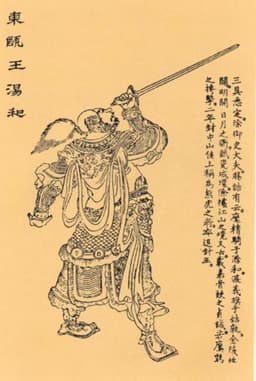
Tang He
General · Medieval
56.1Total
Basic Information
Born
1159
1326
Died
1189
1395
Era
Medieval
Medieval
Nationality
Japan
China
Occupation
General
General
Civilization
Eastern
Eastern
Score Comparison
Military (10%)
65.0
82.0
Political (20%)
32.1
39.4
Influence (20%)
55.0
50.2
Legacy (20%)
52.0
43.3
Leadership (15%)
46.3
80.0
Strategy (15%)
58.0
66.3
TOTAL
50.8
56.1
Minamoto no Yoshitsune — Complete Timeline
1183 AD
Battle of KurikaraWar
Minamoto no Yoshitsune led a surprise attack on the Taira army at Kurikara Pass, using a tactic of driving cattle with torches tied to their horns to create chaos. The victory was a turning point in the Genpei War, allowing the Minamoto to advance toward Kyoto.
BattleGenpei WarTactics
Impact: national
1184 AD
Battle of Ichi-no-TaniWar◆ Major
Yoshitsune led a daring charge down a steep cliff at Ichi-no-Tani fortress, catching the Taira forces by surprise. The Minamoto victory destroyed a major Taira stronghold and forced the Taira to retreat to the sea, further weakening their position in the war.
BattleCliff ChargeTaira Stronghold
Impact: national
1185 AD
Battle of Dan-no-uraWar
Yoshitsune commanded the Minamoto fleet at the naval Battle of Dan-no-ura, where the Taira were decisively defeated. The battle ended the Genpei War, with the Taira clan destroyed and the child Emperor Antoku drowned. Yoshitsune's role cemented his reputation as a military genius.
Naval BattleGenpei WarTaira Defeat
Impact: national
Conflict with Minamoto no YoritomoPolitical Action◆ Major
After the Genpei War, Yoritomo turned against Yoshitsune, viewing him as a threat. Yoritomo ordered his arrest, and Yoshitsune fled Kyoto, becoming a fugitive. The conflict between the brothers led to Yoshitsune's eventual downfall and death, and became a central theme in Japanese literature.
Brother ConflictYoritomoFugitive
Impact: nationaltragic
1189 AD
Death at KoromogawaOther◆ Major
Minamoto no Yoshitsune was cornered at the Battle of Koromogawa by forces loyal to Yoritomo. After a final stand, he committed suicide along with his wife and retainers. His death ended the Minamoto civil war and solidified Yoritomo's control over the shogunate.
DeathSuicideKoromogawa
Impact: nationaltragic
Tang He — Complete Timeline
1353 AD
Joining Zhu Yuanzhang's rebellionWar
Tang He, a childhood friend of Zhu Yuanzhang, joined Zhu's rebel forces early in the Red Turban Rebellion. He quickly rose through the ranks due to his military skills and loyalty.
Red Turban RebellionEarly MingFriendship
Impact: regional
1363 AD
Command at the Battle of Lake PoyangWar◆ Major
Tang He commanded a naval squadron during the Battle of Lake Poyang, contributing to the Ming victory over Chen Youliang. His use of fire ships helped destroy the enemy fleet.
BattleNaval warfareFire ships
Impact: national
1371 AD
Conquest of SichuanWar◆ Major
Tang He led a Ming army into Sichuan, conquering the independent kingdom of Ming Yuzhen. This campaign brought the southwestern region under Ming control and completed the unification of China proper.
ConquestSichuanMing unification
Impact: national
1395 AD
Retirement and deathOther
Tang He retired from military service in his later years and died peacefully. Unlike many other Ming generals, he was not executed or purged by the Hongwu Emperor, likely due to their long friendship.
RetirementDeathMing dynasty
Expert Analysis
Origins
Minamoto no Yoshitsune was born in 1159 in Japan, the ninth son of Minamoto no Yoshitomo. After his father's defeat in the Heiji Rebellion, Yoshitsune was spared and raised in a temple, studying martial arts. His early life was marked by obscurity and survival. Tang He was born in 1326 in Fengyang, China, to a poor peasant family. He became a childhood friend of Zhu Yuanzhang, the future Hongwu Emperor. Both men rose from humble beginnings, but Yoshitsune's upbringing was more turbulent and isolated.
Rise to Power
Yoshitsune's rise came during the Genpei War (1180-1185). He joined his half-brother Yoritomo's cause and quickly proved his military genius. His first major victory was the Battle of Kurikara (1183), where he used a tactic of driving cattle with torches to rout the Taira army. At the Battle of Ichi-no-Tani (1184), he led a daring charge down a steep cliff, surprising the Taira. These victories made him a celebrated commander. Tang He joined Zhu Yuanzhang's Red Turban Rebellion early, around 1352. His loyalty and skill led to rapid promotions. He commanded naval forces at the Battle of Lake Poyang (1363), using fire ships to defeat the larger fleet of Chen Youliang. This victory was crucial for the Ming dynasty's establishment.
Leadership & Governance
Yoshitsune was a charismatic and innovative battlefield commander, scoring 58.0 in strategy and 46.3 in leadership. He inspired fierce loyalty but struggled with political acumen (32.1). After the war, he failed to manage his relationship with Yoritomo, leading to conflict. Tang He scored 80.0 in leadership and 66.3 in strategy, reflecting his effective command and ability to work within the Ming hierarchy. He was a reliable executor of Zhu Yuanzhang's orders, leading the conquest of Sichuan (1371). Unlike Yoshitsune, Tang He understood the importance of political loyalty and retired peacefully, avoiding the purges that killed many Ming generals.
Triumph & Tragedy
Yoshitsune's greatest triumph was the naval Battle of Dan-no-ura (1185), where he decisively defeated the Taira, ending the Genpei War. However, his tragedy came swiftly: his brother Yoritomo turned on him, forcing him to flee. He was finally cornered at Koromogawa (1189) and committed suicide. Tang He's triumphs include the conquest of Sichuan and his role at Lake Poyang. His tragedy is less dramatic: he died peacefully in 1395, but his legacy is overshadowed by other Ming figures. He scored 82.0 in military, significantly higher than Yoshitsune's 65.0, but his influence (50.2) and legacy (43.3) are lower.
Character & Destiny
Yoshitsune's character was marked by ambition and naivety. His military brilliance (58.0 strategy) was unmatched, but his political blindness (32.1) led to his downfall. He trusted his brother too much and failed to build alliances. Tang He was cautious and loyal, understanding the need to defer to Zhu Yuanzhang. His high leadership score (80.0) reflects his ability to command respect without provoking jealousy. His destiny was a peaceful death, while Yoshitsune's was a tragic end, immortalized in Japanese folklore.
Legacy
Yoshitsune became a legendary figure in Japanese culture, inspiring countless stories, Noh plays, and kabuki dramas. His score of 52.0 in legacy reflects his cultural impact. Tang He is remembered as a capable general but not a top-tier figure in Chinese history. His legacy score of 43.3 is lower. However, his contributions to the Ming dynasty's founding were concrete: his naval tactics at Lake Poyang and the conquest of Sichuan expanded Ming territory. Yoshitsune's legacy is more symbolic, representing the tragic hero.
Conclusion
Tang He had a greater historical impact than Minamoto no Yoshitsune. Despite his lower total score (56.1 vs 50.8), Tang He's military achievements (82.0) were more effective in building a stable dynasty. He helped create the Ming Empire, which lasted nearly 300 years, while Yoshitsune's victories only led to his own destruction. Yoshitsune's cultural legacy is strong, but in terms of tangible historical change, Tang He's contributions were more significant.
Rankings
🥇
Tang HeLeader
Mil: 82.0Pol: 39.4Inf: 50.2
56.1
🥈
Minamoto no Yoshitsune
Mil: 65.0Pol: 32.1Inf: 55.0
50.8
+5.3 behind
How This Comparison Works
Algorithm
Each figure is scored on 6 dimensions (0—100 scale) based on structured historical data: Military (10%), Political (20%), Influence (20%), Legacy (20%), Leadership (15%), Strategy (15%). The weighted total produces the final ranking.
Data Sources
Scores are computed from structured sub-indicators in the database. Scale factors adjust for era (Ancient ×0.85, Modern ×1.0) and civilization size (Eastern ×1.05, Other ×0.80) to account for differences in population and military scale.
Maximum 3 Figures
Comparisons are limited to 2—3 figures to ensure readability and statistical meaningfulness.
Error Margins
±5 points per dimension — Sub-scores are derived from historical records with inherent uncertainty. Two figures within 5 points on a dimension should be considered roughly equivalent in that area.
Total Score Accuracy
±3 points overall — The weighted combination of 6 dimensions produces a total score with approximately ±3 points of uncertainty. Differences of less than 3 points are not statistically significant— the figures are effectively tied.
Known Limitations
- Historical records are incomplete and uneven across civilizations
- Figures from oral-tradition societies may be underrepresented
- Occupation labels can misclassify multi-role figures
- Scores measure capability and impact, not moral character
- Quantitative scoring is a comparison tool, not absolute truth
Capability Radar
Military (10%) — Battles & Warfare
Battles
65
75
Win Rate
70
80
Expansion
30
75
Political (20%) — Governance & Reform
Reform
10
30
Diplomacy
25
50
Economy
10
40
Influence (20%) — Cultural & Global Reach
Cultural
85
40
Global
60
30
Legacy (20%) — Historical Impact
Historical
80
50
Longevity
75
40
Leadership (15%) — Power & Stability
Tenure
15
60
Stability
10
55
Strategy (15%) — Tactics & Innovation
Strategy
60
75
Tactics
85
70
Reform
20
40
Similar Comparisons
Comments & Discussion
No comments yet. Be the first to share your thoughts!