Loading...
Minamoto no Yoritomo vs Muqali
Minamoto no Yoritomo leads by 2.0 pts · 2 figures compared
…

Minamoto no Yoritomo
General · Medieval
63.3Total
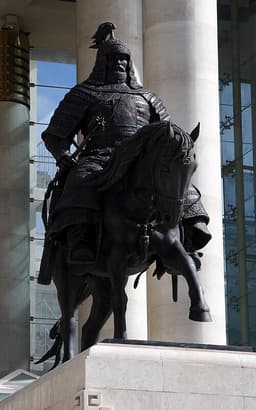
Muqali
General · Medieval
61.3Total
Basic Information
Born
1147
1170
Died
1199
1223
Era
Medieval
Medieval
Nationality
Japan
Mongol Empire
Occupation
General
General
Civilization
Eastern
Eastern
Score Comparison
Military (10%)
67.5
65.0
Political (20%)
60.0
68.0
Influence (20%)
55.0
58.0
Legacy (20%)
72.0
49.2
Leadership (15%)
62.0
70.4
Strategy (15%)
65.4
72.0
TOTAL
63.3
61.3
Minamoto no Yoritomo — Complete Timeline
1180 AD
Genpei War LeadershipWar
Minamoto no Yoritomo emerged as the leader of the Minamoto clan during the Genpei War against the Taira. He raised an army in the Kant
Genpei WarKamakuraMinamoto
Impact: national
1185 AD
Appointment of Shugo and JitōReform◆ Major
Yoritomo appointed shugo (military governors) and jit
FeudalismShugoJitō
Impact: nationalconstructive
Establishment of the Kamakura ShogunatePolitical Action
After the Genpei War, Yoritomo established the Kamakura shogunate, a military government based in Kamakura. He received the title of sh
ShogunateKamakuraMilitary Government
Impact: nationalconstructive
Exile of Minamoto no YoshitsunePolitical Action◆ Major
Yoritomo ordered the pursuit and eventual death of his brother Minamoto no Yoshitsune, who had been a key general in the Genpei War. Yoritomo viewed Yoshitsune as a political rival and used his authority to eliminate him, consolidating his own power within the Minamoto clan.
Brother ConflictYoshitsunePower Consolidation
Impact: nationaldestructive
1199 AD
Death from Horse FallOther◆ Major
Minamoto no Yoritomo died after falling from his horse during a ceremony. His death led to a power struggle within the Kamakura shogunate, as his sons were young and inexperienced. The H
DeathHōjō RegencyMinamoto Decline
Impact: nationaltragic
Muqali — Complete Timeline
1211 AD
Campaign in Northern ChinaWar◆ Major
Muqali was a key commander in Genghis Khan's invasion of the Jin Dynasty. He led forces in the capture of numerous cities and fortresses in northern China, including the victory at the Battle of Yehuling in 1211, which broke Jin resistance.
Jin DynastyYehulingNorthern China
Impact: regional
1212 AD
Conquest of ManchuriaWar
Muqali led a campaign to subdue the Khitan and Jurchen tribes in Manchuria. He defeated the rebel Khitan leader Yel
ManchuriaKhitanJurchen
Impact: regional
1215 AD
Siege of ZhongduWar◆ Major
Muqali participated in the Mongol siege of Zhongdu (modern Beijing), the capital of the Jin Dynasty. The city fell after a prolonged siege, leading to the massacre of its inhabitants and the effective collapse of Jin authority in northern China.
ZhongduBeijingSiege
Impact: regionaldestructive
1217 AD
Appointment as Viceroy of ChinaPolitical Action◆ Major
Genghis Khan appointed Muqali as viceroy (guo-wang) of all conquered territories in China, granting him command of the Mongol forces in the region. This made Muqali the de facto ruler of Mongol-occupied northern China.
ViceroyChinaGenghis Khan
Impact: regionalconstructive
Expert Analysis
Origins
Minamoto no Yoritomo was born in 1147 into the Minamoto clan, a powerful samurai family in Japan. His father, Minamoto no Yoshitomo, was a military leader, but after the Heiji Rebellion (1160), the Minamoto were crushed by the Taira clan. Yoritomo, then a child, was spared but exiled to Izu Province. His early life was spent under the watch of the Hōjō clan, who later became his allies. This exile shaped his cautious, calculating nature.
Muqali was born around 1170 into the Jalayir tribe, a vassal of the Mongols. His father was a commander under Genghis Khan, and Muqali grew up in the steppe warrior tradition. He entered Genghis Khan's service as a young man, quickly proving his loyalty and skill. Unlike Yoritomo, Muqali's rise was tied directly to the Mongol conquest machine, not to a clan restoration.
Rise to Power
Yoritomo's rise began in 1180 when Prince Mochihito called for Minamoto loyalists to rise against the Taira. Yoritomo raised an army in the Kantō region, but his early campaign stalled at the Battle of Ishibashiyama, where he was defeated. However, he retreated and consolidated power in Kamakura, building a base of samurai supporters. Key turning points included the Battle of Fujigawa (1180), where the Taira fled without fighting, and the establishment of a provisional government. By 1185, after the Genpei War, Yoritomo had defeated the Taira, but he also eliminated rivals, including his brother Yoshitsune, whom he forced into exile and death.
Muqali rose through merit in Genghis Khan's army. He participated in the 1211 invasion of the Jin Dynasty, leading forces in the capture of cities like Xijing (Datong). His decisive role in the siege of Zhongdu (1215) earned him Genghis's trust. In 1217, Genghis appointed Muqali as viceroy (guo-wang) of all conquered Chinese territories, granting him command of Mongol forces in the region—a rare honor for a non-royal. This appointment made Muqali the effective ruler of northern China.
Leadership & Governance
Yoritomo's leadership was institutional. He created the Kamakura shogunate, a military government that balanced power between the shōgun and the Hōjō regents. He appointed shugo (military governors) and jitō (stewards) to provinces, establishing a feudal system that collected taxes and maintained order. His governance was pragmatic, using legal codes like the Jōei Shikimoku (1232) later, but during his life, he relied on patronage and loyalty. He centralized power in Kamakura, away from the imperial court in Kyoto.
Muqali ruled as a viceroy, not a founder. He administered conquered lands using a mix of Mongol military rule and Chinese bureaucratic methods. He appointed local Chinese officials to manage taxation and justice, while Mongol commanders oversaw garrisons. His leadership was more military-focused: he led campaigns to subdue Manchuria and suppress rebellions. Unlike Yoritomo, he did not create lasting institutions; his authority derived from Genghis Khan's mandate.
Triumph & Tragedy
Yoritomo's greatest triumph was founding the Kamakura shogunate, which lasted until 1333. He unified the samurai class and established a feudal system that defined Japan for centuries. His greatest failure was the destruction of his own family: he eliminated his brother Yoshitsune and other relatives, leaving his sons vulnerable. After his death in 1199 from a horse fall, the Hōjō regents seized power, and his lineage faded.
Muqali's triumphs included conquering much of northern China for the Mongols, capturing key cities like Zhongdu and securing Manchuria. He was a loyal and effective general. His tragedy was that his achievements were overshadowed by Genghis Khan's legacy. He died in 1223 during a campaign, and his sons did not inherit his position. The Mongol Empire continued without him, and his personal legacy faded.
Character & Destiny
Yoritomo was paranoid, ruthless, and calculating. He eliminated rivals without hesitation, even family. This secured his power but also isolated him. His death from a horse fall—an accident—ended his rule abruptly, leading to the Hōjō takeover. Historians score his leadership at 62.0, reflecting his effective but flawed governance.
Muqali was loyal, disciplined, and strategically adept. He scored 70.4 in leadership, higher than Yoritomo, due to his ability to command respect and execute complex campaigns. However, his destiny was tied to Genghis Khan; he never sought independent power. His strategy score of 72.0 reflects his skill in sieges and mobile warfare.
Legacy
Yoritomo's legacy is immense: he founded the shogunate system that ruled Japan for nearly 700 years. The samurai class became the dominant social force. His political score of 60.0 and legacy score of 72.0 reflect this institutional impact. The Kamakura period is named after his capital.
Muqali's legacy is more limited. He was a key figure in the Mongol conquest of China, but his name is less known than Subutai or Jebe. His legacy score of 49.2 reflects his overshadowing by Genghis Khan. However, he helped establish Mongol rule in China, which later led to the Yuan Dynasty.
Conclusion
Minamoto no Yoritomo had greater impact than Muqali. While Muqali scored higher in leadership (70.4 vs 62.0) and strategy (72.0 vs 65.4), Yoritomo's legacy score (72.0 vs 49.2) demonstrates his enduring influence. Yoritomo founded a new political system that shaped Japan for centuries, whereas Muqali was a brilliant executor of Mongol conquest but left no lasting institutions. The total score gap of 2.0 points (63.3 vs 61.3) reflects this: Yoritomo's institutional creation outweighs Muqali's military achievements.
Rankings
🥇
Minamoto no YoritomoLeader
Mil: 67.5Pol: 60.0Inf: 55.0
63.3
🥈
Muqali
Mil: 65.0Pol: 68.0Inf: 58.0
61.3
+2.0 behind
How This Comparison Works
Algorithm
Each figure is scored on 6 dimensions (0—100 scale) based on structured historical data: Military (10%), Political (20%), Influence (20%), Legacy (20%), Leadership (15%), Strategy (15%). The weighted total produces the final ranking.
Data Sources
Scores are computed from structured sub-indicators in the database. Scale factors adjust for era (Ancient ×0.85, Modern ×1.0) and civilization size (Eastern ×1.05, Other ×0.80) to account for differences in population and military scale.
Maximum 3 Figures
Comparisons are limited to 2—3 figures to ensure readability and statistical meaningfulness.
Error Margins
±5 points per dimension — Sub-scores are derived from historical records with inherent uncertainty. Two figures within 5 points on a dimension should be considered roughly equivalent in that area.
Total Score Accuracy
±3 points overall — The weighted combination of 6 dimensions produces a total score with approximately ±3 points of uncertainty. Differences of less than 3 points are not statistically significant— the figures are effectively tied.
Known Limitations
- Historical records are incomplete and uneven across civilizations
- Figures from oral-tradition societies may be underrepresented
- Occupation labels can misclassify multi-role figures
- Scores measure capability and impact, not moral character
- Quantitative scoring is a comparison tool, not absolute truth
Capability Radar
Military (10%) — Battles & Warfare
Battles
45
75
Win Rate
55
80
Expansion
60
85
Political (20%) — Governance & Reform
Reform
85
65
Diplomacy
75
72
Economy
65
60
Influence (20%) — Cultural & Global Reach
Cultural
80
55
Global
70
55
Legacy (20%) — Historical Impact
Historical
85
65
Longevity
85
50
Leadership (15%) — Power & Stability
Tenure
70
70
Stability
60
68
Strategy (15%) — Tactics & Innovation
Strategy
65
82
Tactics
40
78
Reform
75
60
Similar Comparisons
Comments & Discussion
No comments yet. Be the first to share your thoughts!