Loading...
Michael VIII Palaiologos vs Qin Shi Huang
Qin Shi Huang leads by 32.4 pts · 2 figures compared
…
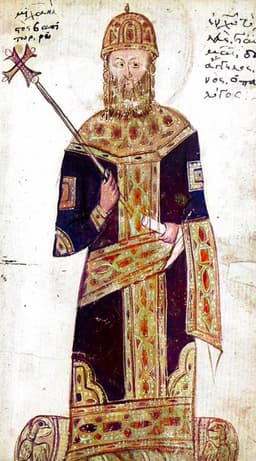
Michael VIII Palaiologos
Emperor · Medieval
52.8Total
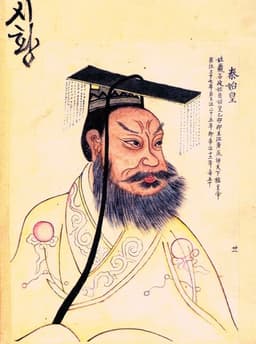
Qin Shi Huang
Emperor · Ancient
85.2Total
Basic Information
Born
1223
-259
Died
1282
-210
Era
Medieval
Ancient
Nationality
Byzantine Empire
China
Occupation
Emperor
Emperor
Civilization
Western
Eastern
Score Comparison
Military (10%)
70.0
80.0
Political (20%)
45.0
90.0
Influence (20%)
55.0
85.0
Legacy (20%)
55.0
90.0
Leadership (15%)
40.0
78.0
Strategy (15%)
55.0
82.0
TOTAL
52.8
85.2
Michael VIII Palaiologos — Complete Timeline
1261 AD
Recapture of Constantinople from the Latin EmpireWar
Michael VIII Palaiologos's general Alexios Strategopoulos led a surprise attack that recaptured Constantinople from the Latin Empire without a major battle. The city was restored as the Byzantine capital, ending 57 years of Latin rule and re-establishing the Byzantine Empire.
ReconquestFourth CrusadeConstantinople
Impact: globalconstructive
Coronation as Byzantine emperor in Hagia SophiaPolitical Action◆ Major
Michael VIII was crowned emperor in Hagia Sophia in Constantinople, legitimizing his rule as the restorer of the Byzantine Empire. The coronation was a major symbolic event, reaffirming the continuity of the Roman imperial tradition in the East.
CoronationRestorationHagia Sophia
Impact: nationalconstructive
1262 AD
Restoration of the Byzantine navy and fortificationsReform
Michael VIII rebuilt the Byzantine navy, which had been neglected under the Nicaean emperors, and strengthened the fortifications of Constantinople. These measures improved the empire's defensive capabilities and allowed for limited naval campaigns in the Aegean.
Military ReformNavyFortifications
Impact: nationalconstructive
1274 AD
Union of the Churches at the Second Council of LyonPolitical Action◆ Major
Michael VIII agreed to the Union of the Churches at the Second Council of Lyon, recognizing papal supremacy in exchange for Western support against the Angevin threat. The union was deeply unpopular in Byzantium and caused religious strife, but it temporarily prevented a crusade against Constantinople.
Church UnionPapacyReligious Controversy
Impact: regional
1281 AD
Defeat of the Angevin invasion at the Siege of BeratWar◆ Major
Michael VIII's forces defeated an Angevin army besieging Berat in Albania, capturing the Angevin commander. The victory ended Charles of Anjou's plans to invade Constantinople and restored Byzantine control over parts of the Balkans.
Angevin WarsMilitary VictoryBalkans
Impact: regional
Qin Shi Huang — Complete Timeline
246 BC
Construction of the Mausoleum and Terracotta ArmyOther◆ Major
Qin Shi Huang commissioned a vast mausoleum complex near Xi'an, guarded by thousands of life-sized terracotta soldiers, horses, and chariots. The project employed hundreds of thousands of workers and reflected his obsession with immortality and imperial power.
Impact: global
230 BC
Conquest of the Six Warring StatesWar
From 230 to 221 BCE, Ying Zheng led the Qin state in a series of campaigns that conquered the Han, Zhao, Wei, Chu, Yan, and Qi states. This unified China under a single ruler for the first time, ending the Warring States period.
Impact: global
221 BC
Standardization of Writing, Currency, and MeasurementsReform◆ Major
Qin Shi Huang ordered the standardization of Chinese script, currency, and weights and measures across the unified empire. This facilitated administration, trade, and cultural integration, laying a foundation for future dynasties.
Impact: globalconstructive
Proclamation of the Qin DynastyPolitical Action
After conquering the last independent state, Ying Zheng declared himself Shi Huangdi (First Emperor), founding the Qin Dynasty. He adopted a new title to signify his supreme authority and initiated centralized imperial rule.
Impact: global
214 BC
Initiation of the Great Wall ConstructionOther◆ Major
Qin Shi Huang ordered the connection and extension of existing northern fortifications to create a unified defensive wall against nomadic Xiongnu raids. This project involved massive conscripted labor and became the precursor to the later Great Wall.
Impact: regional
213 BC
Burning of Books and Burying of ScholarsPolitical Action◆ Major
On the advice of Li Si, Qin Shi Huang ordered the burning of historical records and philosophical texts not aligned with Legalist doctrine. He also had 460 Confucian scholars buried alive to suppress dissent and consolidate ideological control.
Impact: nationaldestructive
Expert Analysis
michael-viii-palaiologos-vs-qin-shi-huang
### The Unifier and the Restorer
History remembers two men who rebuilt worlds from the ashes of collapse. One, a conqueror who forged a new empire from warring fragments. The other, a survivor who clawed back an ancient throne from foreign usurpers. Qin Shi Huang and Michael VIII Palaiologos both stood at the hinge points of their civilizations, yet their paths diverged so sharply that one left a unified China, the other a Byzantine ghost that would flicker for two more centuries before vanishing. What drove these differences? The answer lies not only in their ambitions, but in the very nature of what they inherited.
### Origins
Ying Zheng was born in 259 BC into a world of chaos. The Warring States period had torn China apart for centuries, seven kingdoms locked in a brutal dance of alliances and betrayals. His father was king of Qin, a western state seen as semi-barbaric by the more cultured central kingdoms. Yet Qin had one advantage: a ruthless legalist philosophy that valued order above all. Ying Zheng grew up in a court where poison was as common as policy, where his mother’s lover plotted against him, and where survival demanded absolute control. He learned early that power was something to be seized, not inherited.
Michael VIII Palaiologos, born in 1223, came from a world already broken. The Fourth Crusade had shattered the Byzantine Empire in 1204, and Constantinople sat in the hands of Latin crusaders. Michael grew up in the exile court of Nicaea, one of several Byzantine rump states. His family tree was a tangle of emperors and usurpers; his grandfather had been blinded in a coup. Michael learned the arts of diplomacy and patience, watching as the Latins squabbled and the Nicaeans plotted. He understood that empires are not built in a day—they are stolen in a moment of weakness.
### Rise to Power
Ying Zheng became king of Qin at thirteen, but his rise was a decade-long campaign of conquest. From 230 to 221 BC, he unleashed his generals on the six rival states, one by one. He did not lead from the front; he directed from behind, using strategy, bribery, and terror. When the last king surrendered, Ying Zheng did something unprecedented: he declared himself *Shi Huangdi*—the First Emperor. He was not merely a king among kings; he was a divine ruler, the founder of a new order.
Michael’s rise was more subtle. He was a skilled general and diplomat, but he was also a master of intrigue. In 1259, he defeated a coalition of enemies at the Battle of Pelagonia, a victory that made him co-emperor of Nicaea. Then, in July 1261, while his army was far away, his general Alexios Strategopoulos noticed that the Latin garrison of Constantinople had sailed off to attack a Byzantine island. With a handful of men, Strategopoulos slipped through a gap in the walls and took the city without a fight. Michael arrived weeks later, entered Hagia Sophia, and was crowned emperor—the restorer of the Byzantine Empire.
### Leadership & Governance
Qin Shi Huang ruled like a machine. He imposed standardization across his new empire: the same script, the same currency, the same axle lengths for carts. He built roads and canals, and in 214 BC, he ordered the connection of northern fortifications into what would become the Great Wall. But his governance was brutal. In 213 BC, on the advice of his chancellor Li Si, he ordered the burning of all historical records and philosophical texts not aligned with Legalist thought. Scholars who resisted were buried alive. He believed that the past must be erased for the new order to stand.
Michael VIII, by contrast, ruled like a tightrope walker. He restored the Byzantine navy and rebuilt fortifications, but his empire was a shadow of its former self. He faced threats from every direction: the Latin West, the Serbian kingdom, the Turkish beyliks. To survive, he made a desperate gamble. In 1274, at the Second Council of Lyon, he agreed to the Union of the Churches, recognizing papal supremacy in exchange for protection against the Angevin king Charles of Sicily. It was a diplomatic masterstroke that bought time, but it alienated his Orthodox subjects. Michael was not building a new order; he was patching the cracks in an old one.
### Triumph & Tragedy
Qin Shi Huang’s greatest triumph was the unification itself. He had accomplished what no Chinese ruler had done before: a single empire stretching from the Yellow Sea to the Tibetan plateau. But his tragedy was as vast as his ambition. He became obsessed with immortality, sending expeditions for the elixir of life and building a mausoleum guarded by thousands of life-sized terracotta soldiers—a silent army for the afterlife. He died in 210 BC, probably from mercury poisoning from his immortality potions. Within four years, his dynasty collapsed in rebellion.
Michael’s triumph was the recapture of Constantinople in 1261, a feat that seemed impossible. He restored the Byzantine Empire, even if it was a pale copy of its former glory. But his tragedy was the Union of the Churches. It earned him the hatred of his own people, who saw him as a traitor to Orthodoxy. When he died in 1282, his successor immediately repudiated the Union, leaving the empire isolated and weakened. Michael had saved Byzantium, but at a cost that would haunt it until its final fall in 1453.
### Character & Destiny
Qin Shi Huang was a man of iron will and paranoia. He believed that order could be imposed by force, that history could be rewritten, that even death could be conquered. His character shaped a destiny of absolute control, but also of inevitable backlash. He left no room for compromise, and his empire crumbled because it was built on fear, not loyalty.
Michael VIII was a man of silk and steel—flexible, patient, and ruthless when needed. He knew that survival required sacrifice, and he was willing to be hated. His character shaped a destiny of fragile restoration, of holding together what could not be healed. He was a pragmatist in an age of faith, and his empire endured because of his cunning, not his ideals.
### Legacy
Qin Shi Huang’s legacy is monumental. He created the template for imperial China, a system of centralized bureaucracy that would last for two millennia. The Great Wall, the Terracotta Army, the unified script—these are his fingerprints on history. He is remembered as both a tyrant and a founder, a figure of awe and horror.
Michael VIII’s legacy is more ambiguous. He revived the Byzantine Empire, but his compromises weakened it. He is remembered as a great restorer, but also as the emperor who sold his soul for survival. The Byzantines he saved would last only 200 more years, a slow decline that might have been avoided with a different path.
### Conclusion
Standing at the edge of their worlds, both men faced the same question: how do you rebuild what is broken? Qin Shi Huang answered with fire and iron, forging a new China that would outlast him. Michael VIII answered with diplomacy and patience, stitching together a Byzantine remnant that would fade into memory. One created a foundation for a civilization; the other postponed its end. In the end, the differences between them are the differences between a man who believed he could remake the world and a man who knew he could only save a piece of it. Both were right. Both were wrong. And history, as always, remembers both.
Rankings
🥇
Qin Shi HuangLeader
Mil: 80.0Pol: 90.0Inf: 85.0
85.2
🥈
Michael VIII Palaiologos
Mil: 70.0Pol: 45.0Inf: 55.0
52.8
+32.4 behind
How This Comparison Works
Algorithm
Each figure is scored on 6 dimensions (0—100 scale) based on structured historical data: Military (10%), Political (20%), Influence (20%), Legacy (20%), Leadership (15%), Strategy (15%). The weighted total produces the final ranking.
Data Sources
Scores are computed from structured sub-indicators in the database. Scale factors adjust for era (Ancient ×0.85, Modern ×1.0) and civilization size (Eastern ×1.05, Other ×0.80) to account for differences in population and military scale.
Maximum 3 Figures
Comparisons are limited to 2—3 figures to ensure readability and statistical meaningfulness.
Error Margins
±5 points per dimension — Sub-scores are derived from historical records with inherent uncertainty. Two figures within 5 points on a dimension should be considered roughly equivalent in that area.
Total Score Accuracy
±3 points overall — The weighted combination of 6 dimensions produces a total score with approximately ±3 points of uncertainty. Differences of less than 3 points are not statistically significant— the figures are effectively tied.
Known Limitations
- Historical records are incomplete and uneven across civilizations
- Figures from oral-tradition societies may be underrepresented
- Occupation labels can misclassify multi-role figures
- Scores measure capability and impact, not moral character
- Quantitative scoring is a comparison tool, not absolute truth
Capability Radar
Military (10%) — Battles & Warfare
Battles
65
85
Win Rate
60
90
Expansion
50
90
Political (20%) — Governance & Reform
Reform
60
95
Diplomacy
80
75
Economy
55
90
Influence (20%) — Cultural & Global Reach
Cultural
60
95
Global
55
85
Legacy (20%) — Historical Impact
Historical
75
95
Longevity
65
95
Leadership (15%) — Power & Stability
Tenure
70
70
Stability
45
65
Strategy (15%) — Tactics & Innovation
Strategy
75
85
Tactics
70
80
Reform
55
95
Similar Comparisons
Comments & Discussion
Qin Crusher6/17/2026
Michael VIII is a footnote, Qin Shi Huang is a revolution. Qin ended centuries of war with iron discipline, standardized writing and measures across a continent. Michael just grabbed a dying city and called it restoration—Byzantium was already a corpse propped up by Latin puppets. Qin built the Great Wall; Michael watched the Palaiologoi dynasty bleed away Anatolia. Sorry, but “ghost” is generous. One man forged a civilization; the other just delayed its funeral. Facts don’t care about nostalgia
史实刀客6/17/2026
拿秦始皇对比米海尔八世?这简直是拿泰山比石子。秦始皇统一七国,书同文车同轨,连兵马俑都镇守了两千年。米海尔呢?1261年夺回君士坦丁堡有啥用?拜占庭早烂透了,他靠热那亚人帮忙,换来的是威尼斯人吸血。秦朝崩溃后汉朝继承其制,拜占庭呢?米海尔的“修复”只是让帝国多苟延残喘两百年,最终死于土耳其人之手。别侮辱真霸主。
LegionnaireGhost6/17/2026
As a military historian, the key difference is institutional stamina. Qin Shi Huang built from scratch: standardized armies, crossbow corps, canal logistics—a war machine that crushed six kingdoms in a decade. Michael VIII fought a guerrilla campaign out of Nicaea, but his army was a motley of mercenaries and hereditary levies. After retaking Constantinople, he couldn’t even hold Anatolia against the Turks. Qin’s forces stayed formidable for centuries; Michael’s Byzantium never recovered its mil
古文辩手6/17/2026
你们这些数据控又忽略文化根基。秦始皇焚书坑儒统一文字,功德无量但充满血腥。米海尔八世呢?他上台前拜占庭早分裂成拉丁帝国、尼西亚等碎片,他拼死恢复东正教正统,维护了千年文化的延续性。没有他,后来的希腊文化复兴从哪来?秦朝立国15年就亡了,而米海尔的王朝撑了快两个世纪。文化韧性比军事肌肉更持久,懂吗?
CynicByz6/17/2026
The data speaks: Qin united 7 kingdoms into a single state with standardized laws and currency; his empire left archaeological footprints that dominate textbooks. Michael VIII couldn’t even standardize tax collection in his own shrinking realm. By 1282, Byzantium was a city-state with pretensions. Qin’s terracotta army is a UNESCO wonder; what’s Michael’s legacy? A shaky throne and a devastated Balkan economy. He’s a master of propaganda, not statecraft. One built a foundation; the other built a