Loading...
This comparison has not been analyzed yet.
One-time AI generation (~1 minute). Scores and timeline are already available below.
Michael Manley vs Pierre Werner
Pierre Werner leads by 5.8 pts · 2 figures compared
…

Michael Manley
Politician · Modern
54.0Total
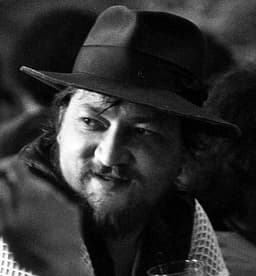
Pierre Werner
Politician · Modern
59.8Total
Basic Information
Born
1924
1913
Died
—
2002
Era
Modern
Modern
Nationality
Jamaica
Luxembourg
Occupation
Politician
Politician
Civilization
Western
Western
Score Comparison
Military (10%)
47.8
47.8
Political (20%)
70.0
75.0
Influence (20%)
60.0
72.0
Legacy (20%)
49.2
40.0
Leadership (15%)
48.8
78.0
Strategy (15%)
40.6
40.8
TOTAL
54.0
59.8
Michael Manley — Complete Timeline
1972 AD
Elected Prime Minister of JamaicaPolitical Action◆ Major
Manley led the People's National Party (PNP) to victory in the 1972 general election, becoming Prime Minister. His election marked a shift toward democratic socialism and a more assertive foreign policy.
Election VictoryPNPSocialism
Impact: nationalconstructive
Established Diplomatic Relations with CubaPolitical Action◆ Major
Manley established diplomatic relations with Fidel Castro's Cuba, breaking with the US-led isolation policy. This move strengthened ties with the socialist bloc and aligned Jamaica with the Non-Aligned Movement, but strained relations with the United States.
Foreign PolicyCubaNon-Aligned MovementCold War
Impact: regionalconstructive
1974 AD
Implemented Democratic Socialist PoliciesReform◆ Major
Manley's government introduced a series of democratic socialist reforms, including free education, a minimum wage, land reform, and the nationalization of key industries like bauxite. These policies aimed to reduce inequality but led to economic decline and capital flight.
SocialismEconomic ReformNationalizationEducation
Impact: nationalprogressive
1980 AD
Lost the 1980 General ElectionPolitical Action◆ Major
Manley's PNP was defeated by Edward Seaga's JLP in the 1980 general election, amid economic crisis and political violence. The loss reflected public dissatisfaction with socialist policies and economic decline.
Election DefeatEconomic CrisisPolitical Violence
Impact: nationaltragic
1989 AD
Returned to Power in 1989Political Action◆ Major
Manley led the PNP to victory in the 1989 general election, returning to power after nine years. He adopted a more pragmatic, centrist approach, abandoning radical socialism and embracing market-friendly policies.
Election VictoryPolitical ComebackPragmatism
Impact: nationalconstructive
Pierre Werner — Complete Timeline
1959 AD
Service as Prime Minister of LuxembourgPolitical Action◆ Major
Pierre Werner became Prime Minister of Luxembourg, a position he held for 15 years. His tenure focused on economic diversification, financial sector development, and active participation in European integration, establishing Luxembourg as a key financial center.
Luxembourg PoliticsEconomic Development
Impact: nationalconstructive
1970 AD
Chairmanship of the Werner CommitteePolitical Action◆ Major
Pierre Werner chaired a committee of experts tasked by the European Commission to design a plan for achieving economic and monetary union within the European Economic Community. The resulting Werner Report proposed a three-stage plan to create a single currency by 1980, laying the groundwork for the euro.
European IntegrationMonetary UnionEuro
Impact: regionalconstructive
Presentation of the Werner ReportPolitical Action◆ Major
The Werner Report was formally presented to the European Commission and the Council of Ministers. It outlined a detailed roadmap for a European monetary union, including a single currency and a central banking system, though the plan was not fully implemented due to the collapse of the Bretton Woods system and the 1970s oil crisis.
European IntegrationMonetary UnionEuro
Impact: regionalconstructive
This comparison has not been analyzed yet.
One-time AI generation (~1 minute). Scores and timeline are already available below.
Rankings
🥇
Pierre WernerLeader
Mil: 47.8Pol: 75.0Inf: 72.0
59.8
🥈
Michael Manley
Mil: 47.8Pol: 70.0Inf: 60.0
54.0
+5.8 behind
How This Comparison Works
Algorithm
Each figure is scored on 6 dimensions (0—100 scale) based on structured historical data: Military (10%), Political (20%), Influence (20%), Legacy (20%), Leadership (15%), Strategy (15%). The weighted total produces the final ranking.
Data Sources
Scores are computed from structured sub-indicators in the database. Scale factors adjust for era (Ancient ×0.85, Modern ×1.0) and civilization size (Eastern ×1.05, Other ×0.80) to account for differences in population and military scale.
Maximum 3 Figures
Comparisons are limited to 2—3 figures to ensure readability and statistical meaningfulness.
Error Margins
±5 points per dimension — Sub-scores are derived from historical records with inherent uncertainty. Two figures within 5 points on a dimension should be considered roughly equivalent in that area.
Total Score Accuracy
±3 points overall — The weighted combination of 6 dimensions produces a total score with approximately ±3 points of uncertainty. Differences of less than 3 points are not statistically significant— the figures are effectively tied.
Known Limitations
- Historical records are incomplete and uneven across civilizations
- Figures from oral-tradition societies may be underrepresented
- Occupation labels can misclassify multi-role figures
- Scores measure capability and impact, not moral character
- Quantitative scoring is a comparison tool, not absolute truth
Capability Radar
Military (10%) — Battles & Warfare
Battles
29
28
Win Rate
34
34
Expansion
37
38
Political (20%) — Governance & Reform
Reform
70
85
Diplomacy
65
80
Economy
55
90
Influence (20%) — Cultural & Global Reach
Cultural
50
50
Global
50
75
Legacy (20%) — Historical Impact
Historical
55
75
Longevity
40
80
Leadership (15%) — Power & Stability
Tenure
45
70
Stability
40
75
Strategy (15%) — Tactics & Innovation
Strategy
37
38
Tactics
38
38
Reform
42
41
Similar Comparisons
Comments & Discussion
No comments yet. Be the first to share your thoughts!