Loading...
This comparison has not been analyzed yet.
One-time AI generation (~1 minute). Scores and timeline are already available below.
MHDYS of Aksum vs Ramesses VII
MHDYS of Aksum leads by 10.2 pts · 2 figures compared
…
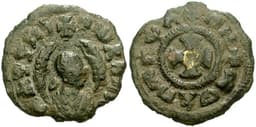
MHDYS of Aksum
Emperor · Ancient
45.3Total
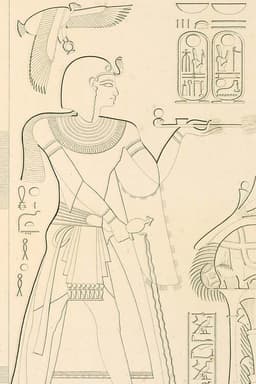
Ramesses VII
Emperor · Ancient
35.1Total
Basic Information
Born
340
-1137
Died
360
-1129
Era
Ancient
Ancient
Nationality
Ethiopia
New Kingdom Egypt
Occupation
Emperor
Emperor
Civilization
Other
Middle Eastern
Score Comparison
Military (10%)
50.0
10.2
Political (20%)
37.9
33.6
Influence (20%)
51.8
41.6
Legacy (20%)
43.3
33.3
Leadership (15%)
48.4
39.0
Strategy (15%)
35.7
45.0
TOTAL
45.3
35.1
MHDYS of Aksum — Complete Timeline
345 AD
Continued Christianization of AksumCultural◆ Major
MHDYS of Aksum promoted Christianity within the empire, building on the work of Ezana. He issued coins with explicit Christian crosses and likely supported the spread of the religion among the elite and in trade centers.
ChristianizationReligious PolicyAksumite Empire
Impact: nationalconstructive
350 AD
Minted coins with Greek inscriptionsCultural
MHDYS issued gold and silver coins bearing Greek legends, reflecting Aksum's engagement with the Hellenistic world. These coins facilitated trade with Byzantine and Red Sea merchants.
CoinageTradeHellenistic Influence
Impact: regionalconstructive
Ramesses VII — Complete Timeline
1137 BC
Accession and Economic CrisisPolitical Action◆ Major
Ramesses VII succeeded his father Ramesses VI during a period of severe economic decline. Grain prices rose sharply, and state resources were depleted. The king struggled to maintain the administration and pay workers, leading to strikes and unrest among the tomb builders at Deir el-Medina.
Economic CrisisDeir el-MedinaStrikes
Impact: nationaldestructive
1135 BC
Strikes at Deir el-MedinaPolitical Action◆ Major
Workers at the royal tomb construction site at Deir el-Medina went on strike due to delayed wages and food shortages. This was one of the first recorded labor strikes in history. The event highlighted the economic collapse and the inability of the state to fulfill its obligations.
StrikeDeir el-MedinaLabor
destructive
Construction of Tomb KV1Cultural
Ramesses VII built his tomb in the Valley of the Kings (KV1). The tomb is small and poorly decorated compared to earlier royal tombs, reflecting the economic constraints. It was left unfinished, and its decoration was limited to a few scenes from the Book of the Dead.
TombValley of the KingsEconomic Decline
This comparison has not been analyzed yet.
One-time AI generation (~1 minute). Scores and timeline are already available below.
Rankings
🥇
MHDYS of AksumLeader
Mil: 50.0Pol: 37.9Inf: 51.8
45.3
🥈
Ramesses VII
Mil: 10.2Pol: 33.6Inf: 41.6
35.1
+10.2 behind
How This Comparison Works
Algorithm
Each figure is scored on 6 dimensions (0—100 scale) based on structured historical data: Military (10%), Political (20%), Influence (20%), Legacy (20%), Leadership (15%), Strategy (15%). The weighted total produces the final ranking.
Data Sources
Scores are computed from structured sub-indicators in the database. Scale factors adjust for era (Ancient ×0.85, Modern ×1.0) and civilization size (Eastern ×1.05, Other ×0.80) to account for differences in population and military scale.
Maximum 3 Figures
Comparisons are limited to 2—3 figures to ensure readability and statistical meaningfulness.
Error Margins
±5 points per dimension — Sub-scores are derived from historical records with inherent uncertainty. Two figures within 5 points on a dimension should be considered roughly equivalent in that area.
Total Score Accuracy
±3 points overall — The weighted combination of 6 dimensions produces a total score with approximately ±3 points of uncertainty. Differences of less than 3 points are not statistically significant— the figures are effectively tied.
Known Limitations
- Historical records are incomplete and uneven across civilizations
- Figures from oral-tradition societies may be underrepresented
- Occupation labels can misclassify multi-role figures
- Scores measure capability and impact, not moral character
- Quantitative scoring is a comparison tool, not absolute truth
Capability Radar
Military (10%) — Battles & Warfare
Battles
15
5
Win Rate
20
5
Expansion
15
5
Political (20%) — Governance & Reform
Reform
40
10
Diplomacy
35
10
Economy
25
5
Influence (20%) — Cultural & Global Reach
Cultural
40
10
Global
30
5
Legacy (20%) — Historical Impact
Historical
45
10
Longevity
35
10
Leadership (15%) — Power & Stability
Tenure
30
20
Stability
30
5
Strategy (15%) — Tactics & Innovation
Strategy
20
5
Tactics
15
5
Reform
10
5
Similar Comparisons
Comments & Discussion
No comments yet. Be the first to share your thoughts!