Loading...
This comparison has not been analyzed yet.
One-time AI generation (~1 minute). Scores and timeline are already available below.
Meli-Shipak II vs Simuka
Simuka leads by 5.5 pts · 2 figures compared
…

Meli-Shipak II
Emperor · Ancient
35.6Total
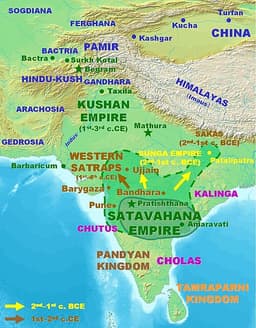
Simuka
Emperor · Ancient
41.1Total
Basic Information
Born
-1186
-230
Died
-1172
-210
Era
Ancient
Ancient
Nationality
Kassite Dynasty
India
Occupation
Emperor
Emperor
Civilization
Middle Eastern
Indian
Score Comparison
Military (10%)
10.2
35.0
Political (20%)
26.4
26.4
Influence (20%)
43.2
51.0
Legacy (20%)
34.2
44.2
Leadership (15%)
45.0
41.5
Strategy (15%)
45.0
35.7
TOTAL
35.6
41.1
Meli-Shipak II — Complete Timeline
1180 BC
Land Grant to Son Marduk-apla-iddina IPolitical Action◆ Major
Meli-Shipak II granted land to his son Marduk-apla-iddina I, recorded on a kudurru (boundary stone). The kudurru details the land boundaries, exemptions, and blessings, serving as a legal document and a symbol of royal authority and succession planning.
Land GrantKudurruSuccession
Impact: nationalconstructive
1175 BC
Issuance of Multiple KudurrusCultural
Meli-Shipak II issued several kudurrus recording land grants and legal privileges to officials and family members. These stone monuments provide valuable insight into Kassite land tenure, taxation, and religious practices, and are key archaeological sources for the period.
KudurruLand TenureArchaeology
Impact: nationalconstructive
Simuka — Complete Timeline
230 BC
Founded the Satavahana DynastyPolitical Action
Simuka established the Satavahana dynasty in the Deccan region after the decline of the Mauryan Empire. He overthrew the last Mauryan governor in the area and declared independence, founding a kingdom that would last for centuries.
Dynasty FoundingDeccanIndependence
Impact: regionalconstructive
225 BC
Conquered Western DeccanWar◆ Major
Simuka expanded his territory by conquering parts of the western Deccan, including the region around Nashik. He defeated local rulers and established Satavahana control over key trade routes.
ConquestExpansionTrade Routes
Impact: regional
220 BC
Issued Coins with Brahmi ScriptCultural
Simuka issued coins bearing his name in Brahmi script, marking the beginning of Satavahana coinage. These coins facilitated trade and served as a symbol of sovereignty.
CoinageTradeSovereignty
Impact: regionalconstructive
This comparison has not been analyzed yet.
One-time AI generation (~1 minute). Scores and timeline are already available below.
Rankings
🥇
SimukaLeader
Mil: 35.0Pol: 26.4Inf: 51.0
41.1
🥈
Meli-Shipak II
Mil: 10.2Pol: 26.4Inf: 43.2
35.6
+5.5 behind
How This Comparison Works
Algorithm
Each figure is scored on 6 dimensions (0—100 scale) based on structured historical data: Military (10%), Political (20%), Influence (20%), Legacy (20%), Leadership (15%), Strategy (15%). The weighted total produces the final ranking.
Data Sources
Scores are computed from structured sub-indicators in the database. Scale factors adjust for era (Ancient ×0.85, Modern ×1.0) and civilization size (Eastern ×1.05, Other ×0.80) to account for differences in population and military scale.
Maximum 3 Figures
Comparisons are limited to 2—3 figures to ensure readability and statistical meaningfulness.
Error Margins
±5 points per dimension — Sub-scores are derived from historical records with inherent uncertainty. Two figures within 5 points on a dimension should be considered roughly equivalent in that area.
Total Score Accuracy
±3 points overall — The weighted combination of 6 dimensions produces a total score with approximately ±3 points of uncertainty. Differences of less than 3 points are not statistically significant— the figures are effectively tied.
Known Limitations
- Historical records are incomplete and uneven across civilizations
- Figures from oral-tradition societies may be underrepresented
- Occupation labels can misclassify multi-role figures
- Scores measure capability and impact, not moral character
- Quantitative scoring is a comparison tool, not absolute truth
Capability Radar
Military (10%) — Battles & Warfare
Battles
5
20
Win Rate
5
20
Expansion
5
30
Political (20%) — Governance & Reform
Reform
20
20
Diplomacy
20
20
Economy
20
20
Influence (20%) — Cultural & Global Reach
Cultural
10
30
Global
5
15
Legacy (20%) — Historical Impact
Historical
15
35
Longevity
10
40
Leadership (15%) — Power & Stability
Tenure
30
25
Stability
25
25
Strategy (15%) — Tactics & Innovation
Strategy
5
20
Tactics
5
15
Reform
5
10
Similar Comparisons
Comments & Discussion
No comments yet. Be the first to share your thoughts!