Loading...
Maurice vs Zenobia of Palmyra
Maurice leads by 3.6 pts · 2 figures compared
…

Maurice
Emperor · Ancient
61.8Total
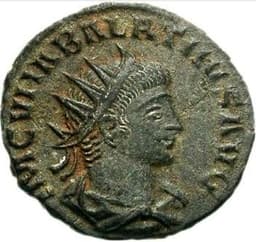
Zenobia of Palmyra
Emperor · Ancient
58.2Total
Basic Information
Born
-539
240
Died
—
274
Era
Ancient
Ancient
Nationality
Byzantine Empire
Palmyrene Empire
Occupation
Emperor
Emperor
Civilization
Western
Middle Eastern
Score Comparison
Military (10%)
61.7
82.0
Political (20%)
72.0
54.7
Influence (20%)
57.2
60.0
Legacy (20%)
54.0
52.0
Leadership (15%)
68.0
55.3
Strategy (15%)
68.0
55.0
TOTAL
61.8
58.2
Maurice — Complete Timeline
582 AD
Became Byzantine EmperorPolitical Action◆ Major
Upon the death of Tiberius II, Maurice, a successful general who had married Tiberius's daughter, was proclaimed emperor. His accession marked the beginning of a reign focused on military and administrative reform.
AccessionByzantine EmpireMilitary Rule
Impact: national
584 AD
Established the Exarchates of Ravenna and CarthageReform◆ Major
Maurice reorganized the administration of the empire's remaining territories in Italy and Africa by creating the Exarchates of Ravenna and Carthage. These military-civilian districts concentrated authority in the hands of an exarch to better defend against external threats.
Administrative ReformByzantine EmpireMilitary Organization
Impact: regionalconstructive
591 AD
Concluded a peace treaty with the Sassanid EmpireWar
Maurice helped the deposed Sassanid prince Khosrow II regain his throne. In return, Khosrow ceded large territories in Armenia and Mesopotamia to the Byzantines, ending a long and costly war on favorable terms.
Roman-Persian WarsTreatyTerritorial Expansion
Impact: regionalconstructive
602 AD
Overthrown and executed by PhocasPolitical Action
A mutiny by the Danube army, led by the centurion Phocas, marched on Constantinople. Maurice was forced to flee but was captured and executed along with his sons. His death plunged the empire into a destructive civil war.
UsurpationCivil WarByzantine Empire
Impact: nationaltragic
Zenobia of Palmyra — Complete Timeline
270 AD
Conquest of EgyptWar◆ Major
Zenobia's general Zabdas led a Palmyrene army to conquer Egypt, defeating the Roman prefect Tenagino Probus. Egypt became part of the Palmyrene Empire, giving Zenobia control over the grain supply to Rome.
ConquestEgyptPalmyrene Empire
Impact: regionaldestructive
271 AD
Proclamation of Augustus for VaballathusPolitical Action◆ Major
Zenobia proclaimed her son Vaballathus as Augustus (emperor), effectively declaring independence from the Roman Empire. This was a direct challenge to Roman authority and marked the height of Palmyrene power.
ProclamationIndependencePalmyrene Empire
Impact: regionaldestructive
272 AD
Defeat by Aurelian at the Battle of ImmaeWar◆ Major
Roman Emperor Aurelian defeated Zenobia's forces at the Battle of Immae near Antioch. The Palmyrene army was routed, and Zenobia was forced to retreat to Palmyra.
BattleRoman-Persian WarAurelian
Impact: regionaldestructive
274 AD
Capture and Parade in RomePolitical Action◆ Major
After the fall of Palmyra, Zenobia was captured by Aurelian and brought to Rome. She was paraded in golden chains in Aurelian's triumph, a symbol of Roman victory over the Palmyrene rebellion.
CaptureTriumphRoman Empire
Impact: regionaltragic
Expert Analysis
Origins
Maurice (539–602) was born in Arabissus, Cappadocia, to a wealthy family of Armenian or Roman origin. His father was a prominent official, and Maurice received a thorough education, rising through military ranks. He served as a notary and then as a general under Emperor Tiberius II, marrying Tiberius's daughter Constantina. Zenobia (c. 240–274) was born in Palmyra, Syria, to a noble family. She claimed descent from the Ptolemies and Cleopatra. She married Odaenathus, the ruler of Palmyra, and after his assassination in 267, she became regent for her young son Vaballathus, effectively controlling the Palmyrene kingdom.
Rise to Power
Maurice rose as a capable general under Tiberius II. In 582, upon Tiberius's death, Maurice was proclaimed emperor, having been adopted by Tiberius and married to his daughter. His accession was smooth, backed by the army and the Senate. Zenobia rose after her husband's death, initially ruling in her son's name. She expanded Palmyra's influence, leveraging the Roman Empire's internal crises. In 269, she conquered Egypt, and in 271, she proclaimed Vaballathus as Augustus, declaring independence from Rome, thus challenging the authority of Emperor Aurelian.
Leadership & Governance
Maurice's leadership was marked by administrative reforms. He established the Exarchates of Ravenna and Carthage (c. 584–590), decentralizing power to better defend Italian and African territories. He also reformed the army, improving pay and organization. However, his austerity measures to cut costs made him unpopular. Zenobia governed as a regent but effectively ruled Palmyra. She promoted Hellenistic culture, patronized scholars, and maintained a cosmopolitan court. She adopted Roman administrative structures but also emphasized Palmyrene identity. Her leadership was decisive and ambitious, but she lacked long-term administrative stability.
Triumph & Tragedy
Maurice's greatest triumph was his intervention in Sassanid affairs, helping Khosrow II regain the throne in 591, which led to a favorable peace treaty ceding Armenia and Mesopotamia to Byzantium. This secured the eastern frontier for a decade. His tragedy was his overthrow in 602 due to a mutiny by the Danube army led by Phocas. He was captured and executed along with his sons, ending a reign that had stabilized the empire. Zenobia's triumph was the conquest of Egypt in 269, bringing its grain wealth to Palmyra. She also expanded into Anatolia. Her tragedy was her defeat by Aurelian at the Battle of Immae in 272, followed by the fall of Palmyra. She was captured and paraded in Rome in golden chains, a symbol of Rome's triumph.
Character & Destiny
Maurice was a capable administrator and general, but his frugality and inflexibility alienated the army and populace. His decision to enforce austerity on the Danube troops triggered the mutiny that cost him his life. His character was that of a competent but unloved ruler, whose destiny was cut short by his own policies. Zenobia was ambitious, intelligent, and charismatic, modeling herself after Cleopatra. She challenged Rome at its weakest moment, but her overreach provoked a focused Roman response. Her character combined daring with strategic miscalculation, leading to her downfall. Historical assessments note her as a formidable leader but ultimately unable to sustain her empire.
Legacy
Maurice's legacy is mixed. His administrative reforms, particularly the Exarchates, influenced Byzantine governance for centuries. His peace with Persia allowed the empire to focus on the Balkans. However, his overthrow led to the disastrous war with Persia that weakened Byzantium. Scoring 61.8 overall, his military score is 61.7, political 72.0, influence 57.2, legacy 54.0, leadership 68.0, strategy 68.0. Zenobia's legacy is romanticized as a symbol of rebellion and female power. She is remembered as a warrior queen who dared to defy Rome. Her Palmyrene empire was short-lived, but her story endures. She scores 58.2 overall, with military 82.0, political 54.7, influence 60.0, legacy 52.0, leadership 55.3, strategy 55.0. While her military prowess is high, her political and leadership scores are lower, reflecting the ephemeral nature of her achievements.
Conclusion
Maurice had a greater impact on history. Despite his lower military score (61.7 vs 82.0), his political score (72.0 vs 54.7) and leadership score (68.0 vs 55.3) reflect his ability to govern effectively and implement lasting reforms. His peace with Persia and the creation of the Exarchates had long-term consequences for the Byzantine Empire and beyond. Zenobia's conquests were dramatic but temporary, undone within a few years. Her legacy is more symbolic than practical. Maurice's total score of 61.8 exceeds Zenobia's 58.2, and the data supports his greater influence on the course of history. Thus, Maurice is the more significant figure.
Rankings
🥇
MauriceLeader
Mil: 61.7Pol: 72.0Inf: 57.2
61.8
🥈
Zenobia of Palmyra
Mil: 82.0Pol: 54.7Inf: 60.0
58.2
+3.6 behind
How This Comparison Works
Algorithm
Each figure is scored on 6 dimensions (0—100 scale) based on structured historical data: Military (10%), Political (20%), Influence (20%), Legacy (20%), Leadership (15%), Strategy (15%). The weighted total produces the final ranking.
Data Sources
Scores are computed from structured sub-indicators in the database. Scale factors adjust for era (Ancient ×0.85, Modern ×1.0) and civilization size (Eastern ×1.05, Other ×0.80) to account for differences in population and military scale.
Maximum 3 Figures
Comparisons are limited to 2—3 figures to ensure readability and statistical meaningfulness.
Error Margins
±5 points per dimension — Sub-scores are derived from historical records with inherent uncertainty. Two figures within 5 points on a dimension should be considered roughly equivalent in that area.
Total Score Accuracy
±3 points overall — The weighted combination of 6 dimensions produces a total score with approximately ±3 points of uncertainty. Differences of less than 3 points are not statistically significant— the figures are effectively tied.
Known Limitations
- Historical records are incomplete and uneven across civilizations
- Figures from oral-tradition societies may be underrepresented
- Occupation labels can misclassify multi-role figures
- Scores measure capability and impact, not moral character
- Quantitative scoring is a comparison tool, not absolute truth
Capability Radar
Military (10%) — Battles & Warfare
Battles
65
65
Win Rate
70
60
Expansion
60
70
Political (20%) — Governance & Reform
Reform
85
35
Diplomacy
75
60
Economy
80
45
Influence (20%) — Cultural & Global Reach
Cultural
60
55
Global
55
45
Legacy (20%) — Historical Impact
Historical
70
60
Longevity
65
50
Leadership (15%) — Power & Stability
Tenure
70
40
Stability
55
30
Strategy (15%) — Tactics & Innovation
Strategy
80
75
Tactics
75
70
Reform
85
30
Similar Comparisons
Comments & Discussion
No comments yet. Be the first to share your thoughts!