Loading...
This comparison has not been analyzed yet.
One-time AI generation (~1 minute). Scores and timeline are already available below.
Marduk-zakir-shumi I vs Zedekiah of Judah
Marduk-zakir-shumi I leads by 4.8 pts · 2 figures compared
…
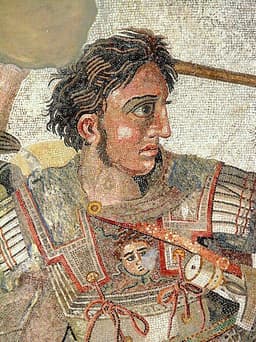
Marduk-zakir-shumi I
Emperor · Ancient
44.9Total
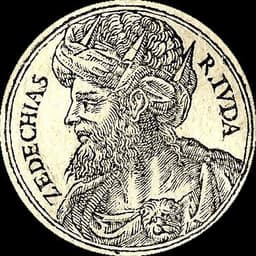
Zedekiah of Judah
Emperor · Ancient
40.1Total
Basic Information
Born
-855
-597
Died
-819
-586
Era
Ancient
Ancient
Nationality
Babylon
Judah
Occupation
Emperor
Emperor
Civilization
Middle Eastern
Middle Eastern
Score Comparison
Military (10%)
46.7
47.5
Political (20%)
39.4
35.0
Influence (20%)
45.5
42.4
Legacy (20%)
36.7
32.5
Leadership (15%)
58.8
49.9
Strategy (15%)
50.0
38.6
TOTAL
44.9
40.1
Marduk-zakir-shumi I — Complete Timeline
851 BC
Alliance with Shalmaneser IIIPolitical Action◆ Major
Marduk-zakir-shumi I formed an alliance with the Assyrian king Shalmaneser III. This alliance helped Marduk-zakir-shumi suppress a rebellion by his brother and secured Assyrian support for Babylonian rule, marking a period of cooperation between the two powers.
Assyrian AllianceRebellion SuppressionDiplomacy
Impact: regionalconstructive
Zedekiah of Judah — Complete Timeline
589 BC
Siege of Jerusalem by NebuchadnezzarWar◆ Major
Nebuchadnezzar's army besieged Jerusalem for 18 months. The siege caused severe famine, and the city walls were breached in 586 BC. Zedekiah and his soldiers attempted to flee but were captured near Jericho.
SiegeFamineCapture
Impact: regionaltragic
Rebellion against BabylonPolitical Action
Zedekiah, appointed king by Nebuchadnezzar, broke his oath of loyalty and formed an alliance with Egypt. He rebelled against Babylonian rule, provoking Nebuchadnezzar's full-scale invasion of Judah. This decision led to the destruction of Jerusalem and the Temple.
RebellionBabylonAlliance with Egypt
Impact: regionaldestructive
586 BC
Capture and blinding of ZedekiahWar◆ Major
Zedekiah was brought before Nebuchadnezzar at Riblah. His sons were executed in front of him, then his eyes were put out. He was bound in bronze shackles and taken to Babylon, where he remained a prisoner until his death.
BlindingExilePunishment
Impact: regionaltragic
Destruction of the First TempleWar
Nebuzaradan, commander of Nebuchadnezzar's guard, burned the Temple of Solomon, the royal palace, and all the houses of Jerusalem. The bronze pillars, vessels, and treasures were carried to Babylon. This event ended the Davidic monarchy and the Temple cult.
Temple DestructionExileEnd of Kingdom
Impact: globaltragic
Babylonian Exile of JudahPolitical Action
After Jerusalem's fall, most of the population of Judah was deported to Babylon. Only the poorest were left to tend the land. This exile lasted 70 years and fundamentally transformed Jewish religion and identity, leading to the development of the synagogue and written Torah.
ExileDeportationJewish Diaspora
Impact: globaltragic
This comparison has not been analyzed yet.
One-time AI generation (~1 minute). Scores and timeline are already available below.
Rankings
🥇
Marduk-zakir-shumi ILeader
Mil: 46.7Pol: 39.4Inf: 45.5
44.9
🥈
Zedekiah of Judah
Mil: 47.5Pol: 35.0Inf: 42.4
40.1
+4.8 behind
How This Comparison Works
Algorithm
Each figure is scored on 6 dimensions (0—100 scale) based on structured historical data: Military (10%), Political (20%), Influence (20%), Legacy (20%), Leadership (15%), Strategy (15%). The weighted total produces the final ranking.
Data Sources
Scores are computed from structured sub-indicators in the database. Scale factors adjust for era (Ancient ×0.85, Modern ×1.0) and civilization size (Eastern ×1.05, Other ×0.80) to account for differences in population and military scale.
Maximum 3 Figures
Comparisons are limited to 2—3 figures to ensure readability and statistical meaningfulness.
Error Margins
±5 points per dimension — Sub-scores are derived from historical records with inherent uncertainty. Two figures within 5 points on a dimension should be considered roughly equivalent in that area.
Total Score Accuracy
±3 points overall — The weighted combination of 6 dimensions produces a total score with approximately ±3 points of uncertainty. Differences of less than 3 points are not statistically significant— the figures are effectively tied.
Known Limitations
- Historical records are incomplete and uneven across civilizations
- Figures from oral-tradition societies may be underrepresented
- Occupation labels can misclassify multi-role figures
- Scores measure capability and impact, not moral character
- Quantitative scoring is a comparison tool, not absolute truth
Capability Radar
Military (10%) — Battles & Warfare
Battles
30
5
Win Rate
35
5
Expansion
20
0
Political (20%) — Governance & Reform
Reform
20
5
Diplomacy
60
5
Economy
25
5
Influence (20%) — Cultural & Global Reach
Cultural
20
5
Global
10
5
Legacy (20%) — Historical Impact
Historical
25
10
Longevity
15
5
Leadership (15%) — Power & Stability
Tenure
40
10
Stability
35
5
Strategy (15%) — Tactics & Innovation
Strategy
30
5
Tactics
25
5
Reform
15
0
Similar Comparisons
Comments & Discussion
No comments yet. Be the first to share your thoughts!