Loading...
Analysis will be generated on first visit.
Scores and timeline are available below. The page will refresh automatically when ready.
Marcus Vipsanius Agrippa vs Napoleon Bonaparte
Napoleon Bonaparte leads by 11.1 pts · 2 figures compared
…

Marcus Vipsanius Agrippa
General · Ancient
71.3Total
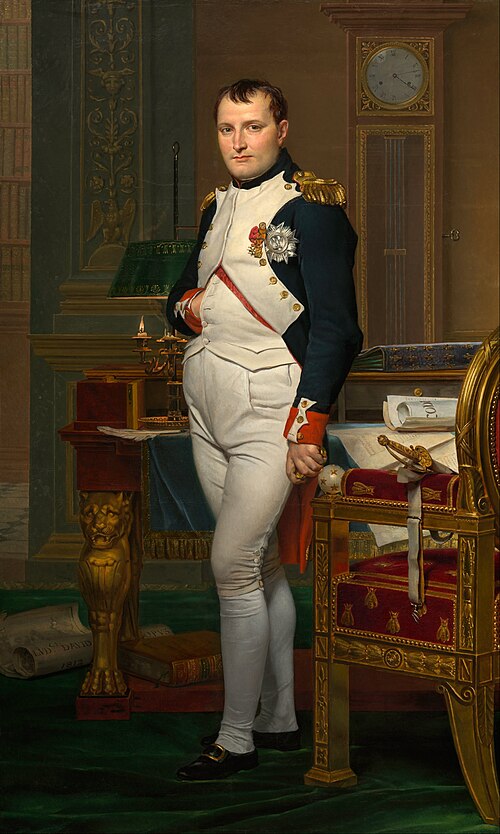
Napoleon Bonaparte
General · Modern
82.4Total
Basic Information
Born
-63
1769
Died
-12
1821
Era
Ancient
Modern
Nationality
Roman Empire
France
Occupation
General
General
Civilization
Western
Western
Score Comparison
Military (10%)
84.3
94.0
Political (20%)
74.1
75.0
Influence (20%)
67.3
82.0
Legacy (20%)
60.7
78.0
Leadership (15%)
72.0
80.0
Strategy (15%)
77.7
93.0
TOTAL
71.3
82.4
Rankings
🥇
Napoleon BonaparteLeader
Mil: 94.0Pol: 75.0Inf: 82.0
82.4
🥈
Marcus Vipsanius Agrippa
Mil: 84.3Pol: 74.1Inf: 67.3
71.3
+11.1 behind
How This Comparison Works
Algorithm
Each figure is scored on 6 dimensions (0—100 scale) based on structured historical data: Military (10%), Political (20%), Influence (20%), Legacy (20%), Leadership (15%), Strategy (15%). The weighted total produces the final ranking.
Data Sources
Scores are computed from structured sub-indicators in the database. Scale factors adjust for era (Ancient ×0.85, Modern ×1.0) and civilization size (Eastern ×1.05, Other ×0.80) to account for differences in population and military scale.
Maximum 3 Figures
Comparisons are limited to 2—3 figures to ensure readability and statistical meaningfulness.
Error Margins
±5 points per dimension — Sub-scores are derived from historical records with inherent uncertainty. Two figures within 5 points on a dimension should be considered roughly equivalent in that area.
Total Score Accuracy
±3 points overall — The weighted combination of 6 dimensions produces a total score with approximately ±3 points of uncertainty. Differences of less than 3 points are not statistically significant— the figures are effectively tied.
Known Limitations
- Historical records are incomplete and uneven across civilizations
- Figures from oral-tradition societies may be underrepresented
- Occupation labels can misclassify multi-role figures
- Scores measure capability and impact, not moral character
- Quantitative scoring is a comparison tool, not absolute truth
Capability Radar
Military (10%) — Battles & Warfare
Battles
85
95
Win Rate
90
90
Expansion
82
95
Political (20%) — Governance & Reform
Reform
78
95
Diplomacy
80
80
Economy
70
85
Influence (20%) — Cultural & Global Reach
Cultural
65
85
Global
65
90
Legacy (20%) — Historical Impact
Historical
75
95
Longevity
70
90
Leadership (15%) — Power & Stability
Tenure
75
85
Stability
85
70
Strategy (15%) — Tactics & Innovation
Strategy
85
95
Tactics
88
98
Reform
80
92
Analysis will be generated on first visit.
Scores and timeline are available below. The page will refresh automatically when ready.
Marcus Vipsanius Agrippa — Complete Timeline
39 BC
Governorship of GaulWar◆ Major
Agrippa was appointed governor of Transalpine Gaul. He suppressed a rebellion by the Aquitanian tribes, extended Roman control, and began construction of the road network that would become the Via Agrippa, linking the province to Italy.
Provincial AdministrationRoad BuildingMilitary Campaign
Impact: regionalconstructive
33 BC
Construction of the Aqua JuliaCultural
As aedile, Agrippa oversaw the construction of the Aqua Julia aqueduct in Rome. This project improved the city's water supply and demonstrated his commitment to public works, setting a precedent for his later building programs.
AqueductPublic WorksUrban Infrastructure
constructive
31 BC
Battle of ActiumWar
Agrippa commanded the fleet of Octavian against the combined naval forces of Mark Antony and Cleopatra. His tactical maneuvering and blockade forced Antony's fleet to break out, resulting in a decisive victory that ended the Roman civil wars.
Naval BattleCivil WarOctavian
Impact: global
25 BC
Completion of the PantheonCultural◆ Major
Agrippa completed the original Pantheon in Rome, a temple dedicated to all the gods. The building featured a rectangular plan with a porch of granite columns. The structure was later rebuilt by Hadrian but retained Agrippa's inscription.
ArchitectureTemplePublic Building
Impact: globalconstructive
21 BC
Marriage to Julia the ElderPolitical Action◆ Major
Augustus arranged for Agrippa to marry his daughter Julia, cementing their political alliance. The marriage produced five children, including Gaius and Lucius Caesar, whom Augustus adopted as his heirs, and Agrippina the Elder.
Dynastic MarriageAugustusImperial Succession
Impact: national
Similar Comparisons
Comments & Discussion
No comments yet. Be the first to share your thoughts!