Loading...
Analysis will be generated on first visit.
Scores and timeline are available below. The page will refresh automatically when ready.
Marcus Aurelius vs Napoleon Bonaparte
Napoleon Bonaparte leads by 11.6 pts · 2 figures compared
…

Marcus Aurelius
Emperor · Ancient
70.8Total
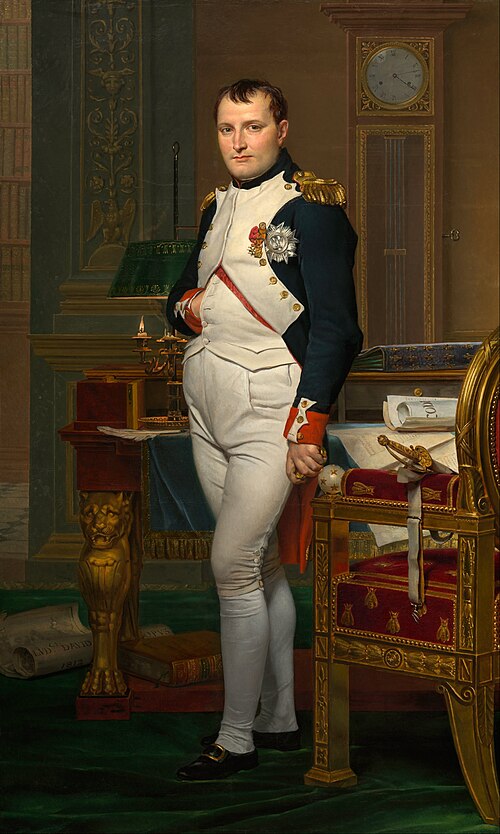
Napoleon Bonaparte
General · Modern
82.4Total
Basic Information
Born
121
1769
Died
180
1821
Era
Ancient
Modern
Nationality
Roman Empire
France
Occupation
Emperor
General
Civilization
Western
Western
Score Comparison
Military (10%)
62.1
94.0
Political (20%)
71.8
75.0
Influence (20%)
75.0
82.0
Legacy (20%)
72.4
78.0
Leadership (15%)
80.3
80.0
Strategy (15%)
58.0
93.0
TOTAL
70.8
82.4
Rankings
🥇
Napoleon BonaparteLeader
Mil: 94.0Pol: 75.0Inf: 82.0
82.4
🥈
Marcus Aurelius
Mil: 62.1Pol: 71.8Inf: 75.0
70.8
+11.6 behind
How This Comparison Works
Algorithm
Each figure is scored on 6 dimensions (0—100 scale) based on structured historical data: Military (10%), Political (20%), Influence (20%), Legacy (20%), Leadership (15%), Strategy (15%). The weighted total produces the final ranking.
Data Sources
Scores are computed from structured sub-indicators in the database. Scale factors adjust for era (Ancient ×0.85, Modern ×1.0) and civilization size (Eastern ×1.05, Other ×0.80) to account for differences in population and military scale.
Maximum 3 Figures
Comparisons are limited to 2—3 figures to ensure readability and statistical meaningfulness.
Error Margins
±5 points per dimension — Sub-scores are derived from historical records with inherent uncertainty. Two figures within 5 points on a dimension should be considered roughly equivalent in that area.
Total Score Accuracy
±3 points overall — The weighted combination of 6 dimensions produces a total score with approximately ±3 points of uncertainty. Differences of less than 3 points are not statistically significant— the figures are effectively tied.
Known Limitations
- Historical records are incomplete and uneven across civilizations
- Figures from oral-tradition societies may be underrepresented
- Occupation labels can misclassify multi-role figures
- Scores measure capability and impact, not moral character
- Quantitative scoring is a comparison tool, not absolute truth
Capability Radar
Military (10%) — Battles & Warfare
Battles
70
95
Win Rate
65
90
Expansion
40
95
Political (20%) — Governance & Reform
Reform
70
95
Diplomacy
75
80
Economy
60
85
Influence (20%) — Cultural & Global Reach
Cultural
85
85
Global
80
90
Legacy (20%) — Historical Impact
Historical
90
95
Longevity
95
90
Leadership (15%) — Power & Stability
Tenure
85
85
Stability
65
70
Strategy (15%) — Tactics & Innovation
Strategy
75
95
Tactics
60
98
Reform
55
92
Analysis will be generated on first visit.
Scores and timeline are available below. The page will refresh automatically when ready.
Marcus Aurelius — Complete Timeline
161 AD
Became Roman EmperorPolitical Action◆ Major
Marcus Aurelius succeeded Antoninus Pius as Roman Emperor in 161 CE, initially co-ruling with Lucius Verus. His accession marked the beginning of a reign that would be defined by constant warfare and the Antonine Plague, testing his Stoic principles.
SuccessionRoman EmpireCo-Emperor
Impact: global
165 AD
Endured the Antonine PlagueOther◆ Major
The Antonine Plague, likely smallpox, swept through the Roman Empire during Marcus Aurelius's reign, killing an estimated 5-10 million people. The epidemic weakened the military and economy, contributing to the empire's long-term decline and forcing the emperor to recruit slaves and gladiators.
PlaguePandemicRoman Empire
Impact: globaltragic
166 AD
Fought the Marcomannic WarsWar◆ Major
Marcus Aurelius led Roman forces in a series of campaigns along the Danube frontier against the Marcomanni, Quadi, and other Germanic tribes. The wars lasted from 166 to 180 CE, straining the empire's resources and requiring the emperor to spend years on the front lines.
Danube FrontierGermanic TribesWar
Impact: regional
170 AD
Wrote MeditationsCultural
During his military campaigns, Marcus Aurelius composed his personal philosophical writings, later known as Meditations. The work, written in Greek, consists of Stoic reflections on duty, mortality, and self-discipline, and has become a foundational text of Western philosophy.
PhilosophyStoicismLiterature
Impact: globalconstructive
177 AD
Appointed Commodus as SuccessorPolitical Action◆ Major
Marcus Aurelius appointed his son Commodus as co-emperor and successor, breaking the tradition of adopting capable successors. Commodus's subsequent tyrannical rule is often cited as a turning point in Rome's decline, marking the end of the Pax Romana.
SuccessionCommodusPax Romana
Impact: globaltragic
Similar Comparisons
Comments & Discussion
No comments yet. Be the first to share your thoughts!