Loading...
Marcelo Caetano vs Naftali Bennett
Marcelo Caetano leads by 4.9 pts · 2 figures compared
…
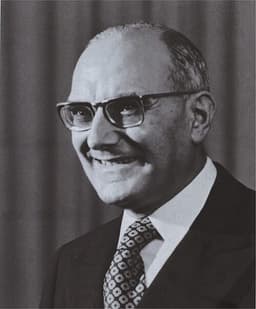
Marcelo Caetano
Politician · Modern
46.2Total

Naftali Bennett
Politician · Modern
41.3Total
Basic Information
Born
1906
1972
Died
1980
—
Era
Modern
Modern
Nationality
Portugal
Israel
Occupation
Politician
Politician
Civilization
Western
Middle Eastern
Score Comparison
Military (10%)
50.0
47.1
Political (20%)
37.9
35.1
Influence (20%)
50.2
47.9
Legacy (20%)
40.0
35.8
Leadership (15%)
58.8
41.5
Strategy (15%)
41.8
41.5
TOTAL
46.2
41.3
Marcelo Caetano — Complete Timeline
1968 AD
Continued Colonial War in AfricaWar◆ Major
Caetano continued Portugal's costly colonial wars in Angola, Mozambique, and Guinea-Bissau, resisting independence movements. The wars drained resources and caused growing opposition within the military and society.
Colonial WarAfrican IndependenceMilitary Conflict
Impact: globaldestructive
Appointed Prime Minister of PortugalPolitical Action◆ Major
Caetano succeeded Ant
Estado NovoSuccessionAuthoritarianism
Impact: national
1974 AD
Overthrown by the Carnation RevolutionPolitical Action
Caetano was overthrown by a military coup known as the Carnation Revolution, led by left-wing officers. The bloodless coup ended the Estado Novo regime and led to the establishment of democracy in Portugal.
CoupRevolutionEnd of Dictatorship
Impact: national
Exiled to BrazilPolitical Action
After the Carnation Revolution, Caetano was exiled to Brazil, where he lived until his death in 1980. He was not prosecuted for his role in the regime, but remained a controversial figure.
ExilePost-RevolutionLegacy
Impact: nationaltragic
Naftali Bennett — Complete Timeline
1999 AD
Founded Cyota SoftwareInvention◆ Major
Bennett co-founded Cyota, a cybersecurity company specializing in anti-fraud technology for online banking. He sold the company to RSA Security in 2005 for $145 million, establishing his business reputation.
CybersecurityEntrepreneurshipTechnology
Impact: globalconstructive
2015 AD
Appointed Minister of EducationPolitical Action◆ Major
Bennett was appointed Minister of Education in Benjamin Netanyahu's government. He implemented reforms including increased funding for religious education and promoting Jewish identity in schools.
EducationReformIsrael
Impact: nationalconstructive
2021 AD
Oversaw Operation Guardian of the WallsWar◆ Major
As Prime Minister, Bennett oversaw Israel's military operation in Gaza against Hamas in May 2021. The 11-day conflict involved heavy rocket fire and airstrikes, ending with a ceasefire.
GazaHamasMilitary Operation
Impact: regional
Became Prime Minister of IsraelPolitical Action
Bennett became Prime Minister as head of a diverse coalition government, ending Benjamin Netanyahu's 12-year tenure. He served from June 2021 to June 2022, focusing on economic recovery and managing COVID-19.
Prime MinisterCoalitionLeadership
Impact: national
Expert Analysis
Origins
Marcelo Caetano was born on August 17, 1906, in Lisbon, Portugal, into a middle-class family. He studied law at the University of Lisbon and became a professor, specializing in administrative law. His academic career led him to support the authoritarian Estado Novo regime under António de Oliveira Salazar. Caetano was a key intellectual figure, writing extensively on corporatist ideology and serving as a minister in Salazar's government.
Naftali Bennett was born on March 25, 1972, in Haifa, Israel, to immigrant parents from the United States and Canada. He served in the Israel Defense Forces as a commander in the elite Sayeret Matkal unit. After his military service, he studied law at Hebrew University and later co-founded Cyota, a cybersecurity company specializing in anti-fraud technology for online banking. He sold the company to RSA Security in 2005 for $145 million, making him a wealthy entrepreneur.
Rise to Power
Caetano rose through the ranks of the Estado Novo as a loyalist. He served as Minister of Colonies (1944-1947) and later as President of the Corporative Chamber. In 1968, when Salazar suffered a stroke, Caetano was appointed Prime Minister, promising reforms and liberalization. However, he maintained the regime's core authoritarian structures and continued the unpopular colonial wars.
Bennett entered politics later, first serving as Director General of the Yesha Council, representing Israeli settlers. He was elected to the Knesset in 2013 as a member of the Jewish Home party, a religious-nationalist party. He served as Minister of Economy and later Minister of Education under Prime Minister Benjamin Netanyahu. In June 2021, after four elections, Bennett formed a diverse coalition government, becoming Prime Minister and ending Netanyahu's 12-year tenure. He scored 35.1 in political skill, reflecting his ability to navigate coalition politics, though lower than Caetano's 37.9.
Leadership & Governance
Caetano's leadership style was cautious and bureaucratic. He promised to "renew" the regime but implemented minimal reforms, such as granting limited press freedom and allowing some opposition activity. However, he maintained the secret police (PIDE) and censorship. His governance focused on preserving the Estado Novo's corporatist system and continuing the war in Africa, which consumed over 40% of the national budget. His leadership score is 58.8, reflecting his administrative competence but lack of transformative vision.
Bennett's leadership was pragmatic and coalition-focused. He governed a diverse alliance of left-wing, centrist, and right-wing parties, including an Arab Islamist party for the first time. His approach emphasized consensus-building and avoiding ideological conflicts. During his tenure, he oversaw Operation Guardian of the Walls in May 2021, a military campaign against Hamas in Gaza. He also prioritized economic growth and technological innovation, leveraging his business background. His leadership score of 41.5 is lower, partly due to the short duration of his premiership (one year).
Triumph & Tragedy
Caetano's greatest achievement was maintaining stability and avoiding a violent transition during his tenure. He also initiated some economic development, with GDP growth averaging 6% in the early 1970s. However, his greatest failure was his inability to end the colonial wars, which drained resources and led to military discontent. The Carnation Revolution on April 25, 1974, overthrew him in a bloodless coup, ending 48 years of dictatorship. He scored 50.0 in military, reflecting his role in the colonial conflicts.
Bennett's triumph was forming a stable government and ending the political deadlock in Israel. He also managed the COVID-19 pandemic effectively, with a rapid vaccination campaign. His failure was the short-lived government, which collapsed after a year, and the Gaza conflict that resulted in over 250 deaths. His military score of 47.1 reflects his service and oversight of operations but lower than Caetano's due to the scale of war.
Character & Destiny
Caetano was intellectual but indecisive. He believed in gradual reform but lacked the courage to implement change. His loyalty to Salazar's legacy prevented him from pursuing a different path. He fled to Brazil after the revolution, where he lived quietly until his death in 1980. His character – cautious and conservative – sealed his fate as the last dictator of Portugal.
Bennett is ambitious and entrepreneurial. He shifted from high-tech to politics, displaying adaptability. His decision to form a coalition with left-wing parties was pragmatic but alienated his base. After leaving office, he returned to the private sector. His destiny was to be a transitional figure, breaking Netanyahu's dominance but unable to consolidate power.
Legacy
Caetano's legacy is largely negative: he is remembered as the last ruler of a repressive regime that fell to revolution. The Estado Novo's collapse led to democracy and decolonization. His policies were reversed, and his influence score of 50.2 reflects limited enduring impact.
Bennett's legacy is still forming, but he is seen as a symbol of political innovation. His coalition proved that Arab parties could be part of a government. His legacy score of 35.8 is low due to his short term and limited lasting changes. However, his high-tech background influenced Israel's innovation policy.
Conclusion
Marcelo Caetano had a higher total score (46.2 vs 41.3) and greater historical impact, albeit negative. He presided over a regime that collapsed under its own weight, leading to a democratic transition. Bennett's impact was more immediate but less profound. Caetano's failures in Africa reshaped Portugal's identity, while Bennett's coalition was a temporary experiment. Thus, Caetano's influence, though damaging, was more consequential.
Rankings
🥇
Marcelo CaetanoLeader
Mil: 50.0Pol: 37.9Inf: 50.2
46.2
🥈
Naftali Bennett
Mil: 47.1Pol: 35.1Inf: 47.9
41.3
+4.9 behind
How This Comparison Works
Algorithm
Each figure is scored on 6 dimensions (0—100 scale) based on structured historical data: Military (10%), Political (20%), Influence (20%), Legacy (20%), Leadership (15%), Strategy (15%). The weighted total produces the final ranking.
Data Sources
Scores are computed from structured sub-indicators in the database. Scale factors adjust for era (Ancient ×0.85, Modern ×1.0) and civilization size (Eastern ×1.05, Other ×0.80) to account for differences in population and military scale.
Maximum 3 Figures
Comparisons are limited to 2—3 figures to ensure readability and statistical meaningfulness.
Error Margins
±5 points per dimension — Sub-scores are derived from historical records with inherent uncertainty. Two figures within 5 points on a dimension should be considered roughly equivalent in that area.
Total Score Accuracy
±3 points overall — The weighted combination of 6 dimensions produces a total score with approximately ±3 points of uncertainty. Differences of less than 3 points are not statistically significant— the figures are effectively tied.
Known Limitations
- Historical records are incomplete and uneven across civilizations
- Figures from oral-tradition societies may be underrepresented
- Occupation labels can misclassify multi-role figures
- Scores measure capability and impact, not moral character
- Quantitative scoring is a comparison tool, not absolute truth
Capability Radar
Military (10%) — Battles & Warfare
Battles
27
24
Win Rate
34
24
Expansion
34
27
Political (20%) — Governance & Reform
Reform
20
20
Diplomacy
35
25
Economy
30
30
Influence (20%) — Cultural & Global Reach
Cultural
20
10
Global
20
15
Legacy (20%) — Historical Impact
Historical
25
10
Longevity
15
5
Leadership (15%) — Power & Stability
Tenure
40
15
Stability
15
15
Strategy (15%) — Tactics & Innovation
Strategy
38
32
Tactics
39
32
Reform
44
38
Similar Comparisons
Comments & Discussion
No comments yet. Be the first to share your thoughts!