Loading...
This comparison has not been analyzed yet.
One-time AI generation (~1 minute). Scores and timeline are already available below.
Man Singh of Amber vs Panfilo Lacson
Man Singh of Amber leads by 9.4 pts · 2 figures compared
…

Man Singh of Amber
General · Modern
58.1Total
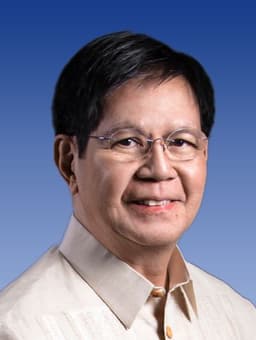
Panfilo Lacson
General · Modern
48.7Total
Basic Information
Born
1550
1948
Died
1614
—
Era
Modern
Modern
Nationality
India
Philippines
Occupation
General
General
Civilization
Indian
Eastern
Score Comparison
Military (10%)
74.7
50.0
Political (20%)
68.0
48.0
Influence (20%)
58.0
50.2
Legacy (20%)
50.0
40.0
Leadership (15%)
48.8
65.0
Strategy (15%)
60.7
41.7
TOTAL
58.1
48.7
Man Singh of Amber — Complete Timeline
1576 AD
Battle of HaldighatiWar◆ Major
Man Singh commanded the Mughal army against Maharana Pratap of Mewar at Haldighati. Though the Mughals claimed victory, Pratap escaped, and the battle became a symbol of Rajput resistance.
Mughal-Rajput WarBattle
Impact: regional
1592 AD
Conquest of OrissaWar◆ Major
Man Singh led a Mughal campaign to conquer Orissa from the Afghans. He defeated the Afghan ruler Qutlu Khan Lohani and annexed the region, extending Mughal influence in eastern India.
ConquestOrissaMughal Expansion
Impact: regional
Built the Amber Fort and PalaceCultural◆ Major
Man Singh oversaw the construction of the Amber Fort and Palace near Jaipur. The complex, blending Rajput and Mughal architecture, became a symbol of Kachwaha power and a UNESCO World Heritage site.
ArchitectureHeritageAmber Fort
Impact: regionalconstructive
1595 AD
Governor of BengalPolitical Action◆ Major
Man Singh served as the Mughal governor of Bengal from 1595 to 1606. He suppressed rebellions, expanded Mughal control, and administered the province effectively, earning Akbar's trust.
GovernorBengalMughal Administration
Impact: regionalconstructive
Panfilo Lacson — Complete Timeline
1999 AD
Appointed Philippine National Police ChiefPolitical Action◆ Major
Panfilo Lacson was appointed Chief of the Philippine National Police (PNP) by President Joseph Estrada. He led a controversial anti-crime campaign that included extrajudicial killings of suspected criminals.
PoliceAnti-CrimeExtrajudicial Killings
Impact: national
2001 AD
Elected Senator in 2001 ElectionsPolitical Action◆ Major
Lacson won a Senate seat in the 2001 Philippine general election. He positioned himself as a law-and-order advocate and critic of corruption, serving three terms in the Senate.
ElectionSenateLaw and Order
Impact: national
2004 AD
Presidential Candidacy in 2004 ElectionPolitical Action◆ Major
Lacson ran for president in the 2004 Philippine election under the Laban ng Demokratikong Pilipino party. He placed third with 3.5 million votes, behind Gloria Macapagal Arroyo and Fernando Poe Jr.
Presidential ElectionPhilippinesLaban ng Demokratikong Pilipino
Impact: national
This comparison has not been analyzed yet.
One-time AI generation (~1 minute). Scores and timeline are already available below.
Rankings
🥇
Man Singh of AmberLeader
Mil: 74.7Pol: 68.0Inf: 58.0
58.1
🥈
Panfilo Lacson
Mil: 50.0Pol: 48.0Inf: 50.2
48.7
+9.4 behind
How This Comparison Works
Algorithm
Each figure is scored on 6 dimensions (0—100 scale) based on structured historical data: Military (10%), Political (20%), Influence (20%), Legacy (20%), Leadership (15%), Strategy (15%). The weighted total produces the final ranking.
Data Sources
Scores are computed from structured sub-indicators in the database. Scale factors adjust for era (Ancient ×0.85, Modern ×1.0) and civilization size (Eastern ×1.05, Other ×0.80) to account for differences in population and military scale.
Maximum 3 Figures
Comparisons are limited to 2—3 figures to ensure readability and statistical meaningfulness.
Error Margins
±5 points per dimension — Sub-scores are derived from historical records with inherent uncertainty. Two figures within 5 points on a dimension should be considered roughly equivalent in that area.
Total Score Accuracy
±3 points overall — The weighted combination of 6 dimensions produces a total score with approximately ±3 points of uncertainty. Differences of less than 3 points are not statistically significant— the figures are effectively tied.
Known Limitations
- Historical records are incomplete and uneven across civilizations
- Figures from oral-tradition societies may be underrepresented
- Occupation labels can misclassify multi-role figures
- Scores measure capability and impact, not moral character
- Quantitative scoring is a comparison tool, not absolute truth
Capability Radar
Military (10%) — Battles & Warfare
Battles
75
15
Win Rate
70
20
Expansion
65
5
Political (20%) — Governance & Reform
Reform
30
40
Diplomacy
70
35
Economy
35
30
Influence (20%) — Cultural & Global Reach
Cultural
45
20
Global
35
10
Legacy (20%) — Historical Impact
Historical
50
25
Longevity
40
15
Leadership (15%) — Power & Stability
Tenure
55
55
Stability
50
25
Strategy (15%) — Tactics & Innovation
Strategy
68
20
Tactics
72
25
Reform
40
30
Similar Comparisons
Comments & Discussion
No comments yet. Be the first to share your thoughts!