Loading...
Mahathir Mohamad vs Yun Posun
Mahathir Mohamad leads by 20.9 pts · 2 figures compared
…

Mahathir Mohamad
Politician · Modern
58.3Total
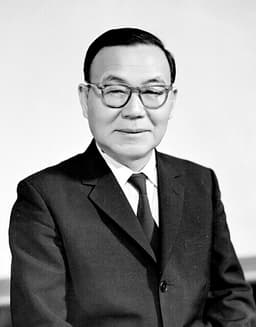
Yun Posun
Politician · Modern
37.4Total
Basic Information
Born
1925
1897
Died
—
1990
Era
Modern
Modern
Nationality
Malaysia
South Korea
Occupation
Politician
Politician
Civilization
Eastern
Eastern
Score Comparison
Military (10%)
10.2
14.0
Political (20%)
70.3
30.8
Influence (20%)
72.0
49.4
Legacy (20%)
52.0
39.2
Leadership (15%)
80.0
38.1
Strategy (15%)
37.3
35.3
TOTAL
58.3
37.4
Mahathir Mohamad — Complete Timeline
1981 AD
Became Prime Minister of MalaysiaPolitical Action◆ Major
Mahathir Mohamad became the fourth Prime Minister of Malaysia. He began a 22-year tenure that would reshape the country's economy and politics.
Prime MinisterMalaysiaLong Tenure
Impact: national
1982 AD
Look East PolicyReform◆ Major
Mahathir launched the 'Look East' policy, encouraging Malaysia to emulate the work ethic and management practices of Japan and South Korea. This aimed to modernize the economy and reduce reliance on the West.
Economic PolicyJapanModernization
Impact: nationalconstructive
1983 AD
Privatization and Economic GrowthReform◆ Major
Mahathir embarked on a massive privatization program, selling state-owned enterprises and encouraging private sector growth. This led to rapid economic expansion and the rise of a Malay business class.
PrivatizationEconomic GrowthBumiputera
Impact: nationalconstructive
1998 AD
Anwar Ibrahim Sacking and ReformasiPolitical Action
Mahathir sacked his deputy Anwar Ibrahim, who then led massive street protests (Reformasi). Anwar was arrested and convicted on sodomy charges, widely seen as politically motivated. This deeply divided Malaysian society.
Political CrisisAnwar IbrahimReformasi
Impact: nationaldestructive
2018 AD
Became Prime Minister Again (Second Term)Political Action◆ Major
At age 92, Mahathir became Prime Minister again after leading the Pakatan Harapan coalition to a historic election victory, defeating the long-ruling Barisan Nasional. He became the world's oldest elected leader.
Election VictoryOldest LeaderPakatan Harapan
Impact: national
Yun Posun — Complete Timeline
1960 AD
Election as President of South KoreaPolitical Action◆ Major
Yun Posun was elected as the second President of South Korea after the April Revolution overthrew Syngman Rhee. His presidency was short-lived, lasting only nine months, as he was a figurehead with limited power under a parliamentary system.
ElectionApril RevolutionSecond Republic
Impact: national
1961 AD
Overthrow by Park Chung-hee's CoupPolitical Action◆ Major
Yun Posun was forced out of office when Park Chung-hee led a military coup on May 16, 1961. The coup ended the Second Republic and established a military junta, with Yun resigning shortly after in protest.
Military CoupPark Chung-heeEnd of Democracy
Impact: nationaldestructive
1963 AD
Opposition to Park Chung-hee's RegimePolitical Action
After his ouster, Yun Posun became a leading opposition figure against Park Chung-hee's authoritarian rule. He ran for president in 1963 and 1967, losing both times, and was a vocal critic of the Yushin Constitution.
OppositionAuthoritarianismDemocracy Movement
Impact: nationalprogressive
Expert Analysis
Origins
Mahathir Mohamad was born on July 10, 1925, in Alor Setar, Kedah, Malaysia, to a teacher father and a homemaker mother. He studied medicine at the University of Malaya in Singapore, graduating in 1953, and worked as a government doctor before entering politics. His early experiences under British colonialism shaped his nationalist views.
Yun Posun was born on August 26, 1897, in Asan, South Chungcheong, Korea, into a wealthy yangban family. He studied at Waseda University in Japan and later at Princeton University in the US, earning a master's degree in archaeology. He returned to Korea and became involved in politics, serving as a councilor under Japanese rule and later as a diplomat for the Republic of Korea.
Rise to Power
Mahathir entered politics in 1964 as a Member of Parliament for Kota Star Selatan. He rose within the United Malays National Organisation (UMNO), becoming Minister of Education in 1974 and Deputy Prime Minister in 1976. In 1981, he became Prime Minister after Hussein Onn stepped down, beginning a 22-year tenure.
Yun Posun's rise came after the April Revolution in 1960, which overthrew Syngman Rhee. He was elected President in August 1960 by the National Assembly, serving as the head of the Second Republic. His presidency was short-lived, lasting only nine months before Park Chung-hee's military coup on May 16, 1961.
Leadership & Governance
Mahathir's leadership was characterized by strong centralization and economic nationalism. He implemented the Look East Policy in 1982, emulating Japanese and South Korean work ethics, and launched massive privatization programs, selling state-owned enterprises. He also promoted heavy industries like the Proton car company. His political score of 70.3 reflects his dominance, but his authoritarian tendencies included curbing judicial independence and suppressing dissent.
Yun Posun's leadership was democratic but weak. He presided over a chaotic political scene with frequent cabinet changes. His presidency was paralyzed by factionalism and economic instability. He scored 30.8 in political leadership, indicating his inability to assert authority. His brief tenure saw little substantive reform.
Triumph & Tragedy
Mahathir's greatest triumph was transforming Malaysia from an agricultural economy to a newly industrialized one, achieving rapid growth averaging 7% annually in the 1990s. However, his tragedy was the Asian Financial Crisis of 1997-98, which exposed vulnerabilities in his economic model. He also sacked his deputy Anwar Ibrahim in 1998, sparking massive protests and a political crisis that tarnished his legacy.
Yun Posun's triumph was his election as president after the April Revolution, symbolizing a brief democratic interlude. His tragedy was his overthrow by Park Chung-hee, which ended South Korea's Second Republic and ushered in 18 years of military dictatorship. He later became an opposition figure, but his influence was limited.
Character & Destiny
Mahathir was pragmatic, decisive, and often confrontational. His leadership score of 80.0 reflects his strong will and strategic vision, but his strategy score of 37.3 indicates mixed long-term planning. His character drove him to centralize power, leading to both economic success and political repression.
Yun Posun was scholarly and principled but indecisive. His leadership score of 38.1 shows his weakness in crisis. His destiny was shaped by the tumultuous post-war Korean politics, where his democratic ideals were no match for military force.
Legacy
Mahathir's legacy is profound in Malaysia: he shaped its economic structure, political culture, and national identity. His policies fostered a Malay middle class but also entrenched ethnic divisions. He scored 52.0 in legacy, reflecting enduring impact but mixed evaluations. His return as PM in 2018 at age 92 was unprecedented.
Yun Posun's legacy is minor. He is remembered as a brief democratic president before authoritarian rule. His score of 39.2 in legacy reflects his short tenure and limited achievements. He is often overshadowed by Park Chung-hee and later democratization leaders.
Conclusion
Mahathir Mohamad had a far greater impact than Yun Posun. With a total score of 58.3 versus 37.4, the 20.9-point gap underscores his dominance. Mahathir's 22-year rule reshaped Malaysia's economy and politics, while Yun Posun's nine-month presidency barely registered. Even considering their different eras, Mahathir's influence on a nation of 30 million dwarfs Yun Posun's role as a transitional figure. Mahathir's legacy, though contested, remains central to modern Malaysia, whereas Yun Posun is a historical footnote.
Rankings
🥇
Mahathir MohamadLeader
Mil: 10.2Pol: 70.3Inf: 72.0
58.3
🥈
Yun Posun
Mil: 14.0Pol: 30.8Inf: 49.4
37.4
+20.9 behind
How This Comparison Works
Algorithm
Each figure is scored on 6 dimensions (0—100 scale) based on structured historical data: Military (10%), Political (20%), Influence (20%), Legacy (20%), Leadership (15%), Strategy (15%). The weighted total produces the final ranking.
Data Sources
Scores are computed from structured sub-indicators in the database. Scale factors adjust for era (Ancient ×0.85, Modern ×1.0) and civilization size (Eastern ×1.05, Other ×0.80) to account for differences in population and military scale.
Maximum 3 Figures
Comparisons are limited to 2—3 figures to ensure readability and statistical meaningfulness.
Error Margins
±5 points per dimension — Sub-scores are derived from historical records with inherent uncertainty. Two figures within 5 points on a dimension should be considered roughly equivalent in that area.
Total Score Accuracy
±3 points overall — The weighted combination of 6 dimensions produces a total score with approximately ±3 points of uncertainty. Differences of less than 3 points are not statistically significant— the figures are effectively tied.
Known Limitations
- Historical records are incomplete and uneven across civilizations
- Figures from oral-tradition societies may be underrepresented
- Occupation labels can misclassify multi-role figures
- Scores measure capability and impact, not moral character
- Quantitative scoring is a comparison tool, not absolute truth
Capability Radar
Military (10%) — Battles & Warfare
Battles
17
16
Win Rate
15
17
Expansion
23
17
Political (20%) — Governance & Reform
Reform
80
20
Diplomacy
75
25
Economy
85
15
Influence (20%) — Cultural & Global Reach
Cultural
65
15
Global
70
10
Legacy (20%) — Historical Impact
Historical
70
20
Longevity
60
15
Leadership (15%) — Power & Stability
Tenure
85
15
Stability
70
10
Strategy (15%) — Tactics & Innovation
Strategy
22
23
Tactics
24
26
Reform
29
29
Similar Comparisons
Comments & Discussion
No comments yet. Be the first to share your thoughts!