Loading...
Maharbal vs Napoleon Bonaparte
Napoleon Bonaparte leads by 27.3 pts · 2 figures compared
…
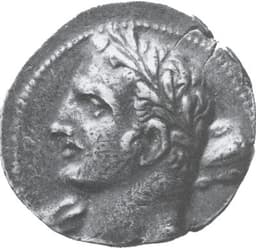
Maharbal
General · Ancient
43.6Total

Napoleon Bonaparte
General · Modern
70.9Total
Basic Information
Born
-245
1769
Died
-202
1821
Era
Ancient
Modern
Nationality
Carthage
France
Occupation
General
General
Civilization
Western
Western
Score Comparison
Military (10%)
20.0
94.0
Political (20%)
35.0
72.0
Influence (20%)
45.5
40.0
Legacy (20%)
38.3
80.0
Leadership (15%)
62.6
78.0
Strategy (15%)
60.0
90.0
TOTAL
43.6
70.9
Maharbal — Complete Timeline
216 BC
Command of Numidian cavalry at CannaeWar◆ Major
Maharbal commanded the Numidian cavalry on the right wing at the Battle of Cannae. His cavalry routed the Roman allied cavalry and then pursued them, preventing them from reforming. This contributed to Hannibal's encirclement and destruction of the Roman army.
Second Punic WarCannaeCavalry
Impact: regional
Capture of Roman camp at CannaeWar
After the Roman defeat at Cannae, Maharbal led a force to capture the Roman camp. He secured the camp and its supplies, completing the Carthaginian victory and preventing Roman survivors from regrouping.
Second Punic WarCannaeCamp
Advice to march on RomePolitical Action◆ Major
After Cannae, Maharbal urged Hannibal to march on Rome immediately, reportedly saying he would feast in the Capitol within five days. Hannibal refused, a decision Maharbal criticized. This moment became famous as a missed opportunity to end the war.
Second Punic WarHannibalStrategy
Impact: regional
214 BC
Capture of CasilinumWar
Maharbal led Carthaginian forces to capture the city of Casilinum in Campania. The city fell after a siege, and Maharbal's forces secured the area for Hannibal's campaign in southern Italy.
Second Punic WarItalySiege
Napoleon Bonaparte — Complete Timeline
1799 AD
Coup of 18 BrumaireOther◆ Major
Napoleon Bonaparte, with support from his brother Lucien and key political figures, overthrew the Directory in a bloodless coup. He established the Consulate with himself as First Consul, effectively becoming the ruler of France. This event ended the French Revolution's most unstable period.
French RevolutionCoupRise to Power
Impact: regional
1804 AD
Promulgation of the Napoleonic CodeOther◆ Major
Napoleon enacted the Civil Code of the French, known as the Napoleonic Code, a comprehensive set of laws that replaced the fragmented feudal legal systems. The code established legal equality, protected property rights, and secularized law. It became the basis for legal systems in many European and world countries.
Legal ReformNapoleonic CodeCivil Law
Impact: globalconstructive
1805 AD
Battle of AusterlitzWar◆ Major
Napoleon's Grande Arm
Napoleonic WarsBattleDecisive Victory
Impact: global
1812 AD
Invasion of RussiaWar◆ Major
Napoleon led the Grande Arm
Napoleonic WarsInvasionDisaster
Impact: globaldestructive
1815 AD
Battle of WaterlooWar◆ Major
Napoleon's French army was defeated by the combined forces of the Duke of Wellington's Anglo-Allied army and Gebhard Leberecht von Bl
Napoleonic WarsBattleFinal Defeat
Impact: globaldestructive
Expert Analysis
maharbal-vs-napoleon-bonaparte
# The General Who Refused to March
On a summer evening in 216 BC, the fields of Cannae ran red with Roman blood. The greatest military disaster in Rome’s history had just unfolded, and a Carthaginian cavalry commander named Maharbal stood before his general, Hannibal Barca, with fire in his eyes. According to the historian Livy, Maharbal urged an immediate march on Rome itself, promising that within five days he would be dining in the Capitol. When Hannibal hesitated, Maharbal uttered words that would echo through the ages: “You know how to win a victory, but not how to use one.”
Two thousand years later, another general stood at the pinnacle of his power. Napoleon Bonaparte had swept across Europe like a storm, his Grande Armée seemingly invincible. Yet when he faced the choice between consolidation and conquest, between strategic patience and relentless ambition, he made decisions that would ultimately doom his empire. These two soldiers—one a footnote to history, the other its titan—were separated by two millennia, yet they shared a single haunting question: What drives a commander to seize the moment, and what holds him back?
Origins
Maharbal was born around 245 BC into Carthage’s military aristocracy, a world shaped by the sea and the sword. Carthage, a Phoenician civilization rooted in trade and war, produced commanders who were as skilled in diplomacy as in battle. Maharbal’s era was defined by the Second Punic War, a life-or-death struggle against a rising Roman Republic. He learned war from the saddle, commanding Numidian cavalry—horsemen from North Africa whose mobility and ferocity could turn the tide of any engagement. His was a world of limited resources and absolute stakes: win, or be erased.
Napoleon Bonaparte was born in 1769 on the island of Corsica, a land recently annexed by France. His family was minor nobility, but his world was one of revolutionary upheaval. The French Revolution had shattered the old order, creating opportunities for men of talent rather than birth. Napoleon was a product of the Enlightenment and the military academies of France, where mathematics, artillery, and strategy were drilled into young minds. Unlike Maharbal, who inherited a tradition of cavalry warfare, Napoleon rose in an age of mass armies and national mobilization. His origins were not in a besieged commercial empire, but in a nation convulsed by ideology and ambition.
Rise to Power
Maharbal’s path to prominence was that of a subordinate commander. He emerges from the historical record not as a leader of armies, but as Hannibal’s trusted cavalry officer. His moment came at Cannae in 216 BC, where he commanded the Numidian horsemen on the right wing. As the Roman legions pressed into Hannibal’s center, Maharbal’s cavalry routed the allied Roman cavalry, then swept around to attack the Roman rear. It was a classic double envelopment, and Maharbal’s speed and discipline made it possible. His rise was not through political maneuvering but through proven effectiveness in the field.
Napoleon’s rise was far more dramatic and personal. Born during the ancien régime, he seized the chaos of the Revolution. In 1793, at the age of twenty-four, he drove the British out of Toulon with a brilliant artillery plan. By 1796, he was commanding the Army of Italy, where his lightning campaigns against the Austrians made him a national hero. In 1799, he staged a coup d’état and became First Consul. By 1804, he crowned himself Emperor of the French. Where Maharbal served, Napoleon commanded; where Maharbal advised, Napoleon decided.
Leadership & Governance
Maharbal’s leadership was tactical, not strategic. He was a superb cavalry commander—aggressive, decisive, and capable of exploiting victory. At Cannae, his pursuit of the fleeing Romans and his capture of the Roman camp demonstrated his ability to finish a fight. But he was never tested as an independent commander. His advice to march on Rome was bold, but Hannibal, who knew the limits of his supply lines and the strength of Rome’s walls, chose a different path. Maharbal’s genius was in the saddle, not in the council chamber.
Napoleon’s leadership was comprehensive. He was a military genius whose campaigns are still studied in war colleges—Austerlitz in 1805, Jena in 1806, Friedland in 1807. He reorganized French administration, codified law through the Napoleonic Code, and centralized the state. He understood logistics, diplomacy, and propaganda. Yet his political wisdom was flawed. He alienated potential allies, invaded Spain and Russia, and refused to share power. He governed by force of personality and fear, not by building lasting institutions.
Triumph & Tragedy
Maharbal’s greatest triumph was Cannae, where his cavalry sealed one of history’s most decisive victories. His tragedy was that he could not persuade his commander to follow through. After Cannae, Hannibal campaigned in Italy for over a decade but never took Rome. Maharbal’s name survives mainly through Livy’s account of his frustrated advice. He died around 202 BC, the year of Hannibal’s final defeat at Zama. His tragedy was that of a brilliant subordinate whose vision was never realized.
Napoleon’s triumphs were many: the glory of Austerlitz, the creation of the Continental System, the spread of revolutionary ideas across Europe. But his tragedy was epic. The invasion of Russia in 1812 destroyed his Grande Armée. The Battle of Leipzig in 1813 shattered his empire. His final defeat at Waterloo in 1815 ended in exile on Saint Helena. Napoleon’s tragedy was not that he lost a battle, but that his ambition outran his capacity to govern what he had conquered.
Character & Destiny
Maharbal was a soldier’s soldier—loyal, fierce, and direct. His character was suited to execution, not command. He saw the moment of victory and wanted to press it, but he lacked the authority to do so. His destiny was to be remembered as a voice of what might have been.
Napoleon was a man of boundless ego and relentless drive. He believed in his own star, and for a time, the stars aligned. But his character—impatient, arrogant, unwilling to compromise—led him to overreach. He could not stop because he could not imagine failure. His destiny was to conquer the world and lose it, to die in exile, haunted by the memory of what he had built and destroyed.
Legacy
Maharbal’s legacy is a single sentence: “You know how to win a victory, but not how to use one.” It has become a cautionary tale for commanders ever since. He is remembered not for what he did, but for what he urged. His influence score of 63.9 reflects a man whose historical footprint is small but whose warning is eternal.
Napoleon’s legacy is vast. His military reforms, the Napoleonic Code, and his reshaping of Europe’s borders endure. His influence score of 82.0 and legacy score of 78.0 place him among history’s most consequential figures. But his legacy is also a warning about the limits of power. He is remembered as both a genius and a cautionary tale—a man who knew how to win victories but, like Hannibal, could not use them.
Conclusion
The difference between Maharbal and Napoleon is not merely one of scale. It is a difference of agency. Maharbal was a voice of advice, a subordinate whose brilliance could not overcome the caution of his commander. Napoleon was the commander himself, whose brilliance was undone by his own ambition. One man urged action and was ignored; the other acted and was destroyed. Both stories remind us that history’s greatest battles are not always won on the field. They are won in the moments of decision that follow—and in the character of those who must make them.
Rankings
🥇
Napoleon BonaparteLeader
Mil: 94.0Pol: 72.0Inf: 40.0
70.9
🥈
Maharbal
Mil: 20.0Pol: 35.0Inf: 45.5
43.6
+27.3 behind
How This Comparison Works
Algorithm
Each figure is scored on 6 dimensions (0—100 scale) based on structured historical data: Military (10%), Political (20%), Influence (20%), Legacy (20%), Leadership (15%), Strategy (15%). The weighted total produces the final ranking.
Data Sources
Scores are computed from structured sub-indicators in the database. Scale factors adjust for era (Ancient ×0.85, Modern ×1.0) and civilization size (Eastern ×1.05, Other ×0.80) to account for differences in population and military scale.
Maximum 3 Figures
Comparisons are limited to 2—3 figures to ensure readability and statistical meaningfulness.
Error Margins
±5 points per dimension — Sub-scores are derived from historical records with inherent uncertainty. Two figures within 5 points on a dimension should be considered roughly equivalent in that area.
Total Score Accuracy
±3 points overall — The weighted combination of 6 dimensions produces a total score with approximately ±3 points of uncertainty. Differences of less than 3 points are not statistically significant— the figures are effectively tied.
Known Limitations
- Historical records are incomplete and uneven across civilizations
- Figures from oral-tradition societies may be underrepresented
- Occupation labels can misclassify multi-role figures
- Scores measure capability and impact, not moral character
- Quantitative scoring is a comparison tool, not absolute truth
Capability Radar
Military (10%) — Battles & Warfare
Battles
30
95
Win Rate
35
90
Expansion
20
95
Political (20%) — Governance & Reform
Reform
5
95
Diplomacy
15
80
Economy
5
85
Influence (20%) — Cultural & Global Reach
Cultural
20
85
Global
10
90
Legacy (20%) — Historical Impact
Historical
25
95
Longevity
15
90
Leadership (15%) — Power & Stability
Tenure
10
85
Stability
10
70
Strategy (15%) — Tactics & Innovation
Strategy
40
95
Tactics
55
98
Reform
10
92
Similar Comparisons
Comments & Discussion
CANNÆ GHOST6/17/2026
Maharbal understood Clausewitz’s “friction” before Clausewitz was born. His demand to march on Rome wasn’t reckless—it was the only move that could end the war. Hannibal had just annihilated 8 legions at Cannae, but Rome still had 5 more in reserve. Maharbal knew psychological shock mattered more than body count. Napoleon, by contrast, never faced a Cannae-level defeat himself, yet his ego led him to Moscow. Maharbal’s tragedy wasn’t his failure—it was Hannibal’s cowardice in victory.
数据拆解者6/17/2026
古代战史博主最爱吹“迦太基骑兵统帅的远见”,但数据不会骗人:公元前216年罗马仍有10万可征兵员,而汉尼拔野战军仅剩4万。拿破仑1812年侵俄前法军主力达60万,入侵后还剩多少?拿马哈巴尔这种小规模冲锋队长跟近代战争之父比,就像拿帆船比机车——时代技术差距摆在那,当段子听可以,正经分析没意义。
THE PALIMPSEST SCHOLAR6/17/2026
Maharbal is Livy’s narrative device, not a documented historical figure. Polybius, our most reliable source for the Punic Wars, never mentions him by name. The “five days to dine in the Capitol” speech is pure Roman literary invention, designed to contrast Hannibal’s caution with his subordinate’s daring. Napoleon is documented in tens of thousands of letters. Comparing a fictionalized footnote to a well-recorded historical genius distorts what we can actually know about ancient command decision
古典军魂6/17/2026
唯一敢对名将说“你只会赢不会用”的狠人,历史上找不出第二个。马哈巴尔如果掌权,迦太基可能早就把罗马共和国碾成历史尘埃了。拿破仑再强,1814年反法同盟压境时还不是怂了?真该让科西嘉矮子听听布匿骑兵的咆哮:“五天拿下元老院!”——可惜两位都没敢赌那把关键性梭哈。
THE IRON CROWN CRITIC6/17/2026
Let’s be real: Maharbal’s proposal was suicidal. Marching on Rome with an exhausted, polyglot army after Cannae, leaving a hostile countryside in your rear, while the Romans still had intact fortifications and a million citizens? That’s not genius—that’s the bravado of a cavalry raider who never had to conduct a siege. Napoleon understood logistics: he abandoned Moscow precisely because he knew you can’t capture a capital with broken supply lines. Maharbal was a tactical prodigy, but strategist?