Loading...
This comparison has not been analyzed yet.
One-time AI generation (~1 minute). Scores and timeline are already available below.
Maha Thammaracha II vs Rupert of Germany
Rupert of Germany leads by 1.2 pts · 2 figures compared
…

Maha Thammaracha II
Emperor · Medieval
36.5Total
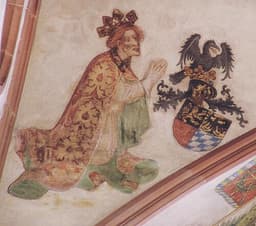
Rupert of Germany
Emperor · Medieval
37.7Total
Basic Information
Born
1350
1352
Died
1399
1410
Era
Medieval
Medieval
Nationality
Thailand
Holy Roman Empire
Occupation
Emperor
Emperor
Civilization
Eastern
Western
Score Comparison
Military (10%)
20.0
21.2
Political (20%)
30.7
27.9
Influence (20%)
46.3
48.6
Legacy (20%)
36.7
38.3
Leadership (15%)
31.2
38.1
Strategy (15%)
45.0
39.6
TOTAL
36.5
37.7
Maha Thammaracha II — Complete Timeline
1378 AD
Vassalage to AyutthayaPolitical Action◆ Major
Maha Thammaracha II became a vassal king of Sukhothai under the rising Ayutthaya Kingdom. He accepted Ayutthayan suzerainty, paying tribute and acknowledging the authority of King Borommaracha I of Ayutthaya.
VassalageAyutthayaSukhothai Decline
Impact: regional
Loss of Sukhothai IndependencePolitical Action◆ Major
Under Maha Thammaracha II, Sukhothai lost its status as an independent kingdom and became a tributary state of Ayutthaya. This marked the beginning of Sukhothai's absorption into the expanding Ayutthayan empire.
Loss of SovereigntyAyutthayaSukhothai
Impact: regionaltragic
Rupert of Germany — Complete Timeline
1400 AD
Election as King of GermanyPolitical Action◆ Major
Rupert, Count Palatine of the Rhine, was elected King of Germany by four electors who deposed King Wenceslaus IV. His election was contested by Wenceslaus's supporters, leading to a divided kingdom.
ElectionDeposition
Impact: national
1401 AD
Italian CampaignWar◆ Major
Rupert led an expedition to Italy to be crowned Holy Roman Emperor. He was defeated by the forces of Gian Galeazzo Visconti of Milan near Brescia and forced to retreat, failing to achieve coronation.
Military DefeatFailed Coronation
Impact: regionaldestructive
1409 AD
Conflict with the Council of PisaPolitical Action
Rupert opposed the Council of Pisa, which attempted to end the Western Schism by deposing both rival popes. He remained loyal to Pope Gregory XII, further isolating him politically.
Western SchismPapal Politics
Impact: regional
This comparison has not been analyzed yet.
One-time AI generation (~1 minute). Scores and timeline are already available below.
Rankings
🥇
Rupert of GermanyLeader
Mil: 21.2Pol: 27.9Inf: 48.6
37.7
🥈
Maha Thammaracha II
Mil: 20.0Pol: 30.7Inf: 46.3
36.5
+1.2 behind
How This Comparison Works
Algorithm
Each figure is scored on 6 dimensions (0—100 scale) based on structured historical data: Military (10%), Political (20%), Influence (20%), Legacy (20%), Leadership (15%), Strategy (15%). The weighted total produces the final ranking.
Data Sources
Scores are computed from structured sub-indicators in the database. Scale factors adjust for era (Ancient ×0.85, Modern ×1.0) and civilization size (Eastern ×1.05, Other ×0.80) to account for differences in population and military scale.
Maximum 3 Figures
Comparisons are limited to 2—3 figures to ensure readability and statistical meaningfulness.
Error Margins
±5 points per dimension — Sub-scores are derived from historical records with inherent uncertainty. Two figures within 5 points on a dimension should be considered roughly equivalent in that area.
Total Score Accuracy
±3 points overall — The weighted combination of 6 dimensions produces a total score with approximately ±3 points of uncertainty. Differences of less than 3 points are not statistically significant— the figures are effectively tied.
Known Limitations
- Historical records are incomplete and uneven across civilizations
- Figures from oral-tradition societies may be underrepresented
- Occupation labels can misclassify multi-role figures
- Scores measure capability and impact, not moral character
- Quantitative scoring is a comparison tool, not absolute truth
Capability Radar
Military (10%) — Battles & Warfare
Battles
5
15
Win Rate
5
10
Expansion
5
5
Political (20%) — Governance & Reform
Reform
10
20
Diplomacy
15
25
Economy
10
20
Influence (20%) — Cultural & Global Reach
Cultural
10
15
Global
5
5
Legacy (20%) — Historical Impact
Historical
10
20
Longevity
10
10
Leadership (15%) — Power & Stability
Tenure
20
30
Stability
15
15
Strategy (15%) — Tactics & Innovation
Strategy
5
10
Tactics
5
10
Reform
5
5
Similar Comparisons
Comments & Discussion
No comments yet. Be the first to share your thoughts!