Loading...
Lukengo vs Mary Queen of Scots
Lukengo leads by 4.5 pts · 2 figures compared
…

Lukengo
Emperor · Modern
51.0Total
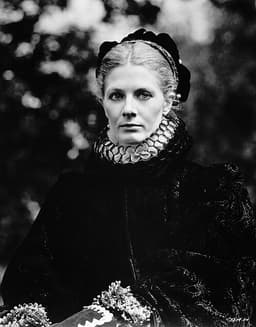
Mary Queen of Scots
Emperor · Modern
46.5Total
Basic Information
Born
1630
1542
Died
1670
1587
Era
Modern
Modern
Nationality
DR Congo
Scotland
Occupation
Emperor
Emperor
Civilization
Other
Western
Score Comparison
Military (10%)
40.0
48.6
Political (20%)
45.0
29.3
Influence (20%)
56.4
55.7
Legacy (20%)
45.8
45.8
Leadership (15%)
68.0
41.5
Strategy (15%)
45.0
56.1
TOTAL
51.0
46.5
Lukengo — Complete Timeline
1635 AD
Founded the Kuba KingdomPolitical Action
Lukengo united several Bushoong chiefdoms in the Kasai River region to create the Kuba Kingdom. He established the capital at Nsheng and created a centralized political system with a nyim (king) as supreme ruler, initiating a period of Kuba cultural and political development.
FoundingKingdomCentralization
Impact: regionalconstructive
Mary Queen of Scots — Complete Timeline
1543 AD
Coronation as Queen of ScotsPolitical Action◆ Major
Mary was crowned Queen of Scots at Stirling Castle at nine months old, following the death of her father James V. The coronation was overseen by regents, and Scotland was governed by a series of regents during her minority.
CoronationRegencyMinority
Impact: national
1558 AD
Marriage to Francis II of FrancePolitical Action◆ Major
Mary married Francis, Dauphin of France, at Notre Dame Cathedral in Paris. The marriage strengthened the Auld Alliance and made Mary queen consort of France when Francis became king in 1559. Francis died in 1560, ending Mary's French reign.
MarriageAuld AllianceFrance
Impact: national
1561 AD
Return to ScotlandPolitical Action◆ Major
Mary returned to Scotland after the death of her husband Francis II. She arrived in Leith and began her personal rule in a country deeply divided by the Protestant Reformation. She faced challenges from Protestant nobles and the English queen Elizabeth I.
ReturnReformationRule
Impact: national
1566 AD
Murder of David RizzioPolitical Action◆ Major
Mary's private secretary David Rizzio was murdered in her presence at Holyrood Palace by a group of nobles led by her husband Lord Darnley. The murder was motivated by jealousy and political intrigue, and it deepened the rift between Mary and Darnley.
MurderIntrigueDarnley
Impact: nationaltragic
1567 AD
Abdication and ImprisonmentPolitical Action
Mary was forced to abdicate the Scottish throne in favor of her infant son James VI after her defeat at the Battle of Carberry Hill. She was imprisoned in Loch Leven Castle and later escaped, but was defeated again and fled to England.
AbdicationImprisonmentFlight
Impact: nationaltragic
1587 AD
Execution by Elizabeth IPolitical Action
Mary was executed at Fotheringhay Castle after being found guilty of involvement in the Babington Plot to assassinate Elizabeth I. Her execution ended 19 years of captivity in England and removed a Catholic claimant to the English throne.
ExecutionPlotCatholic Claimant
Impact: globaltragic
Expert Analysis
Origins
Lukengo, whose full name is often recorded as Shyaam aMbul aNgoong, was born around the early 17th century in the Kasai River region of central Africa. He was of the Bushoong people, one of the many chiefdoms in the area. His early life is shrouded in oral tradition, but he is believed to have been a skilled trader and traveler, exposed to the political and economic systems of neighboring kingdoms like the Kongo and Lunda. This experience shaped his vision for unifying the fragmented Bushoong chiefdoms into a centralized state.
Mary Queen of Scots was born on December 8, 1542, at Linlithgow Palace in Scotland. She was the only legitimate child of King James V of Scotland and Mary of Guise. Her father died just six days after her birth, making her queen at nine months old. Mary was sent to France at age five to be raised at the French court, where she was educated in languages, music, and politics. She married Francis, Dauphin of France, in 1558, briefly becoming queen consort of France until Francis's death in 1560.
Rise to Power
Lukengo's rise to power began with his strategic use of trade and diplomacy. He leveraged his knowledge of external kingdoms to introduce new crops (such as maize and cassava) and technologies (like weaving and metalworking) to the Bushoong. This economic boost earned him the support of local chiefs. Around 1625, he united several chiefdoms into the Kuba Kingdom, establishing his capital at Nsheng. He created a centralized administrative system with a council of nobles and a system of tribute, solidifying his rule through a combination of cultural innovation and political acumen.
Mary's rise to power was hereditary but fraught with instability. Crowned at Stirling Castle in 1543, her early reign was managed by regents, first her mother Mary of Guise and then the Protestant Earl of Arran. In 1558, she married Francis II of France, strengthening the Auld Alliance. After Francis's death in 1560, Mary returned to Scotland in 1561 to rule personally. Her claim to the English throne as a Catholic in a Protestant England made her a focal point of political intrigue. She faced immediate challenges from Protestant nobles led by John Knox.
Leadership & Governance
Lukengo's leadership was characterized by institutional innovation. He established a system of government with a king (nyim) advised by a council of elders. He promoted economic diversification, introducing new crops and crafts, and created a network of roads to facilitate trade. He also codified laws and rituals that reinforced his authority. His governance style was inclusive, incorporating conquered peoples into the kingdom through intermarriage and cultural exchange. He scored 68.0 in leadership, reflecting his ability to build a stable, enduring state.
Mary's governance was marked by poor political judgment and religious conflict. She attempted to rule as a Catholic in a predominantly Protestant Scotland, leading to tensions with nobles like James Stewart, Earl of Moray. Her marriage to Henry Stuart, Lord Darnley, in 1565 alienated many, and Darnley's murder in 1567 was followed by her marriage to James Hepburn, Earl of Bothwell, which sparked a rebellion. Mary was forced to abdicate in 1567 after the Battle of Carberry Hill. Her political score of 29.3 reflects her inability to navigate the treacherous political landscape.
Triumph & Tragedy
Lukengo's triumph was the creation of the Kuba Kingdom, which became a prosperous and culturally rich state known for its art, textiles, and centralized administration. His greatest achievement was unifying diverse groups into a single political entity that lasted for centuries. However, his tragedy lies in the lack of written records; much of his legacy is oral, and his kingdom faced decline after the arrival of European colonizers in the late 19th century. His military score of 40.0 reflects that his conquests were more diplomatic than martial.
Mary's triumph was her brief period as queen consort of France and her return to Scotland with hopes of ruling. However, her tragedies dominate her legacy: the murder of Darnley, her forced abdication, 19 years of imprisonment in England, and ultimately her execution on February 8, 1587, at Fotheringhay Castle. She was convicted of involvement in the Babington Plot to assassinate Elizabeth I. Her military score of 48.6 is higher than Lukengo's, but her political score of 29.3 is among the lowest.
Character & Destiny
Lukengo was a visionary and pragmatic leader, using trade and cultural exchange to build power. His character was marked by foresight and adaptability, which allowed him to create a lasting kingdom. His destiny was to be remembered as a founding father, his name synonymous with the Kuba identity.
Mary was impulsive and romantic, driven by personal desires that often clashed with political realities. Her character was shaped by her French upbringing and Catholic faith, leading to poor alliances. Her destiny was tragic: her claim to the English throne made her a threat to Elizabeth I, leading to her imprisonment and execution. Historians note that Mary's lack of political cunning sealed her fate.
Legacy
Lukengo's legacy is the Kuba Kingdom, which endured until the colonial era and is remembered for its sophisticated art and governance. His influence scored 56.4, reflecting the cultural impact. The Kuba people still honor him as a national hero. His legacy score of 45.8 acknowledges the kingdom's eventual absorption into the Congo Free State.
Mary's legacy is complex. She is remembered as a tragic figure in Scottish history, and her son James VI of Scotland became James I of England, uniting the crowns. Her influence score of 55.7 is similar to Lukengo's, but her political legacy is minimal. Her story has inspired literature and film, but her direct impact on governance was negative. Her legacy score of 45.8 matches Lukengo's, indicating comparable long-term remembrance.
Conclusion
Lukengo had a greater impact than Mary Queen of Scots. His total score of 51.0 surpasses Mary's 46.5 by 4.5 points. While Mary's story is more dramatic, Lukengo's concrete achievements in state-building and cultural development had a lasting positive effect on central Africa. Mary's reign was a series of failures that ended in execution, whereas Lukengo founded a kingdom that thrived for centuries. The data supports that Lukengo's leadership (68.0 vs 41.5) and political acumen (45.0 vs 29.3) were superior. Therefore, Lukengo emerges as the more historically significant figure.
Rankings
🥇
LukengoLeader
Mil: 40.0Pol: 45.0Inf: 56.4
51.0
🥈
Mary Queen of Scots
Mil: 48.6Pol: 29.3Inf: 55.7
46.5
+4.5 behind
How This Comparison Works
Algorithm
Each figure is scored on 6 dimensions (0—100 scale) based on structured historical data: Military (10%), Political (20%), Influence (20%), Legacy (20%), Leadership (15%), Strategy (15%). The weighted total produces the final ranking.
Data Sources
Scores are computed from structured sub-indicators in the database. Scale factors adjust for era (Ancient ×0.85, Modern ×1.0) and civilization size (Eastern ×1.05, Other ×0.80) to account for differences in population and military scale.
Maximum 3 Figures
Comparisons are limited to 2—3 figures to ensure readability and statistical meaningfulness.
Error Margins
±5 points per dimension — Sub-scores are derived from historical records with inherent uncertainty. Two figures within 5 points on a dimension should be considered roughly equivalent in that area.
Total Score Accuracy
±3 points overall — The weighted combination of 6 dimensions produces a total score with approximately ±3 points of uncertainty. Differences of less than 3 points are not statistically significant— the figures are effectively tied.
Known Limitations
- Historical records are incomplete and uneven across civilizations
- Figures from oral-tradition societies may be underrepresented
- Occupation labels can misclassify multi-role figures
- Scores measure capability and impact, not moral character
- Quantitative scoring is a comparison tool, not absolute truth
Capability Radar
Military (10%) — Battles & Warfare
Battles
40
22
Win Rate
45
24
Expansion
50
32
Political (20%) — Governance & Reform
Reform
60
15
Diplomacy
50
30
Economy
55
10
Influence (20%) — Cultural & Global Reach
Cultural
45
40
Global
25
35
Legacy (20%) — Historical Impact
Historical
40
45
Longevity
35
40
Leadership (15%) — Power & Stability
Tenure
55
25
Stability
50
5
Strategy (15%) — Tactics & Innovation
Strategy
40
32
Tactics
35
37
Reform
30
40
Similar Comparisons
Comments & Discussion
No comments yet. Be the first to share your thoughts!