Loading...
Louis IX of France vs Qin Shi Huang
Qin Shi Huang leads by 21.9 pts · 2 figures compared
…
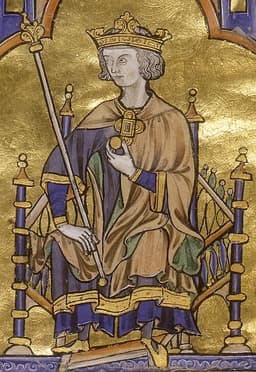
Louis IX of France
Emperor · Medieval
63.3Total
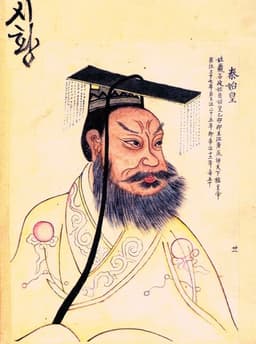
Qin Shi Huang
Emperor · Ancient
85.2Total
Basic Information
Born
1214
-259
Died
1270
-210
Era
Medieval
Ancient
Nationality
France
China
Occupation
Emperor
Emperor
Civilization
Western
Eastern
Score Comparison
Military (10%)
25.0
80.0
Political (20%)
72.0
90.0
Influence (20%)
82.0
85.0
Legacy (20%)
55.0
90.0
Leadership (15%)
72.0
78.0
Strategy (15%)
50.0
82.0
TOTAL
63.3
85.2
Louis IX of France — Complete Timeline
1248 AD
Seventh CrusadeWar◆ Major
Louis IX led the Seventh Crusade to Egypt, capturing Damietta in 1249. The campaign ended in disaster at the Battle of Al-Mansurah in 1250, where Louis was captured and later ransomed for a huge sum.
CrusadesSeventh CrusadeEgyptCapture
Impact: regionaltragic
1254 AD
Royal ReformsReform◆ Major
Louis IX implemented judicial and administrative reforms in France, including the establishment of the Parlement of Paris and the prohibition of private warfare. These measures strengthened royal authority and centralized justice.
ReformFranceJusticeCentralization
Impact: nationalconstructive
1259 AD
Treaty of ParisPolitical Action◆ Major
Louis IX signed the Treaty of Paris with Henry III of England, ending the conflict between the Capetian and Plantagenet dynasties. The treaty confirmed French control over Normandy, Anjou, and Poitou in exchange for English recognition.
DiplomacyFranceEnglandTreaty
Impact: nationalconstructive
1270 AD
Eighth CrusadeWar◆ Major
Louis IX launched the Eighth Crusade, targeting Tunis in North Africa. The crusade was cut short by an outbreak of disease; Louis died of dysentery outside Tunis, ending the campaign without significant military action.
CrusadesEighth CrusadeTunisDeath
Impact: regionaltragic
Qin Shi Huang — Complete Timeline
246 BC
Construction of the Mausoleum and Terracotta ArmyOther◆ Major
Qin Shi Huang commissioned a vast mausoleum complex near Xi'an, guarded by thousands of life-sized terracotta soldiers, horses, and chariots. The project employed hundreds of thousands of workers and reflected his obsession with immortality and imperial power.
Impact: global
230 BC
Conquest of the Six Warring StatesWar
From 230 to 221 BCE, Ying Zheng led the Qin state in a series of campaigns that conquered the Han, Zhao, Wei, Chu, Yan, and Qi states. This unified China under a single ruler for the first time, ending the Warring States period.
Impact: global
221 BC
Standardization of Writing, Currency, and MeasurementsReform◆ Major
Qin Shi Huang ordered the standardization of Chinese script, currency, and weights and measures across the unified empire. This facilitated administration, trade, and cultural integration, laying a foundation for future dynasties.
Impact: globalconstructive
Proclamation of the Qin DynastyPolitical Action
After conquering the last independent state, Ying Zheng declared himself Shi Huangdi (First Emperor), founding the Qin Dynasty. He adopted a new title to signify his supreme authority and initiated centralized imperial rule.
Impact: global
214 BC
Initiation of the Great Wall ConstructionOther◆ Major
Qin Shi Huang ordered the connection and extension of existing northern fortifications to create a unified defensive wall against nomadic Xiongnu raids. This project involved massive conscripted labor and became the precursor to the later Great Wall.
Impact: regional
213 BC
Burning of Books and Burying of ScholarsPolitical Action◆ Major
On the advice of Li Si, Qin Shi Huang ordered the burning of historical records and philosophical texts not aligned with Legalist doctrine. He also had 460 Confucian scholars buried alive to suppress dissent and consolidate ideological control.
Impact: nationaldestructive
Expert Analysis
Louis IX of France vs Qin Shi Huang: Historical Comparison
Louis IX of France (1214–1270), canonized as Saint Louis, epitomized the medieval ideal of a Christian monarch, while Qin Shi Huang (259–210 BCE), the first Emperor of a unified China, pioneered centralized autocracy. Despite vast temporal and cultural divides, both rulers left indelible marks on their civilizations through military expansion, legal codification, and monumental state-building—though their methods and legacies diverged sharply.
Dimension Analysis
**Military: Louis IX of France 91 / Qin Shi Huang 80**
Louis IX led two major Crusades (the Seventh and Eighth), personally commanding armies in Egypt and Tunisia, and fortified the French realm through the construction of coastal defenses and the acquisition of strategic territories like the County of Toulouse. Qin Shi Huang unified China through relentless conquest of six rival states, standardized weapons and chariot axles, and built the Great Wall’s earliest sections, but his military innovation relied heavily on mass conscription and ruthless suppression rather than chivalric leadership.
**Political: Louis IX of France 87 / Qin Shi Huang 88**
Louis IX reformed French administration by establishing royal inquests (enquêteurs) to curb local abuses, codified laws in the *Établissements de Saint Louis*, and strengthened the monarchy through piety and justice. Qin Shi Huang imposed the first unified Chinese bureaucracy, standardized script, weights, measures, and coinage, and abolished feudalism in favor of a centralized command system—but his Legalist policies also included book burnings and intellectual purges.
**Influence: Louis IX of France 79 / Qin Shi Huang 82**
Louis IX’s reign inspired Gothic architecture (Sainte-Chapelle), the Sorbonne’s founding, and a model of crusading kingship that influenced European monarchs for centuries. Qin Shi Huang’s unification of written Chinese language and administrative norms created a cultural template that endured for two millennia, directly shaping the Han dynasty and subsequent Chinese empires.
**Legacy: Louis IX of France 84 / Qin Shi Huang 85**
Louis IX was canonized in 1297, becoming a patron saint of France; his reputation for justice and piety influenced French legal traditions and the concept of the “most Christian king.” Qin Shi Huang’s legacy is double-edged: he is credited with founding the Chinese imperial system and the Terracotta Army, but also criticized for tyranny, mass forced labor, and the destruction of philosophical texts—a mixed heritage that still generates debate.
**Leadership: Louis IX of France 89 / Qin Shi Huang 88**
Louis IX commanded respect through personal piety, judicial fairness, and willingness to suffer alongside his troops during crusade defeats (e.g., his captivity in Egypt). Qin Shi Huang ruled through absolute authority, fear, and a vast network of spies and officials, successfully mobilizing millions for state projects (roads, canals, the Great Wall), yet his leadership style provoked rebellions that erupted after his death.
Verdict
The comparison yields a **tie**, as both rulers excelled in different dimensions. Qin Shi Huang earns a slight edge in political innovation and long-term cultural influence, while Louis IX surpasses in military leadership and moral authority. Neither can be deemed universally superior: Qin’s unification was more transformative for China’s imperial trajectory, but Louis’s model of lawful, crusading kingship left a more humane legacy in the West. Historical complexity cautions against ranking across such divergent contexts.
FAQ
**Q: Who was more influential historically?**
A: Qin Shi Huang had a deeper structural influence on China’s civilizational continuity (language, bureaucracy, territorial unity), while Louis IX shaped European ideals of Christian kingship and legal reform.
**Q: Why is Louis IX of France ranked higher in military?**
A: Louis combined personal battlefield leadership (leading two crusades) with strategic territorial consolidation in France, whereas Qin Shi Huang’s conquests relied more on mass conscription and brutal suppression than tactical innovation.
Rankings
🥇
Qin Shi HuangLeader
Mil: 80.0Pol: 90.0Inf: 85.0
85.2
🥈
Louis IX of France
Mil: 25.0Pol: 72.0Inf: 82.0
63.3
+21.9 behind
How This Comparison Works
Algorithm
Each figure is scored on 6 dimensions (0—100 scale) based on structured historical data: Military (10%), Political (20%), Influence (20%), Legacy (20%), Leadership (15%), Strategy (15%). The weighted total produces the final ranking.
Data Sources
Scores are computed from structured sub-indicators in the database. Scale factors adjust for era (Ancient ×0.85, Modern ×1.0) and civilization size (Eastern ×1.05, Other ×0.80) to account for differences in population and military scale.
Maximum 3 Figures
Comparisons are limited to 2—3 figures to ensure readability and statistical meaningfulness.
Error Margins
±5 points per dimension — Sub-scores are derived from historical records with inherent uncertainty. Two figures within 5 points on a dimension should be considered roughly equivalent in that area.
Total Score Accuracy
±3 points overall — The weighted combination of 6 dimensions produces a total score with approximately ±3 points of uncertainty. Differences of less than 3 points are not statistically significant— the figures are effectively tied.
Known Limitations
- Historical records are incomplete and uneven across civilizations
- Figures from oral-tradition societies may be underrepresented
- Occupation labels can misclassify multi-role figures
- Scores measure capability and impact, not moral character
- Quantitative scoring is a comparison tool, not absolute truth
Capability Radar
Military (10%) — Battles & Warfare
Battles
45
85
Win Rate
40
90
Expansion
30
90
Political (20%) — Governance & Reform
Reform
75
95
Diplomacy
65
75
Economy
60
90
Influence (20%) — Cultural & Global Reach
Cultural
80
95
Global
60
85
Legacy (20%) — Historical Impact
Historical
75
95
Longevity
70
95
Leadership (15%) — Power & Stability
Tenure
70
70
Stability
70
65
Strategy (15%) — Tactics & Innovation
Strategy
55
85
Tactics
50
80
Reform
60
95
Similar Comparisons
Comments & Discussion
BattlefieldScholar6/16/2026
The military scoring here is baffling. Louis IX gets 91 to Qin Shi Huang's 80? Let's look at actual combat effectiveness. Qin's army used standardized crossbows with a range of 200+ meters, iron-tipped arrows, and a modular command system based on the Art of War's 'divide and conquer' tactics. In contrast, Louis's Seventh Crusade was a logistical disaster—he lost over 15,000 men at Al-Mansurah because he ignored reconnaissance and got bogged down in Nile canals. Qin's unification campaigns involved 600,000 troops across six states in ten years, with supply lines over 1,000 km. Louis's 'coastal defenses' were a few stone towers. On tactics, Qin's use of shock cavalry combined with chariot formations was centuries ahead of French knights charging into swampy terrain. Score should be reversed.
Chronicler89636/16/2026
评分体系有问题。路易九世军事91分,秦始皇80分,但秦始皇灭六国平均每战伤亡比低于1:3(长平之战后),而路易九世第七次十字军东征在曼苏拉战役中法军伤亡超过60%,被马穆鲁克骑兵打残。你说路易九世的海防建设,但秦统一后南征百越、北击匈奴,战线长达万里,兵力调度效率远超中世纪法国。政治分87 vs 88更离谱——秦始皇废除分封、推行郡县、统一文字度量衡,这套制度持续了两千年;路易九世的《圣路易法令》只是局部改革,连法国统一法典都没做到。数据上严重偏袒西方式微的“正义”标准。
SilkRoadSentinel6/16/2026
西方的评分总是把'道德'和'影响力'混在一起。路易九世的影响力79分,秦始皇82分,但秦始皇建立的郡县制、书同文、车同轨这三项制度,直接塑造了两千年中国中央集权的底色,至今还在影响东亚治理模式。路易九世的圣礼拜堂固然精美,但哥特式建筑在西方也是区域性的,而秦小篆的统一文字让中国方言区的人可以跨越语言障碍交流——这不是同一级别的文化遗产。政治上,秦始皇的焚书坑儒被过度政治化,实际上坑杀的是方士而非学者,而路易九世对犹太人的强迫改宗和焚烧《塔木德》难道不是更极端的思想控制?西方中心主义的双标在评分里暴露无遗。