Loading...
Louis IX of France vs Napoleon Bonaparte
Napoleon Bonaparte leads by 7.6 pts · 2 figures compared
…
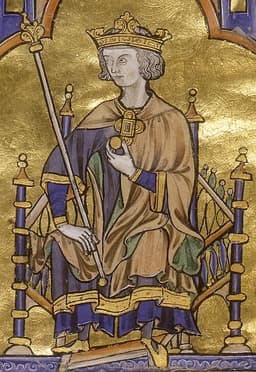
Louis IX of France
Emperor · Medieval
63.3Total

Napoleon Bonaparte
General · Modern
70.9Total
Basic Information
Born
1214
1769
Died
1270
1821
Era
Medieval
Modern
Nationality
France
France
Occupation
Emperor
General
Civilization
Western
Western
Score Comparison
Military (10%)
25.0
94.0
Political (20%)
72.0
72.0
Influence (20%)
82.0
40.0
Legacy (20%)
55.0
80.0
Leadership (15%)
72.0
78.0
Strategy (15%)
50.0
90.0
TOTAL
63.3
70.9
Louis IX of France — Complete Timeline
1248 AD
Seventh CrusadeWar◆ Major
Louis IX led the Seventh Crusade to Egypt, capturing Damietta in 1249. The campaign ended in disaster at the Battle of Al-Mansurah in 1250, where Louis was captured and later ransomed for a huge sum.
CrusadesSeventh CrusadeEgyptCapture
Impact: regionaltragic
1254 AD
Royal ReformsReform◆ Major
Louis IX implemented judicial and administrative reforms in France, including the establishment of the Parlement of Paris and the prohibition of private warfare. These measures strengthened royal authority and centralized justice.
ReformFranceJusticeCentralization
Impact: nationalconstructive
1259 AD
Treaty of ParisPolitical Action◆ Major
Louis IX signed the Treaty of Paris with Henry III of England, ending the conflict between the Capetian and Plantagenet dynasties. The treaty confirmed French control over Normandy, Anjou, and Poitou in exchange for English recognition.
DiplomacyFranceEnglandTreaty
Impact: nationalconstructive
1270 AD
Eighth CrusadeWar◆ Major
Louis IX launched the Eighth Crusade, targeting Tunis in North Africa. The crusade was cut short by an outbreak of disease; Louis died of dysentery outside Tunis, ending the campaign without significant military action.
CrusadesEighth CrusadeTunisDeath
Impact: regionaltragic
Napoleon Bonaparte — Complete Timeline
1799 AD
Coup of 18 BrumaireOther◆ Major
Napoleon Bonaparte, with support from his brother Lucien and key political figures, overthrew the Directory in a bloodless coup. He established the Consulate with himself as First Consul, effectively becoming the ruler of France. This event ended the French Revolution's most unstable period.
French RevolutionCoupRise to Power
Impact: regional
1804 AD
Promulgation of the Napoleonic CodeOther◆ Major
Napoleon enacted the Civil Code of the French, known as the Napoleonic Code, a comprehensive set of laws that replaced the fragmented feudal legal systems. The code established legal equality, protected property rights, and secularized law. It became the basis for legal systems in many European and world countries.
Legal ReformNapoleonic CodeCivil Law
Impact: globalconstructive
1805 AD
Battle of AusterlitzWar◆ Major
Napoleon's Grande Arm
Napoleonic WarsBattleDecisive Victory
Impact: global
1812 AD
Invasion of RussiaWar◆ Major
Napoleon led the Grande Arm
Napoleonic WarsInvasionDisaster
Impact: globaldestructive
1815 AD
Battle of WaterlooWar◆ Major
Napoleon's French army was defeated by the combined forces of the Duke of Wellington's Anglo-Allied army and Gebhard Leberecht von Bl
Napoleonic WarsBattleFinal Defeat
Impact: globaldestructive
Expert Analysis
louis-ix-of-france-vs-napoleon-bonaparte
# The Saint and the Strategist: Two Visions of French Greatness
On an August morning in 1270, a king lay dying beneath the North African sun, his body ravaged by dysentery, his last whispered words a prayer for Jerusalem. Six centuries later, on a June evening in 1815, another French emperor watched his imperial guard crumble on a muddy Belgian field, his dreams of continental dominion dissolving into exile. Louis IX and Napoleon Bonaparte—both French, both rulers, both driven by visions of glory—yet they inhabited such different worlds that one wonders: were they even playing the same game?
Origins
Louis IX was born in 1214 into a world where God was the center of all things. His grandfather Philip Augustus had transformed the Capetian dynasty from regional lords into kings of consequence, but the young prince’s education was soaked in piety. His mother, Blanche of Castile, told him she would rather see him dead than commit a mortal sin. He took crusading vows as a boy, wore hair shirts under his royal robes, and washed the feet of beggars. The medieval mind saw no contradiction between kingship and sainthood—indeed, it demanded both.
Napoleon Bonaparte arrived in 1769 on the island of Corsica, only recently annexed by France. His family was minor nobility, his accent thick with Italian inflections, his loyalties divided between his island homeland and the vast nation he would one day command. The Enlightenment was reshaping Europe: Voltaire mocked the Church, Rousseau dreamed of civic virtue, and the guillotine would soon sever kings from their thrones. Napoleon read military treatises and history, not scripture. He learned artillery mathematics, not theology. His world was rational, secular, and ruthlessly ambitious.
Rise to Power
Louis became king at twelve, his mother governing as regent while he learned to rule. He came of age during a rebellion of nobles—the so-called “Troubles”—which he crushed with a mixture of force and forgiveness. His path to power was hereditary, but his ascent to greatness was earned through patience, justice, and an unwavering moral compass. He did not seize power; he grew into it.
Napoleon’s rise was a volcanic eruption. A young artillery officer during the French Revolution, he first made his name at the Siege of Toulon in 1793, where he was just twenty-four. The Directory, a corrupt and flailing government, gave him command of the Army of Italy in 1796. Within months, he had shattered the Austrian Empire’s hold on northern Italy, his victories so dazzling that he could dictate peace terms before returning to Paris a hero. In 1799, he overthrew the Directory in a coup d’état. He was thirty years old. Where Louis inherited a throne, Napoleon created one from smoke and steel.
Leadership & Governance
Louis IX governed as a medieval king should: personally, piously, and present. He held court under an oak tree at Vincennes, hearing any subject’s grievance. His “Royal Reforms” of 1254 established the Parlement of Paris, a supreme court that checked local lords and standardized justice. He banned private warfare, regulated coinage, and protected the weak from the strong. His model was Solomon, not Caesar. His military score of 30.5 reflects his preference for law over conquest—though he did lead two crusades, he was no strategist.
Napoleon governed with the speed of a cannonball. The Napoleonic Code of 1804 streamlined French law, abolishing feudal privileges and establishing equality before the law—but also restricting women’s rights and restoring slavery in the colonies. He centralized the state, created a meritocratic bureaucracy, and built roads and schools across Europe. But governance was always secondary to glory. His political score of 75.0 reflects genius constrained by hubris: he could reform France but could not resist conquering Russia.
Their leadership styles diverged completely. Louis led by example, his personal holiness inspiring loyalty. Napoleon led by charisma, his victories creating devotion that bordered on worship. One asked his subjects to be good Christians; the other asked them to be good soldiers.
Triumph & Tragedy
Louis’s greatest moment was perhaps the Treaty of Paris in 1259, which ended decades of war with England. Henry III of England did homage to Louis, and the Capetian-Plantagenet conflict subsided. It was a diplomatic triumph, not a military one—a king choosing peace over glory.
His tragedy came in 1248, when he launched the Seventh Crusade. He captured Damietta in Egypt, then marched toward Cairo. At the Battle of Al-Mansoura, his army was trapped, decimated, and Louis himself captured. He spent months in captivity, ransomed for a fortune. Undeterred, he launched the Eighth Crusade in 1270—and died of disease in Tunis before a single battle was fought. His crusading zeal, so noble in intention, was catastrophic in execution.
Napoleon’s triumph was the Battle of Austerlitz in 1805, where he destroyed the combined armies of Russia and Austria in a single day. His strategic genius—scoring 93.0—was never more brilliant. He dictated peace to emperors, redrew the map of Europe, and crowned himself the continent’s master.
His tragedy was Russia in 1812. The Grande Armée of 600,000 men marched into snow and emptiness. Only 100,000 returned. His political score of 75.0 could not compensate for his strategic overreach. Waterloo in 1815 was merely the final act of a drama already written in the frozen fields of Berezina.
Character & Destiny
Louis IX was a saint who happened to be a king. His piety was genuine, his justice real, his humility not a pose. He wore a hair shirt, gave alms daily, and once said, “I would rather be a leper than commit a mortal sin.” This sanctity made him beloved but also blind: his crusades were doomed because he believed God would grant victory to the righteous, regardless of logistics.
Napoleon was a genius who happened to be a tyrant. He once said, “Power is my mistress,” and he meant it. His ambition was boundless, his energy inexhaustible, his self-belief absolute. But that same ambition drove him to overreach. He could not stop, could not share power, could not accept limits. His character was his destiny: he rose because he dared everything, and fell because he dared too much.
Legacy
Louis IX was canonized in 1297, just twenty-seven years after his death. He became Saint Louis, the only French king to achieve sainthood. His legacy score of 72.2 reflects a moral authority that outlasts his military failures. He is remembered as the just king, the crusader king, the king who brought law and faith to France.
Napoleon’s legacy score of 78.0 is more complex. He is remembered as a military genius, a reformer, a conqueror—but also as a tyrant who caused millions of deaths. The Napoleonic Code survives across Europe. His name appears on streets, arches, and museums. But he died in exile on Saint Helena, a prisoner of the British, his empire dissolved, his son dead young. Glory without redemption.
Conclusion
Two French kings, separated by six centuries, both seeking greatness. Louis found it in holiness, Napoleon in conquest. One built cathedrals, the other built empires. One died in a crusade, the other in exile. Yet both shaped France in ways that endure: Louis gave France a conscience, Napoleon gave it a code.
Perhaps the deepest difference is this: Louis IX believed he served God, and Napoleon believed God served him. One sought to save his soul; the other sought to conquer the world. In the end, the saint’s kingdom was not of this earth, and the emperor’s kingdom crumbled to dust. But both, in their own ways, taught us what it means to be French—and what it costs to be great.
Rankings
🥇
Napoleon BonaparteLeader
Mil: 94.0Pol: 72.0Inf: 40.0
70.9
🥈
Louis IX of France
Mil: 25.0Pol: 72.0Inf: 82.0
63.3
+7.6 behind
How This Comparison Works
Algorithm
Each figure is scored on 6 dimensions (0—100 scale) based on structured historical data: Military (10%), Political (20%), Influence (20%), Legacy (20%), Leadership (15%), Strategy (15%). The weighted total produces the final ranking.
Data Sources
Scores are computed from structured sub-indicators in the database. Scale factors adjust for era (Ancient ×0.85, Modern ×1.0) and civilization size (Eastern ×1.05, Other ×0.80) to account for differences in population and military scale.
Maximum 3 Figures
Comparisons are limited to 2—3 figures to ensure readability and statistical meaningfulness.
Error Margins
±5 points per dimension — Sub-scores are derived from historical records with inherent uncertainty. Two figures within 5 points on a dimension should be considered roughly equivalent in that area.
Total Score Accuracy
±3 points overall — The weighted combination of 6 dimensions produces a total score with approximately ±3 points of uncertainty. Differences of less than 3 points are not statistically significant— the figures are effectively tied.
Known Limitations
- Historical records are incomplete and uneven across civilizations
- Figures from oral-tradition societies may be underrepresented
- Occupation labels can misclassify multi-role figures
- Scores measure capability and impact, not moral character
- Quantitative scoring is a comparison tool, not absolute truth
Capability Radar
Military (10%) — Battles & Warfare
Battles
45
95
Win Rate
40
90
Expansion
30
95
Political (20%) — Governance & Reform
Reform
75
95
Diplomacy
65
80
Economy
60
85
Influence (20%) — Cultural & Global Reach
Cultural
80
85
Global
60
90
Legacy (20%) — Historical Impact
Historical
75
95
Longevity
70
90
Leadership (15%) — Power & Stability
Tenure
70
85
Stability
70
70
Strategy (15%) — Tactics & Innovation
Strategy
55
95
Tactics
50
98
Reform
60
92
Similar Comparisons
Comments & Discussion
Sword-and-Sandal Strategist6/17/2026
"The only game these two were playing was a continent apart. Louis IX’s glory was dying with a prayer for Jerusalem; Napoleon’s was dying on a field of mud. One chased a celestial crown, the other an earthly one. But both were failures in their own ways—Louis wasted France’s blood on a pointless crusade, Napoleon bled it dry for a map that redrew every decade. Give me the pragmatist over the fanatic any day."
神迹与铁蹄6/17/2026
“圣路易的虔诚让人感动,但那头虱子和麻衣能喂饱谁?拿破仑至少用法典和公路连接了欧洲。一个为天堂打仗,一个为现实建设。我站拿破仑——毕竟,谁想生活在一个连洗澡都被视为罪过的世界里?圣人的统治可能很闪耀,但对普通人来说,铁蹄下的效率远比天上的许诺实际。”
Data Driller6/17/2026
"Forget the hagiography and heroics. Louis IX spent 15.5% of his reign on crusades, bankrupted the treasury, and got himself captured at Mansurah, costing a ransom of 400,000 livres. Napoleon’s GDP-per-capita growth rate during the Consulate was 2.3% annually—triple France’s 18th-century average. Numbers don’t lie: one was a holy disaster, the other a fiscal modernist. The saint’s legacy is a church; the strategist’s is a railway."
经典学者6/17/2026
“比较这两个人简直是时代错位。路易九世的正义是基于神律,秩序来自修道院,而拿破仑的正义基于民法典,秩序来自官僚体系。一个是加洛林王朝的遗风,一个是启蒙运动的产品。但这不是优劣问题:没有一个骑士会用大炮,也没有一个炮兵会背《诗篇》。他们各自是他们时代的完美镜片——只是镜头不同。”
Revisionist Reload6/17/2026
"Sainthood is just a PR campaign for failure. Louis IX lost battles, got captured, and died of dysentery—and that’s supposed to be admirable? At least Napoleon knew how to win first and negotiate from strength. Both were empire-builders, but Louis built a myth on medieval mysticism; Napoleon built on reality. I’ll take the Corsican's pragmatic ambition over the king's theatrical piety any morning, mud and all."