Loading...
This comparison has not been analyzed yet.
One-time AI generation (~1 minute). Scores and timeline are already available below.
Lipit-Ishtar vs Marduk-nadin-ahhe
Lipit-Ishtar leads by 15.0 pts · 2 figures compared
…
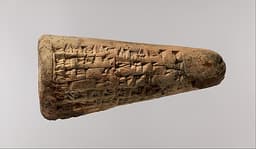
Lipit-Ishtar
Emperor · Ancient
52.6Total

Marduk-nadin-ahhe
Emperor · Ancient
37.6Total
Basic Information
Born
-1870
-1099
Died
-1860
-1082
Era
Ancient
Ancient
Nationality
Isin
Babylon
Occupation
Emperor
Emperor
Civilization
Middle Eastern
Middle Eastern
Score Comparison
Military (10%)
25.9
46.7
Political (20%)
68.0
26.4
Influence (20%)
53.3
44.8
Legacy (20%)
46.7
35.0
Leadership (15%)
74.0
34.6
Strategy (15%)
36.8
38.3
TOTAL
52.6
37.6
Lipit-Ishtar — Complete Timeline
1865 BC
Issuance of the Code of Lipit-IshtarReform◆ Major
Lipit-Ishtar issued a law code written in Sumerian, one of the earliest known legal codes. It covered family law, property rights, and commercial transactions. The code aimed to establish justice and order in Isin, influencing later legal traditions including the Code of Hammurabi.
Law CodeSumerian LawLegal History
Impact: regionalconstructive
Marduk-nadin-ahhe — Complete Timeline
1099 BC
Reign During the Bronze Age CollapseOther◆ Major
Marduk-nadin-ahhe ruled Babylon during the late Bronze Age collapse, a period of widespread societal collapse across the Eastern Mediterranean. His reign faced challenges from invading Aramaean tribes and economic disruption, leading to territorial losses.
Bronze Age CollapseAramaean InvasionsDecline
Impact: regionaldestructive
1090 BC
Conflict with AssyriaWar
Marduk-nadin-ahhe engaged in military conflicts with the Assyrian king Tiglath-Pileser I. The Assyrians launched campaigns into Babylonian territory, resulting in Babylonian defeats and the loss of border regions, further weakening Babylon during the collapse.
Assyrian ConflictMilitary DefeatTerritorial Loss
Impact: regionaldestructive
This comparison has not been analyzed yet.
One-time AI generation (~1 minute). Scores and timeline are already available below.
Rankings
🥇
Lipit-IshtarLeader
Mil: 25.9Pol: 68.0Inf: 53.3
52.6
🥈
Marduk-nadin-ahhe
Mil: 46.7Pol: 26.4Inf: 44.8
37.6
+15.0 behind
How This Comparison Works
Algorithm
Each figure is scored on 6 dimensions (0—100 scale) based on structured historical data: Military (10%), Political (20%), Influence (20%), Legacy (20%), Leadership (15%), Strategy (15%). The weighted total produces the final ranking.
Data Sources
Scores are computed from structured sub-indicators in the database. Scale factors adjust for era (Ancient ×0.85, Modern ×1.0) and civilization size (Eastern ×1.05, Other ×0.80) to account for differences in population and military scale.
Maximum 3 Figures
Comparisons are limited to 2—3 figures to ensure readability and statistical meaningfulness.
Error Margins
±5 points per dimension — Sub-scores are derived from historical records with inherent uncertainty. Two figures within 5 points on a dimension should be considered roughly equivalent in that area.
Total Score Accuracy
±3 points overall — The weighted combination of 6 dimensions produces a total score with approximately ±3 points of uncertainty. Differences of less than 3 points are not statistically significant— the figures are effectively tied.
Known Limitations
- Historical records are incomplete and uneven across civilizations
- Figures from oral-tradition societies may be underrepresented
- Occupation labels can misclassify multi-role figures
- Scores measure capability and impact, not moral character
- Quantitative scoring is a comparison tool, not absolute truth
Capability Radar
Military (10%) — Battles & Warfare
Battles
10
35
Win Rate
10
30
Expansion
10
20
Political (20%) — Governance & Reform
Reform
60
15
Diplomacy
40
20
Economy
40
15
Influence (20%) — Cultural & Global Reach
Cultural
50
15
Global
30
10
Legacy (20%) — Historical Impact
Historical
50
20
Longevity
40
10
Leadership (15%) — Power & Stability
Tenure
40
30
Stability
50
10
Strategy (15%) — Tactics & Innovation
Strategy
10
25
Tactics
10
30
Reform
10
10
Similar Comparisons
Comments & Discussion
No comments yet. Be the first to share your thoughts!