Loading...
Liang Qichao vs Periyar E. V. Ramasamy
Periyar E. V. Ramasamy leads by 3.9 pts · 2 figures compared
…
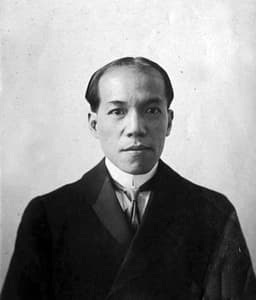
Liang Qichao
Politician · Modern
62.5Total

Periyar E. V. Ramasamy
Politician · Modern
66.4Total
Basic Information
Born
1873
1879
Died
1929
1973
Era
Modern
Modern
Nationality
China
India
Occupation
Politician
Politician
Civilization
Eastern
Indian
Score Comparison
Military (10%)
15.7
40.9
Political (20%)
72.0
72.0
Influence (20%)
88.0
82.0
Legacy (20%)
65.0
68.0
Leadership (15%)
55.3
53.2
Strategy (15%)
36.3
60.0
TOTAL
62.5
66.4
Liang Qichao — Complete Timeline
1898 AD
Fled to Japan after the Hundred Days' ReformPolitical Action◆ Major
After the failure of the Hundred Days' Reform, Liang Qichao fled to Japan to escape persecution. In exile, he continued writing and publishing reformist ideas, becoming a leading voice for change.
ExileReformIntellectual
Impact: nationaltragic
Founded the journal 'Qingyi Bao' (The China Discussion)Cultural◆ Major
Liang Qichao founded 'Qingyi Bao' in Yokohama, Japan, to promote constitutional reform and modern political ideas. The journal circulated widely in China and influenced the reformist movement.
JournalismReformPolitical Thought
Impact: nationalprogressive
1902 AD
Published 'The New Citizen' (Xinmin Shuo)Cultural
Liang Qichao published 'The New Citizen', a series of essays advocating for civic virtue, nationalism, and political reform. The work profoundly influenced Chinese intellectuals and the reform movement.
ReformNationalismPolitical Thought
Impact: nationalprogressive
Periyar E. V. Ramasamy — Complete Timeline
1924 AD
Vaikom Satyagraha LeadershipPolitical Action
Periyar E. V. Ramasamy led the Vaikom Satyagraha in Travancore, a non-violent protest demanding the right of lower-caste Hindus to use the road around the Vaikom temple. He was arrested twice, and the movement gained national attention.
Caste SystemSocial ReformTamil Nadu
Impact: nationalprogressive
1925 AD
Founding of Self-Respect MovementPolitical Action
Periyar founded the Self-Respect Movement in Tamil Nadu, advocating for the rationalism, atheism, and the destruction of caste hierarchy. The movement rejected Brahminical dominance and promoted Dravidian identity.
Dravidian MovementSocial ReformRationalism
Impact: regionalprogressive
1937 AD
Anti-Hindi AgitationsPolitical Action◆ Major
Periyar led protests against the introduction of Hindi as a compulsory subject in Tamil Nadu schools. The agitations forced the government to withdraw the policy, and Periyar became a symbol of Tamil linguistic pride.
LanguageTamil NaduHindi
Impact: regional
1938 AD
Justice Party LeadershipPolitical Action◆ Major
Periyar took over leadership of the Justice Party, which later evolved into the Dravidar Kazhagam. He used the party to campaign for Dravidian nationalism, anti-Hindi policies, and the abolition of caste-based discrimination.
Dravidian MovementPoliticsTamil Nadu
Impact: regionalconstructive
Expert Analysis
Origins
Liang Qichao (1873-1929) was born in Xinhui, Guangdong, China, into a scholarly family. His father was a teacher, and Liang received a classical Confucian education. He passed the provincial imperial exams at age 16, but his exposure to Western ideas through translations and his mentor Kang Youwei shifted his focus toward reform. Periyar E. V. Ramasamy (1879-1973) was born in Erode, Tamil Nadu, India, into a wealthy merchant family of the backward caste. His father owned a grain shop. Periyar had a limited formal education, leaving school at age 10 to help in the family business. Early exposure to caste discrimination, including his own experience of being denied entry to temples, shaped his lifelong rationalist and anti-caste stance.
Rise to Power
Liang Qichao rose to prominence as a leading intellectual of the 1898 Hundred Days' Reform. Alongside Kang Youwei, he advised the Guangxu Emperor on modernizing China. After the reform failed, Liang fled to Japan, where he published reformist journals like 'Qingyi Bao' (1898) and 'Xinmin Congbao' (1902). His essays on the 'new citizen' concept (Xinmin Shuo) advocated for civic virtue, nationalism, and constitutional monarchy, making him a key figure among Chinese students abroad. Periyar's rise began with his involvement in the Indian National Congress but he soon grew disillusioned with its upper-caste dominance. He led the Vaikom Satyagraha (1924-25) in Travancore, demanding lower-caste access to temple roads. In 1926, he founded the Self-Respect Movement, promoting rationalism, atheism, and caste eradication. He took over the Justice Party in 1944, transforming it into the Dravidar Kazhagam, advocating for Dravidian nationalism.
Leadership & Governance
Liang Qichao never held formal government power but shaped policy through his writings and advisory roles. He served as Minister of Justice in the Beiyang government (1913-1914) and later as Minister of Finance (1917), but his influence was primarily intellectual. He advocated for constitutional monarchy, later republicanism, and emphasized education and civic consciousness. His approach was gradualist, seeking to reform Chinese culture from within. Periyar was a grassroots organizer who led mass movements. He never held elected office but exerted influence through the Self-Respect Movement and Dravidar Kazhagam. His leadership was confrontational: he burned the Manusmriti publicly (1956) and led anti-Hindi agitations in 1937-38 and 1965, forcing the Indian government to retain a bilingual policy. Periyar's governance model was based on direct action and social reform rather than state power.
Triumph & Tragedy
Liang Qichao's greatest triumph was popularizing modern political concepts in China. His 'New Citizen' essays influenced a generation, including Mao Zedong and Hu Shih. His historical works, like 'The History of Chinese Political Thought', remain influential. His tragedy was the failure of the Hundred Days' Reform and his inability to prevent China's descent into warlordism. He died in 1929 just as the Kuomintang unified China, but his ideas were sidelined by more radical forces. Periyar's triumphs include the Vaikom Satyagraha, which succeeded in opening temple roads to all castes, and the anti-Hindi agitations, which secured Tamil Nadu's linguistic identity. His Self-Respect Movement led to the establishment of Dravidian parties that have governed Tamil Nadu since 1967. His tragedy was the fragmentation of the Dravidian movement, with the DMK splitting from the Dravidar Kazhagam in 1949 due to Periyar's authoritarian style. He also failed to achieve a separate Dravida Nadu.
Character & Destiny
Liang Qichao was a prolific writer and synthesizer of ideas, often changing his positions as he absorbed new influences. He was optimistic and reformist, believing in gradual change through education. His character was that of a scholar-intellectual, more comfortable with ideas than with political maneuvering. This limited his direct political impact but allowed his writings to endure. Periyar was a fiery orator and uncompromising rationalist. He rejected religion and caste, often using provocative actions. His character was authoritarian and domineering, leading to splits in his movement. Yet his single-minded focus on social justice ensured his principles outlived organizational disputes. Historian Christopher Jaffrelot rates Periyar's influence on Tamil society as profound, comparable to Ambedkar's on Dalits. Liang's influence is more diffuse but foundational to Chinese modernization.
Legacy
Liang Qichao scored 65.0 in legacy. His concept of the 'new citizen' influenced Chinese nationalism and the May Fourth Movement. He introduced Western thinkers like Hobbes, Rousseau, and Kant to Chinese readers. His emphasis on a 'young China' inspired later generations. However, his moderate reformism was overshadowed by the Communist revolution. Periyar scored 68.0 in legacy. His Self-Respect Movement transformed Tamil society, reducing caste discrimination and promoting rationalism. Dravidian parties continue to implement his policies, including reservations for backward castes. The anti-Hindi agitations defined Tamil Nadu's linguistic identity. Periyar's ideas on atheism and women's rights remain influential. In terms of political impact, Periyar's score of 72.0 matches Liang's, but his strategy score (60.0 vs 36.3) reflects his effective grassroots mobilization.
Conclusion
While Liang Qichao shaped Chinese intellectual history, Periyar E. V. Ramasamy had greater tangible impact on society and politics. Periyar's total score of 66.4 versus Liang's 62.5 reflects this. Liang's ideas were crucial but filtered through others; Periyar directly transformed caste relations and governance in Tamil Nadu. His movement produced lasting political parties and policy changes. Liang's reformism was ultimately overtaken by revolution, while Periyar's rationalist anti-caste movement remains a living force. Therefore, Periyar's impact on the ground was more substantial and enduring.
Rankings
🥇
Periyar E. V. RamasamyLeader
Mil: 40.9Pol: 72.0Inf: 82.0
66.4
🥈
Liang Qichao
Mil: 15.7Pol: 72.0Inf: 88.0
62.5
+3.9 behind
How This Comparison Works
Algorithm
Each figure is scored on 6 dimensions (0—100 scale) based on structured historical data: Military (10%), Political (20%), Influence (20%), Legacy (20%), Leadership (15%), Strategy (15%). The weighted total produces the final ranking.
Data Sources
Scores are computed from structured sub-indicators in the database. Scale factors adjust for era (Ancient ×0.85, Modern ×1.0) and civilization size (Eastern ×1.05, Other ×0.80) to account for differences in population and military scale.
Maximum 3 Figures
Comparisons are limited to 2—3 figures to ensure readability and statistical meaningfulness.
Error Margins
±5 points per dimension — Sub-scores are derived from historical records with inherent uncertainty. Two figures within 5 points on a dimension should be considered roughly equivalent in that area.
Total Score Accuracy
±3 points overall — The weighted combination of 6 dimensions produces a total score with approximately ±3 points of uncertainty. Differences of less than 3 points are not statistically significant— the figures are effectively tied.
Known Limitations
- Historical records are incomplete and uneven across civilizations
- Figures from oral-tradition societies may be underrepresented
- Occupation labels can misclassify multi-role figures
- Scores measure capability and impact, not moral character
- Quantitative scoring is a comparison tool, not absolute truth
Capability Radar
Military (10%) — Battles & Warfare
Battles
13
46
Win Rate
16
45
Expansion
20
49
Political (20%) — Governance & Reform
Reform
75
85
Diplomacy
60
70
Economy
55
30
Influence (20%) — Cultural & Global Reach
Cultural
85
75
Global
70
55
Legacy (20%) — Historical Impact
Historical
80
80
Longevity
75
70
Leadership (15%) — Power & Stability
Tenure
20
60
Stability
30
40
Strategy (15%) — Tactics & Innovation
Strategy
21
52
Tactics
25
54
Reform
30
57
Similar Comparisons
Comments & Discussion
No comments yet. Be the first to share your thoughts!