Loading...
This comparison has not been analyzed yet.
One-time AI generation (~1 minute). Scores and timeline are already available below.
Li Rusong vs Yang Ye
Li Rusong leads by 8.7 pts · 2 figures compared
…

Li Rusong
General · Medieval
51.8Total
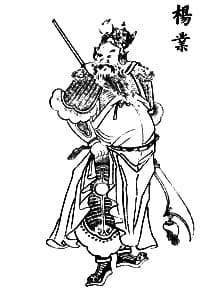
Yang Ye
General · Medieval
43.1Total
Basic Information
Born
1549
927
Died
1598
986
Era
Medieval
Medieval
Nationality
China
China
Occupation
General
General
Civilization
Eastern
Eastern
Score Comparison
Military (10%)
80.0
10.0
Political (20%)
32.2
32.1
Influence (20%)
55.7
54.9
Legacy (20%)
45.8
50.0
Leadership (15%)
54.2
33.5
Strategy (15%)
55.0
60.0
TOTAL
51.8
43.1
Li Rusong — Complete Timeline
1592 AD
Appointed Commander of Ming Forces in KoreaPolitical Action◆ Major
Li Rusong was appointed supreme commander of the Ming expeditionary force sent to aid Joseon Korea against the Japanese invasion led by Toyotomi Hideyoshi. He led a combined Chinese-Korean army to counter the Japanese advance.
Imjin WarMing DynastyCommand
Impact: regional
1593 AD
Recaptured PyongyangWar
Li Rusong led the Ming-Joseon forces in a decisive assault on Pyongyang, which was occupied by Japanese troops. The battle resulted in the recapture of the city and inflicted heavy casualties on the Japanese army, marking a turning point in the war.
Imjin WarBattlePyongyang
Impact: regionalconstructive
Battle of ByeokjegwanWar◆ Major
Li Rusong's forces were ambushed and defeated by a Japanese army at Byeokjegwan near Seoul. Li himself was wounded in the battle. This setback forced the Ming army to retreat and temporarily halted their advance southward.
Imjin WarBattleDefeat
Impact: regionaltragic
Negotiated Ceasefire with JapanPolitical Action◆ Major
Following the military stalemate, Li Rusong participated in negotiations with Japanese representatives for a ceasefire. The talks led to a temporary halt in hostilities and the withdrawal of Japanese forces from the Korean peninsula to the southern coast.
Imjin WarNegotiationCeasefire
Impact: regional
Recalled to ChinaPolitical Action
Li Rusong was recalled to China after the ceasefire. His recall was due to political rivalries at the Ming court and disagreements over war strategy. He was replaced by other commanders for the later phases of the Imjin War.
Ming DynastyRecallImjin War
Impact: national
Yang Ye — Complete Timeline
979 AD
Defected to the Song DynastyPolitical Action◆ Major
Yang Ye defected from the Northern Han kingdom to the Song dynasty after the Song conquest of Taiyuan. He was appointed as a general in the Song army, bringing his military experience to the Song's campaigns against the Liao.
DefectionSong DynastyNorthern Han
Impact: regional
986 AD
Battle of the Qigou RiverWar◆ Major
Yang Ye commanded a Song army at the Battle of the Qigou River against the Liao. After being ordered to advance by the main commander Pan Mei, Yang Ye's forces were surrounded and defeated. He was captured and died shortly after, reportedly by suicide.
BattleSong-Liao WarDeath
Impact: regionaltragic
This comparison has not been analyzed yet.
One-time AI generation (~1 minute). Scores and timeline are already available below.
Rankings
🥇
Li RusongLeader
Mil: 80.0Pol: 32.2Inf: 55.7
51.8
🥈
Yang Ye
Mil: 10.0Pol: 32.1Inf: 54.9
43.1
+8.7 behind
How This Comparison Works
Algorithm
Each figure is scored on 6 dimensions (0—100 scale) based on structured historical data: Military (10%), Political (20%), Influence (20%), Legacy (20%), Leadership (15%), Strategy (15%). The weighted total produces the final ranking.
Data Sources
Scores are computed from structured sub-indicators in the database. Scale factors adjust for era (Ancient ×0.85, Modern ×1.0) and civilization size (Eastern ×1.05, Other ×0.80) to account for differences in population and military scale.
Maximum 3 Figures
Comparisons are limited to 2—3 figures to ensure readability and statistical meaningfulness.
Error Margins
±5 points per dimension — Sub-scores are derived from historical records with inherent uncertainty. Two figures within 5 points on a dimension should be considered roughly equivalent in that area.
Total Score Accuracy
±3 points overall — The weighted combination of 6 dimensions produces a total score with approximately ±3 points of uncertainty. Differences of less than 3 points are not statistically significant— the figures are effectively tied.
Known Limitations
- Historical records are incomplete and uneven across civilizations
- Figures from oral-tradition societies may be underrepresented
- Occupation labels can misclassify multi-role figures
- Scores measure capability and impact, not moral character
- Quantitative scoring is a comparison tool, not absolute truth
Capability Radar
Military (10%) — Battles & Warfare
Battles
75
45
Win Rate
70
35
Expansion
55
10
Political (20%) — Governance & Reform
Reform
20
10
Diplomacy
50
25
Economy
25
10
Influence (20%) — Cultural & Global Reach
Cultural
45
60
Global
50
30
Legacy (20%) — Historical Impact
Historical
55
55
Longevity
40
55
Leadership (15%) — Power & Stability
Tenure
40
30
Stability
35
15
Strategy (15%) — Tactics & Innovation
Strategy
68
40
Tactics
72
50
Reform
30
10
Similar Comparisons
Comments & Discussion
No comments yet. Be the first to share your thoughts!