Loading...
Li Hongzhang vs Zhao Ziyang
Li Hongzhang leads by 13.0 pts · 2 figures compared
…

Li Hongzhang
Politician · Modern
60.7Total
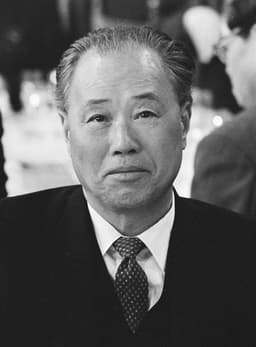
Zhao Ziyang
Politician · Modern
47.7Total
Basic Information
Born
1823
1919
Died
1901
2005
Era
Modern
Modern
Nationality
China
China
Occupation
Politician
Politician
Civilization
Eastern
Eastern
Score Comparison
Military (10%)
50.0
13.4
Political (20%)
72.0
45.0
Influence (20%)
58.3
56.4
Legacy (20%)
54.0
46.7
Leadership (15%)
72.0
74.0
Strategy (15%)
60.0
27.5
TOTAL
60.7
47.7
Li Hongzhang — Complete Timeline
1861 AD
Leadership of the Self-Strengthening MovementReform◆ Major
Li Hongzhang became a leading figure in the Self-Strengthening Movement, promoting modernization of China's military and industry. He established arsenals, shipyards, and telegraph lines, and modernized the Beiyang Fleet to counter foreign threats.
Self-StrengtheningModernization
Impact: nationalconstructive
1864 AD
Suppression of the Taiping RebellionWar◆ Major
Li Hongzhang commanded the Huai Army in campaigns against the Taiping rebels, recapturing Suzhou and other cities. His military efforts helped crush the rebellion and restore Qing control over eastern China.
Taiping RebellionMilitary campaign
Impact: national
1888 AD
Creation of the Beiyang FleetReform◆ Major
Li Hongzhang oversaw the creation of the Beiyang Fleet, the most modern naval force in Asia at the time. The fleet was intended to defend China's coasts but was largely destroyed in the First Sino-Japanese War in 1894.
Naval modernizationSelf-Strengthening
Impact: national
1895 AD
Signing of the Treaty of ShimonosekiPolitical Action
Li Hongzhang negotiated and signed the Treaty of Shimonoseki with Japan, ending the First Sino-Japanese War. The treaty ceded Taiwan and the Pescadores to Japan, recognized Korean independence, and imposed a large indemnity on China.
TreatyDiplomacyTerritorial loss
Impact: globaltragic
1901 AD
Signing of the Boxer ProtocolPolitical Action◆ Major
Li Hongzhang was the chief Qing negotiator for the Boxer Protocol, which ended the Boxer Rebellion. The agreement imposed a massive indemnity on China, allowed foreign troops in Beijing, and further weakened Qing sovereignty.
TreatyDiplomacyForeign intervention
Impact: globaltragic
Zhao Ziyang — Complete Timeline
1980 AD
Appointed Premier of the People's Republic of ChinaPolitical Action◆ Major
Zhao Ziyang succeeded Hua Guofeng as Premier. He implemented Deng Xiaoping's economic reforms, including the household responsibility system and the opening of Special Economic Zones.
Economic ReformPremiership
Impact: nationalconstructive
1987 AD
Appointed General Secretary of the Communist PartyPolitical Action◆ Major
Zhao Ziyang became General Secretary after Hu Yaobang's resignation. He continued economic reforms but faced growing pressure from conservative factions within the party.
Party LeadershipReform Era
Impact: national
1989 AD
Sympathized with Tiananmen Square ProtestersPolitical Action
During the Tiananmen Square protests, Zhao Ziyang visited the protesters and expressed sympathy, opposing the use of force. This led to his purge and house arrest for the rest of his life.
Tiananmen SquarePurge
Impact: globaltragic
Purged and Placed Under House ArrestPolitical Action◆ Major
Zhao Ziyang was removed from all posts and placed under house arrest after the Tiananmen Square crackdown. He was replaced by Jiang Zemin and lived in seclusion until his death in 2005.
PurgeHouse Arrest
Impact: nationaltragic
Expert Analysis
Origins
Li Hongzhang was born in 1823 in Hefei, Anhui, into a scholarly gentry family. His father, Li Wen'an, was a government official, providing Li with access to education and civil service connections. He passed the provincial exams in 1844 and obtained the jinshi degree in 1847, entering the Hanlin Academy. This elite background gave him a foundation in Confucian classics but also exposure to Western military technology during the Taiping Rebellion.
Zhao Ziyang was born in 1919 in Hua County, Henan, into a landlord family. He joined the Communist Party in 1938 during the Second Sino-Japanese War, rising through revolutionary ranks rather than formal education. His early career involved land reform and party organization in rural areas. Unlike Li, his origins were rooted in revolutionary struggle, not imperial bureaucracy.
Rise to Power
Li Hongzhang rose to prominence during the Taiping Rebellion (1850–1864). In 1853, he joined the staff of Zeng Guofan, a key commander. In 1862, Zeng tasked him with raising the Huai Army, which Li funded through customs revenues and equipped with modern weapons. By 1863, his forces recaptured Suzhou and other cities, making him a military leader. His success led to his appointment as Governor of Jiangsu in 1862 and later as Viceroy of Zhili in 1870, a position he held for decades.
Zhao Ziyang rose after the Cultural Revolution. In 1975, he was appointed First Secretary of Sichuan Province, where he implemented agricultural reforms. In 1980, he succeeded Hua Guofeng as Premier, becoming Deng Xiaoping's key ally. He was promoted to General Secretary in 1987 after Hu Yaobang's resignation. His rise was tied to economic reform, not military conquest.
Leadership & Governance
Li Hongzhang's leadership was pragmatic and centralized. As viceroy, he launched the Self-Strengthening Movement (1861–1895), establishing the Jiangnan Arsenal (1865) and the China Merchants' Steam Navigation Company (1873). He created the Beiyang Fleet in 1888, which was the largest navy in Asia. However, his governance relied on personal networks and patronage, leading to corruption and inefficiency. He signed the Treaty of Shimonoseki (1895), ceding Taiwan and paying a 200 million tael indemnity, and the Boxer Protocol (1901), imposing a 450 million tael indemnity. His governance scored 72.0 in political and 72.0 in leadership.
Zhao Ziyang's leadership emphasized economic decentralization. As Premier, he introduced the household responsibility system in agriculture, dismantling communes. He promoted Special Economic Zones like Shenzhen (1980). His political score is 45.0 and leadership 74.0, reflecting his reformist but ultimately suppressed role. He opposed using force against Tiananmen protesters in 1989, leading to his purge. His governance was consultative but lacked military backing.
Triumph & Tragedy
Li Hongzhang's greatest triumph was modernizing China's military and industry, establishing factories, railways, and telegraphs. The Beiyang Fleet was a symbol of progress. However, his greatest failure was the First Sino-Japanese War (1894–1895), where the Beiyang Fleet was destroyed. He also failed to prevent the Boxer Protocol's harsh terms. His legacy is mixed: he advanced modernization but could not save the Qing dynasty.
Zhao Ziyang's triumph was implementing Deng's reforms that spurred economic growth. China's GDP grew 9% annually in the 1980s. His tragedy was his purge and house arrest after Tiananmen. He died in 2005 under confinement. He scored 56.4 in influence and 46.7 in legacy, reflecting his role in reform but inability to protect his vision.
Character & Destiny
Li Hongzhang was shrewd and ambitious, often called a "reformist but loyalist." He navigated between conservative Qing officials and foreign powers. His pragmatism led him to sign unequal treaties, earning him a reputation as a traitor in some views. His destiny was tied to the Qing's decline: he died in 1901, just months after the Boxer Protocol.
Zhao Ziyang was idealistic and empathetic. His visit to Tiananmen protesters showed his sympathy for democracy. However, he lacked the political ruthlessness to survive factional struggles. His destiny was defined by the 1989 crackdown: he chose principles over power, leading to his fall.
Legacy
Li Hongzhang's legacy is tangible: he laid foundations for China's industrialization. His military reforms influenced later warlords. The Beiyang Fleet's loss taught lessons for naval modernization. He is remembered as a controversial figure—a modernizer who served a failing dynasty. His total score is 60.7.
Zhao Ziyang's legacy is ideological: he symbolizes reform and openness. His policies boosted rural incomes and urban growth. After his death, he was rehabilitated in official narratives to some extent. However, his purge limited his direct impact. His total score is 47.7.
Conclusion
Li Hongzhang had a greater impact on China's trajectory. Despite his failures, he initiated military and industrial modernization that outlasted the Qing. Zhao Ziyang's reforms were crucial but were part of Deng's broader program. Li's score of 60.7 vs Zhao's 47.7 reflects his wider influence across multiple dimensions. While Zhao's leadership score (74.0) exceeds Li's (72.0), Li's political (72.0) and influence (58.3) scores surpass Zhao's (45.0 and 56.4). Li's strategic projects—the Beiyang Fleet, arsenals—had lasting structural effects, whereas Zhao's legacy is more symbolic. Thus, Li Hongzhang ranks higher in historical significance.
Rankings
🥇
Li HongzhangLeader
Mil: 50.0Pol: 72.0Inf: 58.3
60.7
🥈
Zhao Ziyang
Mil: 13.4Pol: 45.0Inf: 56.4
47.7
+13.0 behind
How This Comparison Works
Algorithm
Each figure is scored on 6 dimensions (0—100 scale) based on structured historical data: Military (10%), Political (20%), Influence (20%), Legacy (20%), Leadership (15%), Strategy (15%). The weighted total produces the final ranking.
Data Sources
Scores are computed from structured sub-indicators in the database. Scale factors adjust for era (Ancient ×0.85, Modern ×1.0) and civilization size (Eastern ×1.05, Other ×0.80) to account for differences in population and military scale.
Maximum 3 Figures
Comparisons are limited to 2—3 figures to ensure readability and statistical meaningfulness.
Error Margins
±5 points per dimension — Sub-scores are derived from historical records with inherent uncertainty. Two figures within 5 points on a dimension should be considered roughly equivalent in that area.
Total Score Accuracy
±3 points overall — The weighted combination of 6 dimensions produces a total score with approximately ±3 points of uncertainty. Differences of less than 3 points are not statistically significant— the figures are effectively tied.
Known Limitations
- Historical records are incomplete and uneven across civilizations
- Figures from oral-tradition societies may be underrepresented
- Occupation labels can misclassify multi-role figures
- Scores measure capability and impact, not moral character
- Quantitative scoring is a comparison tool, not absolute truth
Capability Radar
Military (10%) — Battles & Warfare
Battles
45
17
Win Rate
30
16
Expansion
20
19
Political (20%) — Governance & Reform
Reform
75
65
Diplomacy
65
55
Economy
70
60
Influence (20%) — Cultural & Global Reach
Cultural
55
30
Global
55
40
Legacy (20%) — Historical Impact
Historical
65
45
Longevity
50
35
Leadership (15%) — Power & Stability
Tenure
70
60
Stability
40
30
Strategy (15%) — Tactics & Innovation
Strategy
55
25
Tactics
40
28
Reform
75
30
Similar Comparisons
Comments & Discussion
No comments yet. Be the first to share your thoughts!