Loading...
Levon V of Armenia vs Napoleon Bonaparte
Napoleon Bonaparte leads by 35.4 pts · 2 figures compared
…
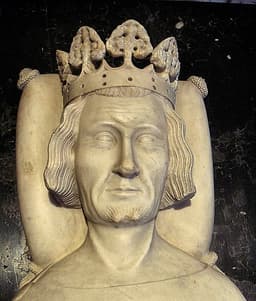
Levon V of Armenia
Emperor · Medieval
35.5Total

Napoleon Bonaparte
General · Modern
70.9Total
Basic Information
Born
1342
1769
Died
1393
1821
Era
Medieval
Modern
Nationality
Cilician Armenia
France
Occupation
Emperor
General
Civilization
Middle Eastern
Western
Score Comparison
Military (10%)
10.2
94.0
Political (20%)
26.4
72.0
Influence (20%)
47.9
40.0
Legacy (20%)
38.3
80.0
Leadership (15%)
33.6
78.0
Strategy (15%)
39.6
90.0
TOTAL
35.5
70.9
Levon V of Armenia — Complete Timeline
1374 AD
Coronation as King of Cilician ArmeniaPolitical Action◆ Major
Levon V was crowned King of Cilician Armenia in Sis, the capital, after the death of his cousin King Constantine IV. His coronation was contested by rival claimants and occurred during a period of intense Mamluk pressure on the kingdom.
CoronationCilician ArmeniaMonarchy
Impact: national
1375 AD
Fall of the Kingdom of Cilician ArmeniaWar◆ Major
Mamluk forces captured the capital Sis after a siege, ending the Kingdom of Cilician Armenia. Levon V was taken prisoner and the kingdom was annexed by the Mamluk Sultanate, marking the end of Armenian statehood in Cilicia.
Fall of KingdomMamluksConquest
Impact: regionaltragic
1382 AD
Release from Captivity and Exile in EuropePolitical Action◆ Major
After seven years of Mamluk captivity, Levon V was ransomed by King John I of Castile. He traveled to Europe, seeking support for a crusade to restore his kingdom, but failed to secure military aid. He spent his remaining years in Spain and France.
ExileRansomCrusade
Impact: regionaltragic
1393 AD
Death in Paris and Burial at Saint-DenisCultural
Levon V died in Paris and was buried in the Basilica of Saint-Denis, the traditional burial place of French kings. His tomb became a symbol of the lost Armenian kingdom and a site of pilgrimage for Armenians in Europe.
DeathBurialSymbolism
Impact: nationaltragic
Napoleon Bonaparte — Complete Timeline
1799 AD
Coup of 18 BrumaireOther◆ Major
Napoleon Bonaparte, with support from his brother Lucien and key political figures, overthrew the Directory in a bloodless coup. He established the Consulate with himself as First Consul, effectively becoming the ruler of France. This event ended the French Revolution's most unstable period.
French RevolutionCoupRise to Power
Impact: regional
1804 AD
Promulgation of the Napoleonic CodeOther◆ Major
Napoleon enacted the Civil Code of the French, known as the Napoleonic Code, a comprehensive set of laws that replaced the fragmented feudal legal systems. The code established legal equality, protected property rights, and secularized law. It became the basis for legal systems in many European and world countries.
Legal ReformNapoleonic CodeCivil Law
Impact: globalconstructive
1805 AD
Battle of AusterlitzWar◆ Major
Napoleon's Grande Arm
Napoleonic WarsBattleDecisive Victory
Impact: global
1812 AD
Invasion of RussiaWar◆ Major
Napoleon led the Grande Arm
Napoleonic WarsInvasionDisaster
Impact: globaldestructive
1815 AD
Battle of WaterlooWar◆ Major
Napoleon's French army was defeated by the combined forces of the Duke of Wellington's Anglo-Allied army and Gebhard Leberecht von Bl
Napoleonic WarsBattleFinal Defeat
Impact: globaldestructive
Expert Analysis
levon-v-of-armenia-vs-napoleon-bonaparte
# The Emperor and the Exile: Napoleon and Levon V
In the spring of 1815, Napoleon Bonaparte stood before his Grande Armée for the last time, a man who had reshaped the map of Europe and whose name still echoes through the centuries. Four centuries earlier, in 1393, another monarch—Levon V of Armenia—died in a Parisian exile so complete that his kingdom had already ceased to exist. Both men wore crowns; both met defeat. But the gulf between them is not merely one of time or geography. It is the difference between a force of nature and a leaf caught in a storm.
Origins
Napoleon was born in 1769 on the island of Corsica, a place that had only recently become French. His family was minor nobility, but the French Revolution had shattered the old order, creating a world where talent could vault a man from obscurity to power. Corsica’s rugged independence shaped his character—ambitious, restless, and contemptuous of inherited privilege. He was a child of the Enlightenment, educated in military academies, yet he also absorbed the revolutionary fervor that promised merit over birth.
Levon V of Armenia, born in 1342, inherited a very different world. Cilician Armenia was a Christian kingdom clinging to the eastern Mediterranean coast, a fragile bastion between the Byzantine Empire and the rising Mamluk Sultanate. His lineage was royal, but his inheritance was a dying state. The Crusades had ended; the Mongols had receded; and the Mamluks were closing in. Levon was born into a kingdom that had already begun its long decline, where survival depended not on ambition but on diplomacy and luck.
Rise to Power
Napoleon’s ascent was meteoric. At twenty-four, he crushed a royalist uprising in Paris. At twenty-six, he led a campaign into Italy that astonished Europe, winning battles against Austrian armies that outnumbered his own. By 1799, he had seized control of France in a coup, and by 1804 he crowned himself Emperor. His path was carved by audacity and military genius—his strategy scores of 93 and military scores of 94 reflect a man who understood war as an art form.
Levon V’s rise was quieter and more desperate. He was crowned in 1374 in Sis, the capital of Cilician Armenia, after the death of his cousin King Constantine IV. There was no grand campaign, no dramatic seizure of power. He inherited a throne that was already under siege. The Mamluk armies had been pressing for decades, and the Armenian kingdom had few allies left. Levon’s coronation was less a beginning than a final act.
Leadership & Governance
Napoleon was a ruler of terrifying energy. He reorganized French law into the Napoleonic Code, a system of civil law that still influences half the world. He centralized the state, reformed education, and built infrastructure. As a military commander, he was unparalleled—his campaigns in Italy, Egypt, and Austria rewrote the rules of war. Yet his political score of 75 hints at his flaw: he could conquer but could not consolidate. He installed his brothers on thrones, but he never built institutions that could outlast him.
Levon V governed a kingdom that was already crumbling. His political score of 44.2 and leadership of 37.4 reflect a ruler who had little room to maneuver. He tried to negotiate with the Mamluks, sought aid from European powers, and maintained the Armenian Church. But his kingdom was small, surrounded by enemies, and abandoned by the West. The Crusader states had fallen; the Pope was preoccupied. Levon’s governance was not about reform but about survival.
Triumph & Tragedy
Napoleon’s greatest moment was Austerlitz in 1805, where he destroyed a combined Russian and Austrian army in a single day. His empire stretched from Spain to Poland. But his tragedy was hubris. The invasion of Russia in 1812 cost him half a million men. He refused to compromise, refused to accept limits. At Waterloo in 1815, his genius failed him, and the coalition armies crushed his final gambit. He died in 1821 on Saint Helena, a prisoner of the British.
Levon V’s tragedy was more absolute. In 1375, the Mamluks captured Sis after a siege. The Kingdom of Cilician Armenia fell. Levon was taken prisoner and spent seven years in captivity. Ransomed by King John I of Castile in 1382, he traveled to Europe, begging for aid to restore his kingdom. No one helped. He died in Paris in 1393, buried in the Basilica of Saint-Denis—a king without a country, his tomb a monument to a lost cause.
Character & Destiny
Napoleon’s character was a furnace of will. He believed he could shape history through sheer force of intellect and ambition. “Impossible,” he once said, “is a word to be found only in the dictionary of fools.” His destiny was to rise higher than any man of his age, then fall harder. His personality drove him to overreach, but it also made him unforgettable.
Levon V was different. He was not a conqueror but a caretaker. His character was shaped by endurance, not ambition. He fought not for glory but for survival. His destiny was to be the last of his line, to watch his kingdom vanish, and to die in a foreign land. Where Napoleon’s story is a blaze, Levon’s is a fading ember.
Legacy
Napoleon’s legacy is immense. The Napoleonic Code, the metric system, modern military strategy—his fingerprints are everywhere. He is remembered as both a hero and a tyrant, a genius and a warning. His influence score of 82 and legacy of 78 place him among the most consequential figures in history.
Levon V’s legacy is quieter. He is remembered by Armenians as the last king of a lost kingdom. His tomb in Saint-Denis was later destroyed; his grave is unknown. But his story endures as a symbol of resistance and loss—a reminder that history is not always written by the victors.
Conclusion
Napoleon and Levon V lived worlds apart, yet both ended in exile. One conquered Europe; the other lost his kingdom. One reshaped the modern world; the other was swallowed by it. Their differences are not merely of scale but of kind. Napoleon was a force that bent history to his will; Levon was a man bent by history. And yet, in their final moments—Napoleon on a remote island, Levon in a foreign city—both faced the same truth: that even the greatest crowns are fragile, and that destiny is rarely kind to those who wear them.
Rankings
🥇
Napoleon BonaparteLeader
Mil: 94.0Pol: 72.0Inf: 40.0
70.9
🥈
Levon V of Armenia
Mil: 10.2Pol: 26.4Inf: 47.9
35.5
+35.4 behind
How This Comparison Works
Algorithm
Each figure is scored on 6 dimensions (0—100 scale) based on structured historical data: Military (10%), Political (20%), Influence (20%), Legacy (20%), Leadership (15%), Strategy (15%). The weighted total produces the final ranking.
Data Sources
Scores are computed from structured sub-indicators in the database. Scale factors adjust for era (Ancient ×0.85, Modern ×1.0) and civilization size (Eastern ×1.05, Other ×0.80) to account for differences in population and military scale.
Maximum 3 Figures
Comparisons are limited to 2—3 figures to ensure readability and statistical meaningfulness.
Error Margins
±5 points per dimension — Sub-scores are derived from historical records with inherent uncertainty. Two figures within 5 points on a dimension should be considered roughly equivalent in that area.
Total Score Accuracy
±3 points overall — The weighted combination of 6 dimensions produces a total score with approximately ±3 points of uncertainty. Differences of less than 3 points are not statistically significant— the figures are effectively tied.
Known Limitations
- Historical records are incomplete and uneven across civilizations
- Figures from oral-tradition societies may be underrepresented
- Occupation labels can misclassify multi-role figures
- Scores measure capability and impact, not moral character
- Quantitative scoring is a comparison tool, not absolute truth
Capability Radar
Military (10%) — Battles & Warfare
Battles
10
95
Win Rate
10
90
Expansion
5
95
Political (20%) — Governance & Reform
Reform
10
95
Diplomacy
30
80
Economy
10
85
Influence (20%) — Cultural & Global Reach
Cultural
15
85
Global
10
90
Legacy (20%) — Historical Impact
Historical
20
95
Longevity
10
90
Leadership (15%) — Power & Stability
Tenure
20
85
Stability
10
70
Strategy (15%) — Tactics & Innovation
Strategy
10
95
Tactics
10
98
Reform
5
92
Similar Comparisons
Comments & Discussion
Corsican Meteor6/17/2026
The "force of nature" comparison is lazy. Napoleon was a Corsican upstart who clawed his way into power by exploiting revolutionary chaos, whereas Levon V was a legitimate monarch born into a dying dynasty. Napoleon's entire career was a calculated gamble of meritocracy and violence; Levon's was a tragedy of geopolitics. Comparing them suggests a false equivalence between active ambition and passive victimhood. Napoleon chose his battlefield; Levon was handed his coffin.
数据考古学家6/17/2026
这个对比用胜负论高低,忽略了关键数据:两人生卒年差距超过400年,政体、人口、军事实力根本没可比性。要是真比,勒翁五世治国时亚美尼亚人口不到50万,疆域相当于一个西西里岛,而拿破仑1812年入侵俄国时兵力超过60万。算算人均承受的压力,勒翁的统治容错率几乎为零,拿破仑的失败却是资源铺天盖地后的自毁。数据上勒翁是悲剧英雄,拿破仑是过度扩张的案例。
Armchair Tactician6/17/2026
Everyone romanticizes Napoleon the loser, but Levon V is the genuine tragic figure. The Mamluks weren't waiting for his Grande Armée to blunder into winter; they were an existential threat that annihilated his kingdom incrementally. Napoleon's Hundred Days were a desperate gamble that failed because he chose Waterloo. Levon's kingdom was erased by gradual conquest, not a single catastrophic battle. Levon died in exile without a second chance. Napoleon got his second chance and still fumbled it.
古典学推土机6/17/2026
勒翁五世是封建时代的残烛,拿破仑是启蒙运动的炸药桶。两人都输了,但输的方式暴露了时代本质:勒翁的失败是旧秩序——领地、血统、宗教同盟——一一崩塌;拿破仑的失败是新秩序——民族主义、理性行政、军事机动——自己炸了自己。勒翁流亡巴黎时,欧洲还在玩家族联姻那一套;拿破仑流放圣赫勒拿时,欧洲已经开始搞维也纳体系。前者是时代的弃子,后者是时代的制造者。
Grumpy Revisionist6/17/2026
Enough with the "exile" pity party for both of them. Levon V spent his last years in Paris literally begging the king of France for a restoration that was never coming. Napoleon? He signed the Treaty of Fontainebleau and still got a pension! Both were losers, but one was a loser who had conquered Europe for a decade, the other a loser whose kingdom never controlled anything beyond a coastal strip. Let's not pretend Levon V's exile was somehow more noble because he had less to lose.